
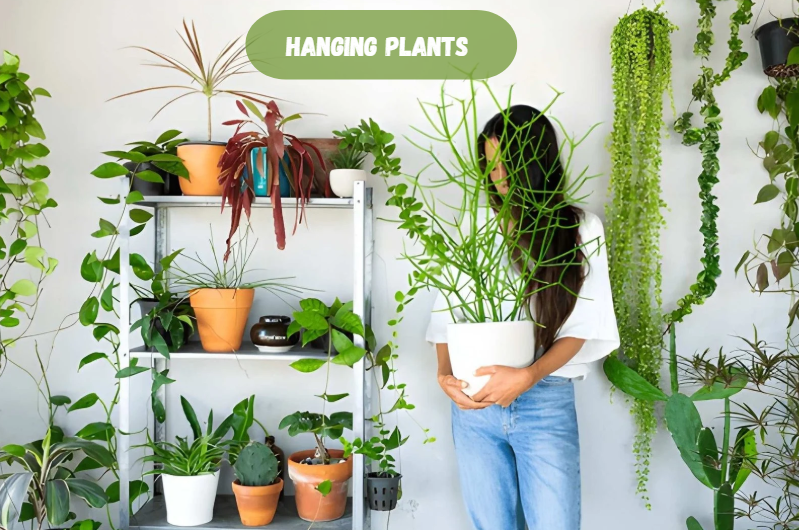
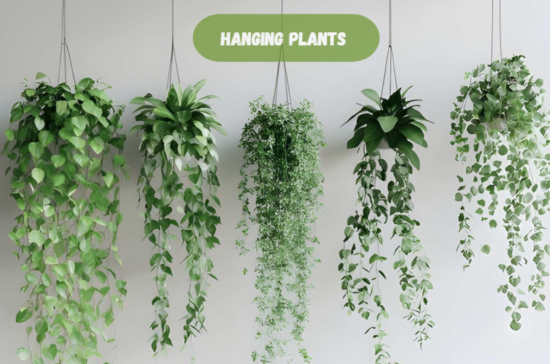
Hanging plants are trailing or vine-style greenery grown in suspended pots, macramé slings, or wall-mounted planters that add vertical dimension to a room without taking up floor space. They work indoors because they use empty ceiling and wall real estate, which is exactly what small apartments and low-square-footage homes are usually short on.
I started hanging plants in my own place back in 2022, mostly because my studio apartment had zero counter space left after two bookshelves and a desk. What I noticed almost immediately is that a room feels bigger, not smaller, once you start using the air above your head instead of just the floor.
Best Hanging Plants for Indoor Decoration
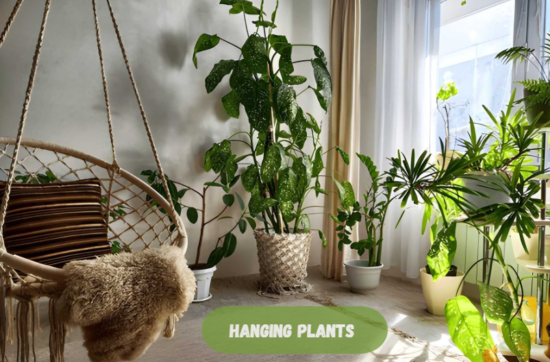
What are the easiest hanging plants to grow indoors?
The easiest hanging plants to grow indoors are Pothos, Heartleaf Philodendron, and Spider Plants because they adapt quickly to standard indoor humidity and tolerate occasional missed waterings.
This is the question I get asked the most on Reddit’s r/houseplants, where people post photos of a dim hallway and ask what will actually live there. Pothos is almost always the top comment, and for good reason. I’ve had one thriving in a north-facing bathroom with a frosted window for three years now, and it’s never once looked stressed.
Which hanging plants need the least light?
The best low-light indoor hanging plants are Pothos, Heartleaf Philodendron, English Ivy, and Boston Ferns, as they can survive and trail beautifully in dim corners without direct sunlight.
Here are a few low-light options that have worked perfectly in my own place and in friends’ apartments:
- Golden Pothos: Barely need light at all and can go two or three weeks without water without showing any stress.
- English Ivy: Handles lower light levels fine, sending down elegant, classic trailing vines that look incredible in a suspended basket.
- Heartleaf Philodendron: Keeps its rich color even in a dim room, whereas a lot of highly variegated plants fade back to plain green without enough sun.
- Boston Ferns: Shag-style, lush hanging options that thrive in lower light, making them perfect for low-sun corners or moisture-rich bathrooms.
Where to Hang Plants Indoors for the Best Effect
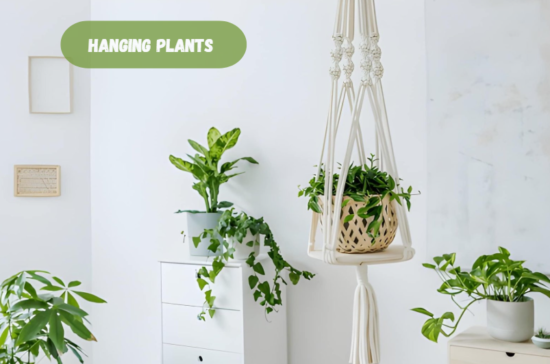
Where should I hang plants in a small apartment?
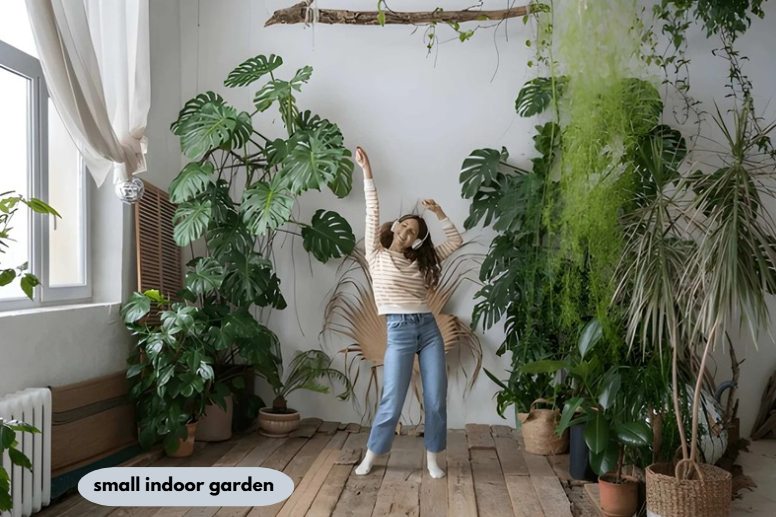
The best places to hang plants in a small apartment are corners, window frames, and unused wall space near ceilings because they add greenery without blocking walkways or furniture.
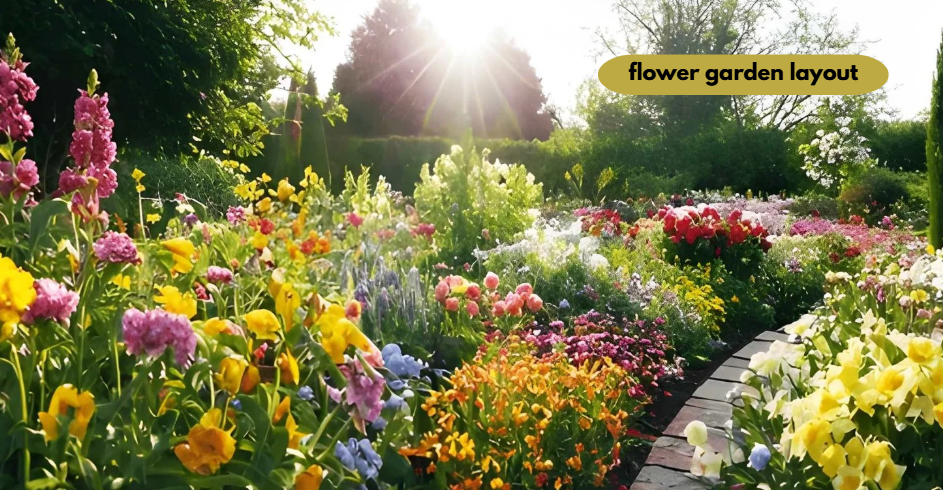
When I helped set up a friend’s studio layout, we used the same spatial thinking you’d apply if you were figuring out how to design a garden layout kdagardenation style, treating the ceiling and walls as usable zones instead of dead air. That mental shift changes everything about how much greenery a small space can actually hold.
How high should hanging plants be placed?
Hanging plants should sit at or slightly above eye level, generally six to twelve inches below the ceiling, so leaves don’t brush your head but still catch natural light.
I learned this one the hard way after hanging a pothos too low near my kitchen doorway and smacking my forehead into it more times than I want to admit. Eye level or just above it is the sweet spot, both for safety and for how the plant photographs, which matters if you’re posting your space on Pinterest or Instagram, like most apartment gardening accounts do now.
How to Style Hanging Plants Like a Pro
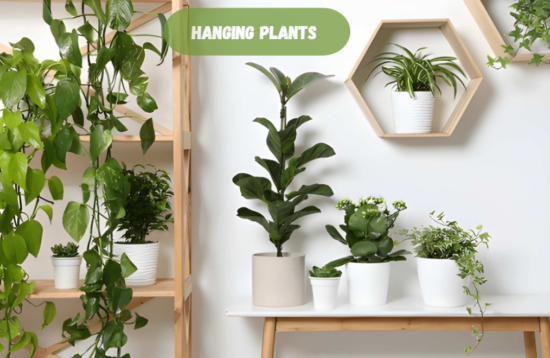
How do you decorate a room with hanging plants?
Mix pot heights, group two to three plants of different trail lengths, and keep hardware like hooks and brackets consistent in finish so the room feels intentional rather than cluttered.
I use a cheap stud finder and matching black hooks throughout my apartment, and that one small consistency choice does more visual work than the plants themselves sometimes. It’s a trick I picked up from watching design breakdowns on YouTube in 2023, where a stager explained that mismatched hardware is what makes a room look thrown together instead of styled.
What’s the best way to arrange hanging plants together?
Stagger trail lengths and stay within a limited color palette of pots so the eye moves naturally instead of feeling overwhelmed.
In my own place, the longest trailer always goes closest to the window, since it gets the best light and naturally becomes the focal point everything else builds around. From there, I keep pot colors within two shades so the whole grouping reads as one display instead of a random collection someone grabbed off a clearance shelf.
Spacing matters more than people expect too. I leave at least eight inches between pots so the leaves don’t start tangling into each other as they grow, and every couple weeks I give each pot a quarter turn so growth stays even instead of leaning hard toward the window.
Hanging Plants vs. Potted Floor Plants
| Feature | Hanging Plants | Potted Floor Plants |
| Floor space used | None | Moderate to high |
| Best light exposure | Near windows, ceiling level | Varies by room corner |
| Watering frequency | Every 1-2 weeks (varies by species) | Every 1-2 weeks (varies by species) |
| Ideal for small apartments | Yes | Limited |
| Visual impact | Vertical, draws eye upward | Grounds a room, adds mass |
| Common maintenance issue | Access for watering can be awkward | Root-bound pots need repotting |
Quick Answers (FAQ)
Do hanging plants need special soil?
No, standard well-draining houseplant potting mix works fine for almost every trailing variety.
Can hanging plants damage ceilings?
Only if the hook isn’t anchored into a stud or proper drywall anchor, so always check weight capacity before installing.
How often should I water hanging plants?
Most trailing varieties do best when watered every one to two weeks, once the top inch of soil feels dry to the touch.
Are hanging plants safe around pets?
Some, like pothos and English ivy, are toxic to cats and dogs if chewed, so keep those higher up or choose a pet-safe variety like spider plants instead.
Final Thoughts
Honestly, hanging plants are one of the cheapest, lowest-risk ways to make a rented apartment feel like it belongs to you. You don’t need a green thumb, a big budget, or a backyard, just a sturdy hook, a plant that matches your light, and a little patience while it settles in. I still check my own collection every Sunday morning with a $6 moisture meter I bought off Amazon in 2022, and that five-minute habit has saved me more plants than any fancy fertilizer ever has.
If you’re just starting out and want easy plants to grow at home without the trial and error I went through, pick one low-maintenance variety, hang it near your brightest window, and see how it does for a month before adding more. That’s genuinely the whole strategy. For more layout and design inspiration, a quick browse through spaces like ww. kdarchitects.net can help you visualize where the greenery might actually fit before you start drilling holes.

One thought on “Hanging Plants Indoor Decoration: Best Plants, Placement & Easy Styling Ideas ”