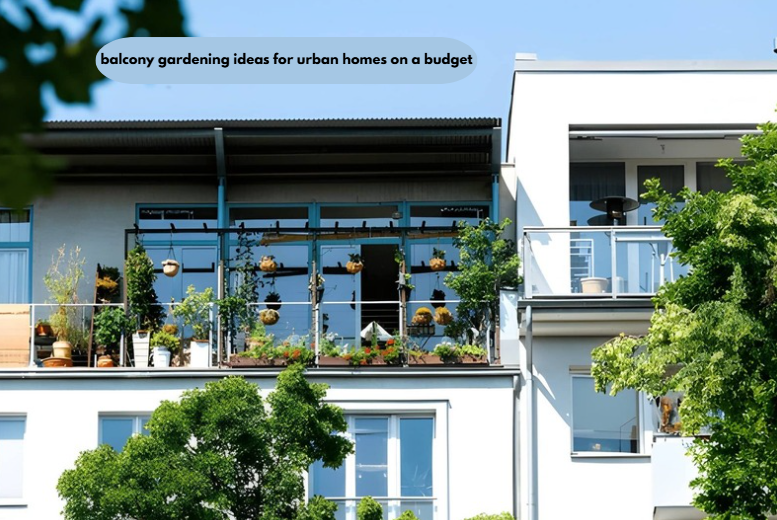
Balcony gardening ideas for urban homes on a budget include using vertical shelving, railing planters, hanging baskets, repurposed containers, and companion planting to grow herbs, vegetables, and flowers in small spaces without spending money on raised beds or built-in structures.
15 Easy Balcony Gardening Ideas for Urban Homes on a Budget
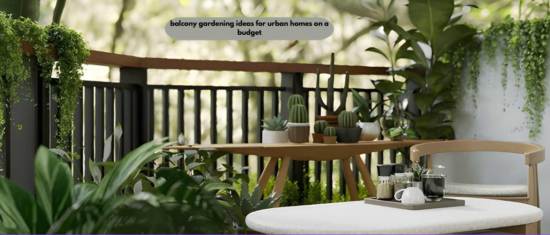
These ideas work whether you’re starting from a completely bare balcony or upgrading a few pots you already own.
- Hang a shoe organizer on the wall and plant lettuce or herbs in each pocket for an almost-free vertical garden.
- Build a stacked crate shelf from free wooden pallets to get three growing levels in the same footprint as one pot.
- Repaint old buckets in one or two colors so a mismatched collection instantly looks designed rather than accidental.
- Pick up a tiered plant stand from a secondhand shop to hold six to eight small pots without eating up floor space.
- Add trailing plants like sweet potato vine or nasturtium to hanging baskets to soften hard railings and hide plain plastic pots.
- Plant basil next to tomatoes as a companion pairing that cuts down on pests naturally, following low-cost KDArchitects Garden Design principles for natural pest control.
- Build a small vertical herb tower from a stacked PVC pipe or a repurposed shoe rack to keep your most-used cooking herbs within arm’s reach.
- Make self-watering containers from two nested buckets to reduce how often you need to water, which helps if you travel often.
- Use a folding table as an extra planting surface that folds away when you need the floor space back.
- Group pots of different heights together to create visual depth even in a two-foot-wide space.
- Attach a cheap trellis to the railing so peas, beans, or cucumbers can grow upward instead of sprawling.
- String solar-powered lights along the railing to extend how long you can enjoy the space in the evening without adding to your electric bill.
- Turn a sealed plastic tote into a small compost bin that converts kitchen scraps into free soil amendment.
- Plant pollinator-friendly flowers like marigolds near your vegetables to improve fruit set on things like peppers and tomatoes.
- Rotate a few pots seasonally, swapping cool-weather greens for warm-weather herbs, so the same containers stay productive year-round instead of sitting empty part of the year.
What Is Balcony Gardening and Why Does It Work for Urban Homes?
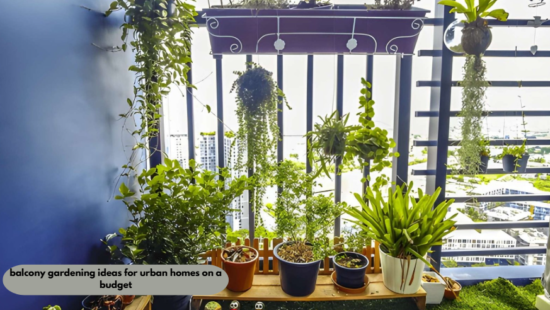
Balcony gardening works for urban homes because it turns unused vertical and railing space into a productive growing area without requiring yard access or major renovation.
What can you actually grow on a balcony garden?
Most herbs, leafy greens, compact vegetables, and flowering annuals thrive in balcony containers as long as they get enough light and consistent watering. Tomatoes bred for containers, peppers, lettuce, spinach, basil, mint, and strawberries all do well in pots holding at least six to twelve inches of soil, and container gardening can produce meaningful yields in just a few square feet, according to the USDA’s National Institute of Food and Agriculture.
How much space do you need to start a balcony garden?
A balcony as small as fifteen to twenty square feet is enough to start a productive garden if you use vertical and railing space wisely, since a narrow ledge fitting two or three window boxes plus a hanging basket already gives you room for a rotating mix of herbs and greens.
Which direction should your garden face for the best results?
South-facing balconies get the most direct sun, while north-facing balconies work better for shade-tolerant plants like ferns and leafy greens.
Understanding which direction should your garden face kdalandscapetion is crucial when planning your sun and shade layout. East-facing spots suit herbs and lettuces that scorch in harsh afternoon sun, while hotter west-facing balconies favor tomatoes and peppers.
How Do You Design a Balcony Garden Layout for a Small Space?
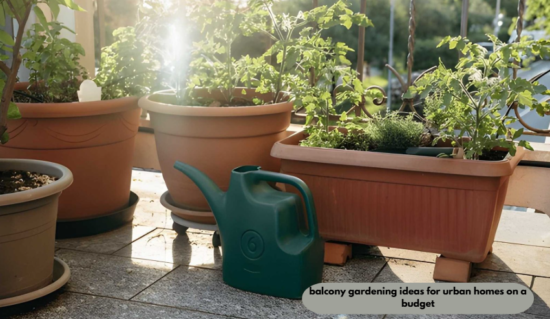
You design a small-space balcony layout by grouping plants with similar sun and water needs, building up instead of out with tiered shelves and railing planters, and leaving a clear walking path.
How do you design a garden layout that maximizes small square footage?
When learning how to design a garden layout kdagardenation many assume they need a formal blueprint. However, treating your balcony as three simple zones—tall against the wall, mid-level on shelving, and low trailing plants—works just as well.
What is vertical gardening and how does it save space?
Vertical gardening uses wall space, trellises, and stacked containers to grow plants upward instead of outward, which multiplies your usable growing area without adding floor footprint. Pocket planters and tiered stands can triple the plants you fit into the same footprint, and vertical systems can meaningfully increase yield per square foot compared to flat, single-layer setups, according to research from Cornell’s Small Farms Program.
How do you create a beautiful home garden in a small area?
If you’re wondering how to create a beautiful home garden in a small area without a big budget, focus less on expensive materials and more on consistency, mixing textures and heights while repeating two or three colors, like painting mismatched thrift-store pots one shade so the collection looks intentional.
Vertical Planters vs. Railing Planters vs. Hanging Baskets: Which Is Best for a Budget Balcony?
The best option depends on your balcony’s layout, but railing planters generally offer the most growing space per dollar for narrow balconies.
| Planter Type | Best For | Approx. Cost | Space Efficiency |
| Railing planters | Narrow balconies, herbs, trailing flowers | $10 to $25 each | High, uses unused rail space |
| Vertical wall pockets | Apartments with a blank wall, leafy greens | $15 to $40 for a set | Very high, stacks upward |
| Hanging baskets | Sunny overhead beams, strawberries, petunias | $8 to $20 each | Moderate, limited by hook points |
Which planter type gives you the most growing space for the least money?
Railing planters typically give you the best return because they attach directly to existing structures and require no additional shelving or hardware.
Do railing planters damage balcony railings?
Most railing planters are designed with padded clips or adjustable brackets that sit on top of the rail without drilling, so they don’t damage standard railings.
Renters especially benefit since most leases prohibit permanent alterations, so look for clip-style brackets over screw-mounted ones if you’re unsure what your lease allows.
What Are the Best Cheap Materials for DIY Balcony Planters?
Repurposed food-safe containers, five-gallon buckets, and fabric grow bags are your cheapest reliable planter options — all far less than ceramic or resin pots.
What household items can be repurposed as planters?
Large yogurt tubs, coffee cans, wooden crates, and cut plastic bottles all work as planters as long as you add drainage holes.
Fabric grow bags are worth a special mention since they’re cheap, foldable for storage, and improve root health through better airflow, making them one of the most practical Modern Small Garden Ideas On Budget for renters. For anything you don’t repurpose, hardware stores, dollar stores, and end-of-season clearance sales at garden centers offer the lowest prices on durable planters.
Why Is My Balcony Garden Dying? Common Problems and Fixes
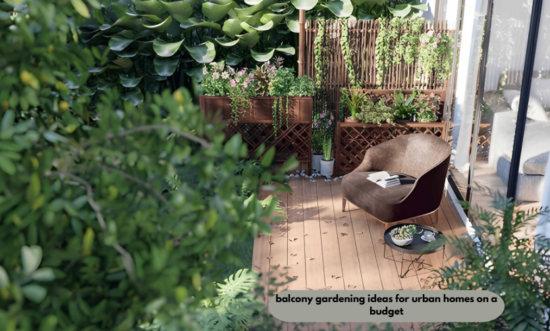
Most balcony garden failures come down to inconsistent watering, poor drainage, or insufficient light rather than the plants themselves.
Why are my balcony plants turning yellow?
Yellowing leaves are most often a sign of overwatering or nitrogen deficiency, both of which are common in containers that don’t drain well.
How do you fix poor drainage in container gardens?
You fix poor drainage by adding drainage holes to the container bottom and using a well-draining potting mix instead of dense garden soil.
Garden soil compacts in containers and suffocates roots, so bagged potting mix formulated for containers performs noticeably better.
Why won’t my balcony vegetables produce fruit?
Vegetables often fail to fruit due to insufficient pollination, since balconies have fewer natural pollinators than open gardens, and hand-pollinating with a small paintbrush usually solves it within a couple of weeks.
How Much Does It Cost to Start a Balcony Garden?
Starting a balcony garden usually costs between fifty and one hundred fifty dollars, with most beginners spending closer to eighty to one hundred dollars on containers, potting mix, and a mix of seeds and starter plants.
You can trim that further by starting from seed instead of buying nursery starts, reusing containers you already have, and asking neighbors for cuttings instead of buying new stock—for example, splitting the roots of a single supermarket basil plant into three pots and propagating cuttings in water can give you an entire season’s herb supply for under $4.
Frequently Asked Questions
Do balcony gardens need special soil?
Yes, a lightweight potting mix designed for containers works far better than regular garden soil because it drains properly and won’t compact.
How often should you water a balcony garden?
Most container plants need water every one to two days in warm weather, since pots dry out faster than ground soil.
Can you grow vegetables on a shaded balcony?
Yes, but stick to leafy greens like lettuce, spinach, and kale, since fruiting vegetables need at least six hours of direct sun.
Is balcony gardening allowed in rental apartments?
Most leases allow container gardening as long as nothing is permanently attached to the structure, though it’s worth checking your specific lease.
Final Thoughts
Good balcony gardening ideas for urban homes on a budget really come down to using vertical space wisely, choosing the right containers for your light conditions, and starting small enough that you’re not overwhelmed in the first month. None of the ideas here require a big upfront investment or special skills, just a willingness to experiment with what fits your specific balcony. If you’ve got an empty ledge or railing sitting unused right now, pick two or three ideas from this list, grab a couple of containers you already have around the house, and get something planted this weekend.