
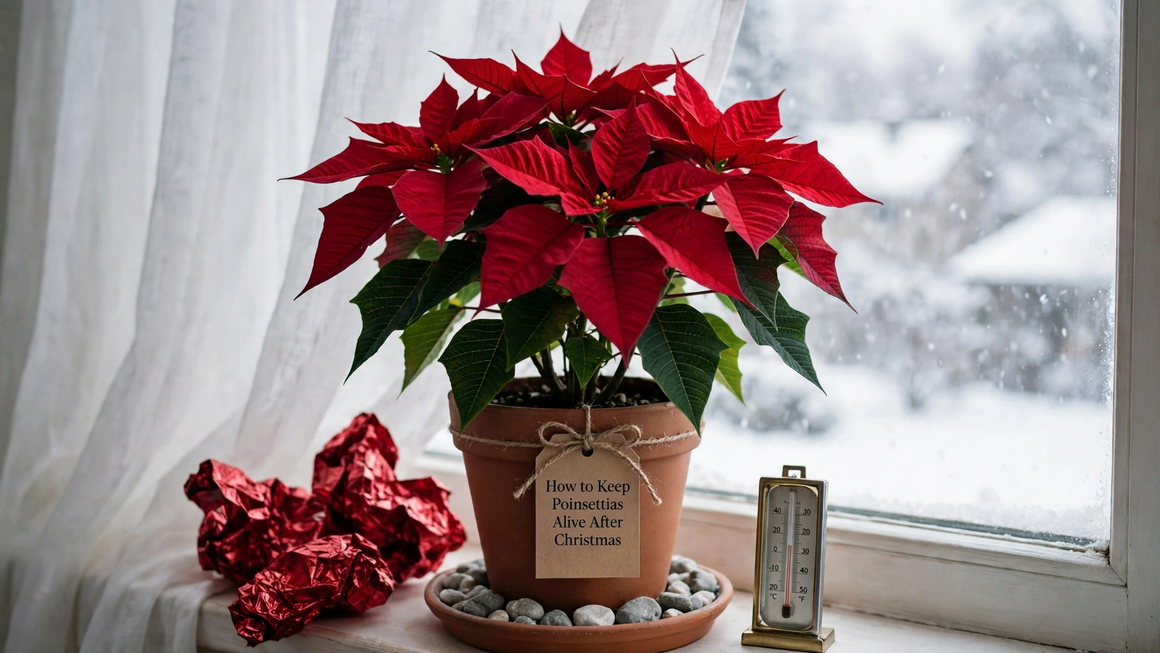
Knowing how to keep poinsettias alive after Christmas comes down to bright indirect light, steady room temperatures, and watering only when the top inch of soil feels dry. Cut the stems back in spring, feed monthly while it grows, and give it 14-hour nights from October to rebloom.
Key Takeaways
- Cold drafts, soggy soil, and ripening fruit placed nearby are three common triggers for sudden leaf drop on holiday poinsettias.
- A decorative foil sleeve traps drained water around the roots, so remove it or punch holes in its base before the first watering.
- Cutting each stem back to 4 to 6 inches in late March or early April produces a fuller, bushier plant by summer.
- Reblooming depends on long, completely dark nights for roughly eight to ten weeks, starting around October 1.
- A poinsettia can live for years as an ordinary houseplant, even if you skip the reblooming step entirely.
What Is Poinsettia Aftercare?
Poinsettia aftercare is the routine of light, water, pruning, and feeding that carries a holiday plant from its January slump through summer growth and, if you want, a second season of colored bracts.
Those red “petals” are actually bracts, a type of modified leaf. The true flowers are the tiny yellow knobs, called cyathia, clustered in the center, and when they drop, the bracts soon follow, which signals that the display season is winding down.
How to Keep Poinsettias Alive After Christmas: 10 Easy Care Tips
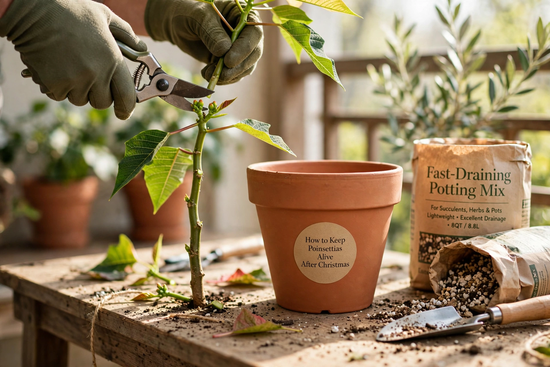
Keep the plant warm, bright, and slightly dry through winter, then switch it to a growth routine once the bracts fade. These ten steps carry it from January to next fall.
- Remove the foil sleeve. Decorative wrap holds drained water against the roots, and constantly wet roots start rotting within days. Punch holes in the base or set the pot on a pebble-lined saucer instead.
- Choose a bright window. An east- or south-facing sill works best, with a sheer curtain filtering harsh afternoon sun so the bracts hold their color longer.
- Guard against temperature swings. Washington State University Extension recommends holding the plant between 55 and 70°F. Leave a simple thermometer on the sill overnight, because a window that reads 68°F at noon can sink below 50°F before dawn during a Midwest January.
- Keep it clear of fruit bowls and vents. Ripening apples and bananas release ethylene gas, which makes poinsettia leaves curl and drop, and forced-air heat dries bracts fast.
- Water by touch, not by date. Water only when the top inch of soil feels dry, then soak the pot until water runs from the drainage holes and empty the saucer.
- Hold off on fertilizer while bracts are colored. Start a balanced, water-soluble houseplant feed at half strength once fresh green leaves appear.
- Let it rest in late winter. As the bracts fade to muddy green, let the soil dry a little deeper between drinks and keep the plant in a bright, slightly cooler room.
- Prune hard in spring. In late March or early April, trim every stem down to about 4 to 6 inches, cutting just over a node so fresh shoots push out below it. Wear gloves, since the milky sap irritates sensitive skin.
- Repot into fresh mix. Move up one pot size, about 2 inches wider, using a fast-draining potting mix and a container with real drainage holes.
- Pinch new shoots through summer. Snip the top inch off each shoot once it has four or five leaves. Every pinch splits one stem into two, so three rounds of pinching turn a single stem into as many as eight bract heads by December.
How Often Should You Water a Poinsettia After the Holidays?
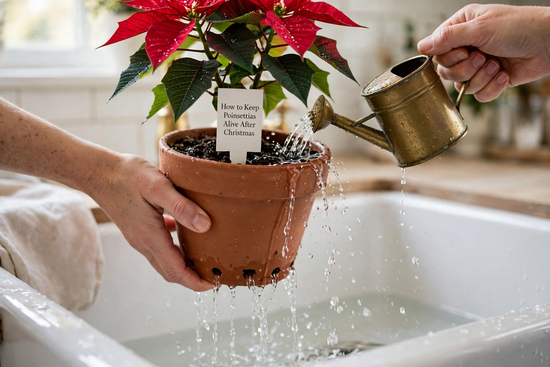
Water when the top inch of soil feels dry, which works out to every 5 to 10 days in most heated homes. Pot size, room humidity, and distance from a heat register shift that interval.
Poinsettias thrive on a simple watering schedule for healthy plant growth: check the soil every third day, and water only when it feels dry at your first knuckle.
When you do water, soak the pot at the sink with room-temperature water until it streams from the drainage holes. Let it drip for ten minutes, then return it to an empty saucer.
The smaller the pot, the sooner it dries—a 4-inch pot needs a finger-check every other day, while 6- and 8-inch pots hold moisture longer. Once the plant moves outdoors in summer, daily checks keep it from wilting on hot afternoons.
The Most Common Mistake: Watering Into the Foil
One of the most common ways poinsettias die in January is drowning inside their decorative sleeve. The foil hides the soil, the surface looks dry, and owners keep adding water that pools in the bottom inch or two, right where the roots sit.
The fix takes ten seconds. Lift the pot after every watering, and if anything sloshes, pour it out.
Why Is My Poinsettia Dying After Christmas?
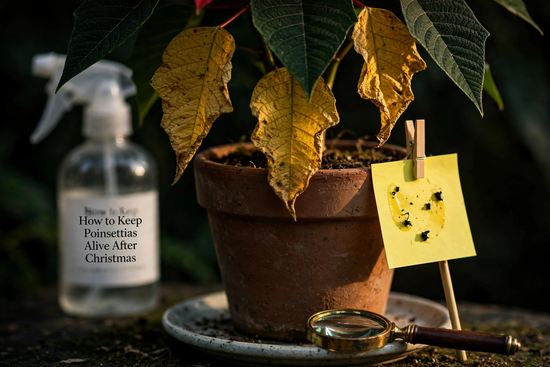
Most struggling poinsettias show one of five symptoms, and each points to a cause you can correct the same day. Match what you see to the list below.
- Yellow lower leaves in wet soil: overwatering or early root rot. Let the soil dry, empty the sleeve, and if wilting continues, unpot the plant and trim brown, mushy roots before repotting in dry mix.
- Green leaves falling suddenly: a cold draft or an abrupt move. Relocate the pot away from exterior doors and keep the room temperature steady.
- Wilting in a dry, lightweight pot: thirst. Soak it thoroughly at the sink; most plants perk up within a few hours.
- Brown, crispy bract edges: dry furnace air or harsh direct sun. Shift it out of the hottest light and away from registers.
- Sticky leaves, tiny white flies, or cottony clumps: whiteflies or mealybugs. Wipe off visible pests and isolate the plant right away.
Poinsettias attract whiteflies more than most houseplants, so knowing how to pest-proof your plants matters here. Check under the leaves weekly, keep a yellow sticky card beside the pot, and quarantine any new plant for two weeks. For an active whitefly problem, spray insecticidal soap on the leaf undersides every 5 to 7 days for three rounds.
How Do You Get a Poinsettia to Turn Red Again?
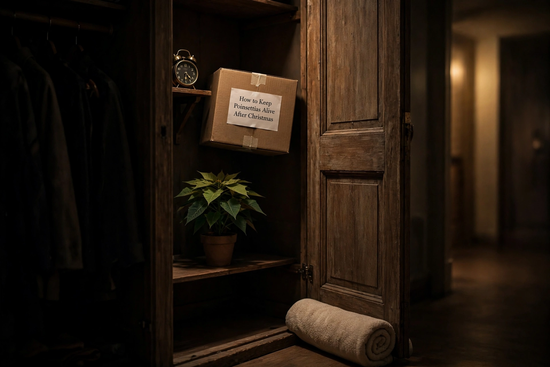
Give it long, unbroken nights every day from early October until the bracts show color. Poinsettias are short-day plants, so night length, not fertilizer, flips the switch from green leaves to colored bracts.
Colorado State University Extension sets the requirement at 14 or more unbroken hours of darkness per night, beginning around October 1, with temperatures of 60 to 70°F. Mark October 1 on your calendar now and pick the closet or box you’ll use before the date arrives.
The Darkness Math
A 14-hour night means lights out at 5:30 p.m. and back into the window at 7:30 a.m. Run that every night from October 1 through December 2, and you log 63 nights, or 882 hours of total darkness.
That schedule leaves 10 hours of daylight, so the plant needs your sunniest window every morning. Two recurring phone alarms keep the routine on track, and once the top bracts show solid color, you can stop the treatment and enjoy the display.
Apartment Gardening makes this step easier than you might expect, because a coat closet, a wardrobe, or a lightproof cardboard box creates total darkness in seconds, with no porch lights or streetlamps to fight. Seal any gap under the closet door with a rolled towel, because even a few minutes of lamplight can delay color.
What Does a Year-Round Poinsettia Care Calendar Look Like?
The year splits into four phases: holiday display, spring cutback, summer growth, and fall darkness treatment. The table below lists the key step for each month, with one figure to remember and the university source behind it.
U.S. floriculture crop sales reached about $8.4 billion in 2025, according to the USDA National Agricultural Statistics Service’s 2025 Floriculture Crops report. Keeping this year’s poinsettia means you won’t need to buy a new one next December, and it gives you free cuttings every summer.
| Months | What to do | Key figure | Source |
| January to March | Feed once bracts fade and new green leaves appear | Balanced houseplant fertilizer once a month | Colorado State University Extension |
| April to August | Prune, repot, pinch shoots, and move outdoors after the last frost | No pinching or pruning after September 1 | Mississippi State University Extension Service |
| September | Bring the plant indoors before frost | Minimum night temperature of 60°F | Mississippi State University Extension Service |
| October to November | Run the 14-hour darkness routine | 6 to 8 hours of bright sunlight each day | Mississippi State University Extension Service |
| October to November | Keep feeding during the darkness routine | Fertilize every 14 days | Mississippi State University Extension Service |
| Late November to December | Return to normal display care once the color shows | Bracts begin coloring by late November, depending on cultivar | Mississippi State University Extension Service |
When you design a garden layout for your patio or balcony each spring, save a spot with morning sun and afternoon shade for the poinsettia. It rewards that placement with thick, glossy summer growth. Wait to move it outside until nights stay above 50°F.
When Does This Advice Not Apply?
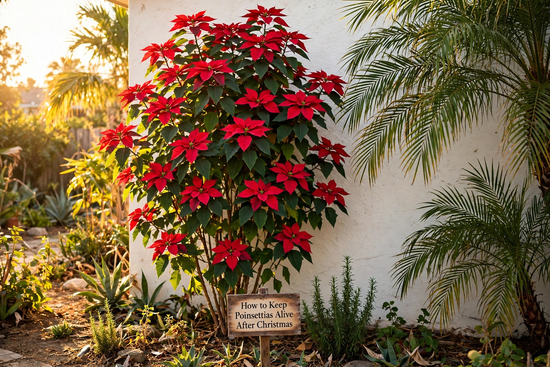
In USDA hardiness zones 9 through 11, including South Florida, the Gulf Coast, south Texas, coastal Southern California, and Hawaii, poinsettias grow outdoors year-round. NC State Extension notes the species can reach 10 feet tall in its native habitat, with a spread of several feet, so leave it well clear of walls and walkways. In zone 9, cover it on rare frosty nights.
Garden Layout Planning in these warm regions lets you use that height as an asset: a striking winter hedge or a bold backdrop at the back of a sunny bed. Skip the closet routine, but keep the shrub away from porch lights, security lights, and streetlamps, since steady night light stops it from coloring.
Frequently Asked Questions
Can a poinsettia live for years?
Yes, a poinsettia can live for many years indoors with steady light, warmth, and careful watering. It grows woodier over time, so annual spring pruning keeps it compact enough for a windowsill.
Why is my poinsettia losing leaves after the holidays?
Leaf loss after the holidays usually traces back to chilly air, waterlogged roots, or a sudden change in light. Fix the most likely cause first, and new leaves typically appear within a few weeks.
Should I cut back my poinsettia after Christmas?
Wait until late March or early April before cutting it back. Pruning too early removes stored energy the plant needs to push strong new shoots once days lengthen.
Are poinsettias poisonous to cats and dogs?
Poinsettias are only mildly toxic to pets and usually cause drooling or an upset stomach rather than serious poisoning. Keep the pot out of reach anyway, and call your veterinarian if symptoms persist.
Can you keep a poinsettia in an apartment year-round?
Yes, a bright window and a dark closet are all an indoor poinsettia truly needs. A balcony works well for summer growth, as long as nights stay above 50°F before you set it outside.
Conclusion
Learning how to keep poinsettias alive after Christmas is mostly about restraint: less water, no fertilizer while it blooms, and patience until spring pruning. Get those three right, add 14-hour nights in October, and the same plant will color up again next December.

One thought on “How to Keep Poinsettias Alive After Christmas: 10 Easy Care Tips ”