Knowing how to grow amaryllis bulbs indoors comes down to restraint: pot the bulb with its top third exposed, water once, and place it in a bright window. Wait for green growth before watering again, keep the room near 68–75°F, and expect blooms in roughly 3–10 weeks.
Key Takeaways
- An amaryllis bulb usually arrives with its flower bud already formed inside, so a beginner’s main job is to avoid rotting it.
- A heavy pot only 1–2 inches wider than the bulb, with a drainage hole, keeps the roots out of standing moisture and the stalk upright.
- Heavy watering before roots and shoots appear is the most common reason new bulbs turn soft and fail.
- The bulb’s country of origin sets its bloom clock, so South African bulbs suit a late-November start while Dutch bulbs need a late-October start for Christmas.
- A bulb needs a full summer of leafy growth plus a cool, dry rest before it will flower a second time.
What Is an Amaryllis Bulb?
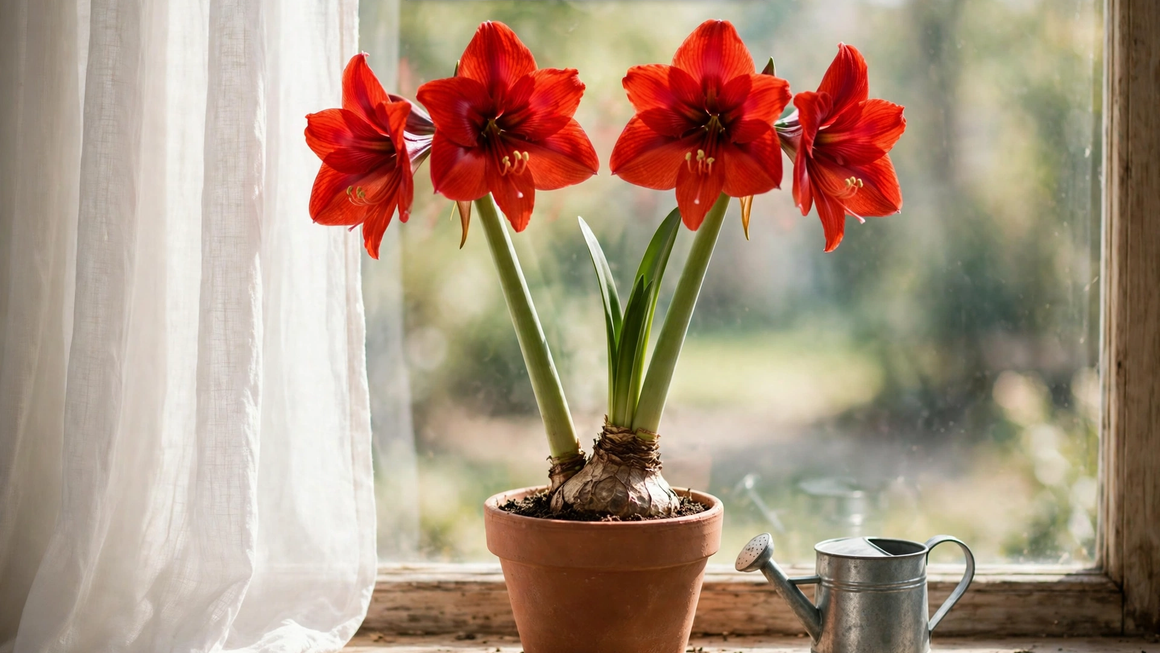
An amaryllis bulb is the swollen underground storage organ of Hippeastrum, a tropical South American plant. It packs enough food to push up a tall flower stalk indoors with almost no outside help.
How to Grow Amaryllis Bulbs Indoors, Step by Step
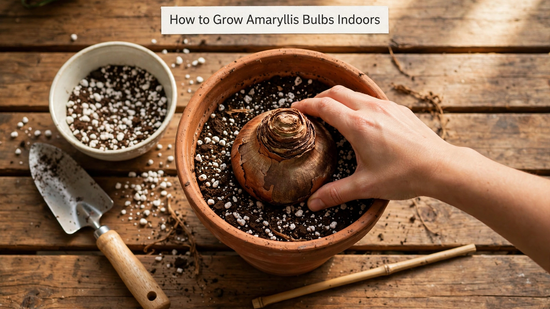
Pot the bulb snugly, water it once, and give it the brightest window you have. The whole job takes about 15 minutes on planting day.
Choosing the right bulb
Bulb size predicts flower count: the biggest, heaviest bulbs produce two or more stalks, while small, bargain bulbs often manage one. Garden centers sell several forms, including classic large-flowered singles, ruffled doubles, miniatures for small spaces, and spidery Cybister types with narrow petals.
For a first attempt, choose a single-flowered red or white cultivar, because those are the easiest to find and among the most forgiving. If you can’t plant right away, keep the bare bulb in a paper bag somewhere cool and dry, never in a sealed plastic bag where condensation breeds mold.
Planting and early care
- Inspect the bulb. Squeeze it gently. A healthy bulb feels as firm as a fresh onion. Reject any with mold, sunken soft patches, or a shriveled base plate.
- Choose a heavy pot. Pick a clay or ceramic container 1–2 inches wider than the bulb, with a drainage hole. Three bulbs fit comfortably in a 10- to 12-inch pot spaced about an inch apart.
- Mix the soil. Blend two parts houseplant potting mix with one part perlite. Skip garden soil, which packs down and stays soggy indoors.
- Set the depth. Nest the bulb so its top third, the “shoulders,” sits above the surface. Firm the mix around it so it doesn’t wobble.
- Water once. Soak the mix until water runs from the hole, then let it drain completely. Hold off on watering again.
- Pick the spot. A south- or west-facing window at 68–75°F wakes the bulb fastest. Skip fertilizer for now; the bulb already holds what it needs to bloom.
- Rotate and stake. Give the pot a quarter turn every two or three days, since the stalk leans hard toward light. Slide a thin bamboo stake beside it once it passes a foot tall.
- Cool it during bloom. When the first bud splits open, move the pot to a cooler room.
Moving it to a cool room matters more than most beginners expect. The University of Wisconsin–Madison Extension recommends a 60–65°F location shielded from direct sun to extend the bloom period. In most American homes, a north-facing bedroom or a drafty entryway sits in that range in December, so park the pot there rather than on a sunny 75°F sill.
How Long Does an Amaryllis Take to Bloom Indoors?
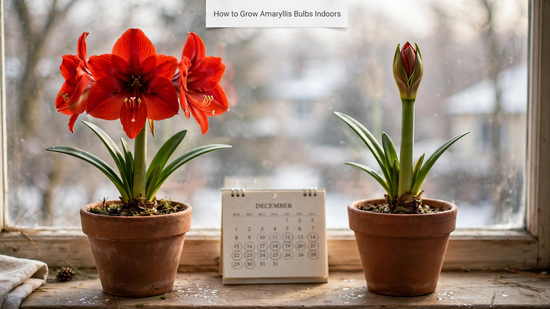
Most potted amaryllis bulbs flower within 3 to 10 weeks, and the bulb’s country of origin explains most of that spread. Room temperature fine-tunes the rest: warmth speeds the stalk, and cool air slows it.
| Measure | Typical figure | Source |
| Bloom time, South African–grown bulbs | 3–5 weeks after potting | Iowa State University Extension and Outreach |
| Bloom time, Dutch-grown bulbs | 6–8 weeks after potting | Iowa State University Extension and Outreach |
| Flower width | Up to 8–10 inches | Iowa State University Extension and Outreach |
| Flower stalk height | 18–30 inches | Iowa State University Extension and Outreach |
| Flowers per stalk | 2–6 | National Gardening Association |
| Life of the open flowers | Nearly 2 weeks | Fedco Seeds |
Worked example: will it bloom by Christmas?
Count backward from your target date, using the origin printed on the label or seller’s listing. For a December 25 display, a Dutch bulb needed potting between October 30 and November 13. A South African bulb has a window from November 20 to December 4.
Pot either type today, November 18, and the math shifts. A South African bulb opens between December 9 and December 23, right on time. A Dutch bulb lands between December 30 and January 13, which makes it a New Year’s flower instead.
Some bulbs run slow. South Dakota State University Extension notes that certain cultivars need up to 10 weeks before the first flower opens. If week eight passes with a fat bud stalk but no color, keep the pot warm and bright and leave it alone.
How amaryllis timing differs from other holiday plants
Amaryllis runs on a stopwatch, not on day length. People who already know how to get a Christmas cactus to bloom often expect the same long-night tricks to work here, but an amaryllis ignores night length entirely; only the potting date and room temperature set its schedule.
Making the flowers last
Snip the yellow pollen-bearing anthers from each flower as it opens. This keeps pollen from staining tablecloths and stops seed formation, which shortens flower life. Pinch off each faded bloom too, but leave the green stalk standing until it yellows, because it feeds the bulb.
What Is a Simple Watering Schedule for Amaryllis?
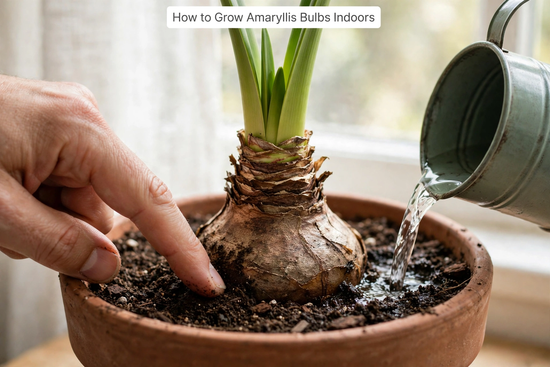
Water once at planting, then skip watering until about 2 inches of green growth shows. After that, water whenever the top inch of mix feels dry, which works out to roughly once a week in a heated home.
This simple watering schedule for healthy plant growth suits most bulbs: the soil decides, not the calendar. Push a finger into the mix to the first knuckle before every watering, and pour at the pot’s edge so water never pools in the bulb’s neck.
The mistake that rots most first-year bulbs
New growers water a freshly potted bulb every few days, the way they treat a leafy pothos. The bulb has no working roots yet, so the mix stays wet, oxygen disappears, and fungi soften the base plate within weeks.
The fix is one deep soak, then patience. If the bottom already feels mushy, unpot the bulb, slice away the soft tissue with a clean knife, let the cut callus for a day, and repot in a fresh, barely damp mix.
Why Are My Amaryllis Leaves Turning Yellow?
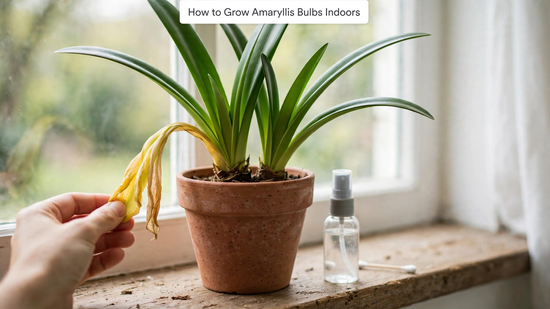
Yellow amaryllis leaves usually signal soggy soil, weak light, hunger, pests, or the plant’s normal slide toward dormancy. The month and the bulb’s firmness tell you which.
If you’re asking yourself, “Why are my plant leaves turning yellow?” Check the calendar before the soil:
- Winter or spring, with a soft bulb: Overwatering. Let the mix dry out and water less often.
- Pale, floppy, yellow-green leaves: Too little light. Move the pot to your sunniest window or under a grow light for 12–14 hours a day.
- Older leaves fading mid-summer: Hunger. Feed with a balanced liquid houseplant fertilizer, such as 10-10-10, once a month.
- Gradual yellowing in August or September: Natural dormancy. Stop watering and let the foliage wither.
When pests or disease cause the color change
Red or reddish-brown streaks on leaves, stalks, and the bulb’s outer scales point to red blotch, a common fungal disease. Remove spotted leaves, peel off damaged outer scales, and keep water off the foliage.
Cottony white clumps tucked where leaves meet the bulb mean mealybugs. Dab each colony with a cotton swab dipped in rubbing alcohol, then recheck weekly for a month.
How Do You Get an Amaryllis to Bloom Again Next Year?
Treat the leaves as the bulb’s food factory after flowering, then give the bulb a cool, dry rest. Skip either half, and next winter brings leaves with no stalk.
Once the flowers fade, cut the stalk 1–2 inches above the bulb but keep every leaf. Grow the plant in full sun through spring and summer, watering and feeding monthly. Once nights stay above 50°F, the pot can spend summer outdoors; if you design a garden layout for your patio, give the amaryllis morning sun and afternoon shade so the broad leaves don’t scorch.
The rest period is not optional.The Pennsylvania Horticultural Society’s guide sets the dormant rest at a minimum of 8 to 12 weeks, kept cool, dark, and dry. Start the rest in mid-August and the bulb comes back out between mid-October and early November, putting a Dutch-grown bulb in flower for most of December.
When the rest ends, scrape off the top inch of old mix and replace it with fresh mix before the first watering. Every two or three years, repot the bulb completely, trimming dead roots and keeping the healthy white ones.
Exception: When the Usual Advice Doesn’t Apply
Waxed amaryllis bulbs break almost every rule above. Growers seal these bulbs in colored wax with enough stored moisture for one bloom cycle, so they need no water, no soil, and only a bright spot; watering them invites rot under the coating. Most have had their roots trimmed and are not meant to rebloom, so treat them as single-season decorations. Bulbs forced in a vase of pebbles follow a middle path: keep the water line just below the base so only the roots touch it, and expect a weakened bulb afterward.
FAQ
Should you soak amaryllis bulbs before planting?
Soaking is optional, but it helps bulbs with dry, wiry roots. Set only the roots and base plate in lukewarm water for 2–4 hours, keeping the bulb itself dry, then pot it right away.
Should I cut off amaryllis leaves after the flowers fade?
No, keep the leaves until they yellow on their own in late summer. They make the sugars the bulb stores for next year’s stalk, and early cutting starves that bloom.
Why does my amaryllis have leaves but no flowers?
A leafy amaryllis with no stalk usually missed a full cool rest or enough summer sun the year before. A shrunken bulb also skips flowering until it rebuilds reserves. Give it a strong growing season and complete dormancy, then try again.
Is amaryllis safe to keep around cats and dogs?
No, every part of the plant is toxic to cats and dogs, and the bulb is the most dangerous part. The ASPCA lists vomiting, drooling, and diarrhea as common signs, with tremors and heart rhythm problems after large amounts. Keep pots on a high shelf, and call your veterinarian immediately if a pet chews the bulb.
Can an amaryllis bloom more than once in a season?
Yes, large healthy bulbs often send up a second or third stalk a few weeks after the first. Keep the plant in bright light and keep watering after the first stalk finishes. Cut each spent stalk promptly so the bulb channels energy into the next one.
What size pot does an amaryllis bulb need?
Use a pot only 1–2 inches wider than the bulb’s diameter, with a drainage hole. Amaryllis flowers best slightly root-bound, and extra soil just holds water that rots the base.
Conclusion
Learning how to grow amaryllis bulbs indoors rewards patience more than effort: one soak, a bright window, and a cool room once the buds open. Match the bulb’s origin to your target date and the flowers arrive on schedule. Keep the leaves growing all summer, give the bulb its cool rest, and one holiday purchase becomes a plant that blooms for years.