
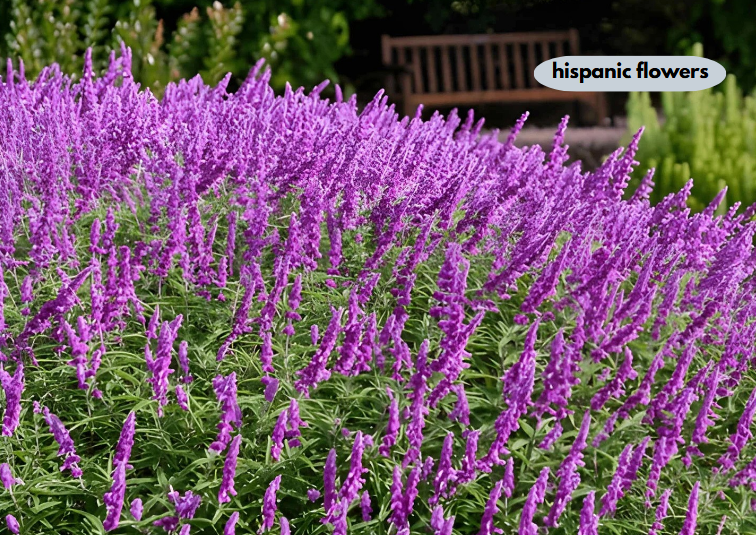
Hispanic flowers like dahlias, marigolds, zinnias, bougainvillea, and Mexican bush sage fill a backyard with bold color, bloom for ages, and handle serious heat. Plant them in full sun, group them in warm-and-cool color blocks, and pair them with terracotta, tile, and gravel for an authentic Latin-inspired look.
Key Takeaways
- Dahlias, zinnias, and cempasúchil marigolds all descend from wild plants native to Mexico and Central America.
- Most Latin-inspired flowers need at least six hours of direct sun a day to bloom heavily.
- Dahlias and Mexican bush sage survive winter in the ground only in warmer USDA zones, so northern gardeners lift, pot, or replant them each year.
- A 12-by-6-foot bed holds about 36 plants when you layer tall, medium, and short flowers in three 2-foot bands.
- Bougainvillea belongs in a movable container anywhere winters bring long stretches of freezing weather.
What Are Hispanic Flowers?
Hispanic flowers are blooming plants that are native to, or culturally rooted in, Mexico, Central America, the Caribbean, and South America, and that appear in home gardens, festivals, and family altars.
The group includes true natives like dahlias and cempasúchil marigolds, plus adopted plants such as bougainvillea that became fixtures of courtyards from Oaxaca to San Antonio. Traditional garden designs from these regions center on enclosed patios, potted plants, fountains, and walls painted in strong colors.
Pew Research Center’s 2025 analysis put the U.S. Latino population at 68 million in 2024. For a gardener, that large community translates into seasonal demand you can plan around: ask local nurseries for cempasúchil starts by late summer, because supplies sell quickly before Día de los Muertos on November 1 and 2.
Which Hispanic Flowers Grow Best in U.S. Backyards?
Dahlias, marigolds, zinnias, Mexican bush sage, and bougainvillea are the most reliable picks for American yards. All five handle summer heat, but they differ sharply in how much winter cold they survive.
| Flower | Native range | Color role in the bed | Winter survival outdoors | Source |
| Dahlia (Dahlia pinnata) | Mexico and Central America | Focal blooms in red, orange, pink | Hardy in zones 8–10 | Oregon State University Extension Service |
| Mexican bush sage (Salvia leucantha) | Mexico | Purple backdrop | Hardy in zones 7–11 | University of Florida IFAS Extension |
| Bougainvillea (Bougainvillea spectabilis) | South America | Magenta or orange on walls and arbors | Zones 9a–11b; tolerates 28°F | Southern Nevada Water Authority |
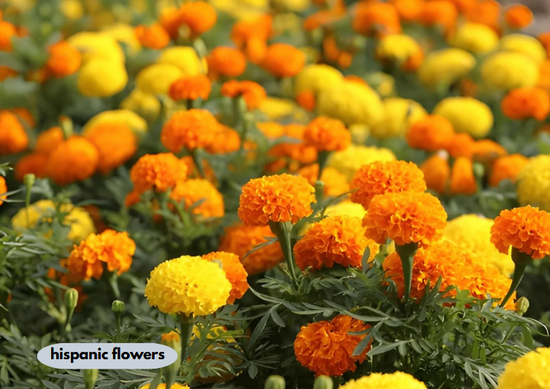
| Cempasúchil marigold (Tagetes erecta) | Mexico | Orange and gold edging | Grown as an annual | Not applicable |
| Zinnia (Zinnia elegans) | Mexico | Mixed bright filler | Grown as an annual | Not applicable |
These five plants form a basic palette that works in almost every region, because the two annuals fill gaps wherever the perennials cannot survive winter. Most yard designs in this style use the sage and bougainvillea for structure and the annuals for changing seasonal color.
Dahlias: The Centerpiece
Use dahlias (Dahlia pinnata) as the focal point because no other Latin flower offers as many bloom shapes and colors. According to UNAM’s Revista Digital Universitaria, Mexico made the dahlia its national flower by presidential decree in 1963.
To echo that heritage, place one deep red or orange dahlia variety near your patio or front walk, where visitors see it first. Plant tubers after the soil warms in spring, and stake each one at planting time so you never drive a stake through a tuber later.
Marigolds and Zinnias: Fast, Low-Cost Color
Sow marigolds (Tagetes erecta) and zinnias (Zinnia elegans) straight into warm soil after your last frost date. Both bloom the same summer from seed and keep flowering when you cut or deadhead them.
For Día de los Muertos altars, sow tall cempasúchil types in early July. That timing puts peak orange blooms in late October in most of the country.
Mexican Bush Sage and Bougainvillea: Structure and Height
Mexican bush sage forms a soft purple shrub that blooms from late summer until frost and draws hummingbirds and butterflies. Bougainvillea climbs walls and arbors, and its bright color comes from papery bracts surrounding tiny white flowers, so it stays colorful for weeks at a time.
How Do You Plan a Latin-Inspired Flower Bed?
Plan the bed in three height bands, tallest at the back and shortest at the front, then repeat two or three bold colors along its full length. Repetition makes bright colors look planned instead of random.
- Find the sun. Choose a spot with six or more hours of direct light, usually on the south or west side of the house.
- Measure and sketch. Do your garden layout planning on graph paper at one square per foot so you know how many plants fit before you shop.
- Pick a color pair. Match one hot color, like orange or red, with one cool contrast, like purple or magenta.
- Set the hardscape first. Add terracotta pots, Talavera-style tile accents, a wall painted cobalt or saffron, and a gravel path before planting.
- Improve the soil. Work 2 to 3 inches of compost into the top 8 inches so water drains quickly.
- Plant, mulch, and water. Fill the back, middle, and front bands in order, spread 2 inches of mulch, and water deeply once or twice a week.
Worked Example: Planting a 12-by-6-Foot Bed
A 12-by-6-foot bed covers 72 square feet and holds about 36 plants when you split it into three 2-foot-deep bands. When you design a garden layout this way, the plant count comes straight from the spacing:
- Back band: Mexican bush sage at 3-foot spacing. 12 feet ÷ 3 = 4 plants.
- Middle band: Dahlias at 18-inch spacing. 144 inches ÷ 18 = 8 plants.
- Front band: Marigolds and zinnias at 12-inch spacing in two rows. 12 plants × 2 rows = 24 plants.
Mulch at 2 inches deep works out to 72 × (2 ÷ 12) = 12 cubic feet, or six standard 2-cubic-foot bags. If you choose orange dahlias and 12 orange marigolds, 20 of the 36 plants carry the hot color, about 56%, while the purple sage and mixed zinnias supply the contrast.
How Do You Grow Tropical Latin Flowers Where Winters Freeze?
Grow frost-tender plants in containers or lift them each fall, then move them indoors before the first hard freeze.
For gardeners in Zones 7 and 8, Clemson Cooperative Extension’s Home & Garden Information Center recommends keeping bougainvillea in containers or growing it indoors. Those zones are colder than the in-ground range shown in the table above, so the two numbers don’t clash.
- Bougainvillea: Plant in a 14- to 16-inch pot on a rolling caddy and roll it into a garage or sunroom before frost.
- Dahlias: After frost blackens the leaves, dig the tubers, rinse them, and store them in peat moss or newspaper in a cool, frost-free spot.
- Marigolds and zinnias: Let them die back and resow next spring.
The full-sun rule does not hold in the low deserts of Arizona, Nevada, and inland Southern California, where afternoons pass 100°F and dahlias and zinnias scorch. There, let the garden face east for morning sun and afternoon shade. Pretty much any desert landscaping guide gives the hot, west-facing spots to bougainvillea and Mexican bush sage.
What Mistakes Ruin a Latin-Inspired Yard?
The most common mistake is buying one flat of every bright color, which turns the bed into visual noise.
- Too many colors: Nursery tables group plants by type, not palette. Pick your color pair before you shop and repeat it at least three times across the bed.
- Wet clay soil: Bougainvillea roots and dahlia tubers rot in soggy winter soil. Raise the bed 6 to 8 inches or mix in coarse compost.
- No hardscape: Without tile, clay pots, or warm-toned walls, the bed looks like an ordinary cottage border. Many ideas for landscaping in this style start with one painted wall.
Frequently Asked Questions
What flowers are popular in Mexican gardens?
Dahlias, cempasúchil marigolds, zinnias, bougainvillea, and Mexican bush sage are the most popular choices. Gardeners also use cosmos, lantana, and hibiscus to add height and tropical texture.
What is the Mexican flower for the Day of the Dead?
The cempasúchil, a tall orange or gold marigold, is the traditional Day of the Dead flower. Families place its petals on altars and paths to guide the spirits of loved ones home.
Can Hispanic flowers grow in cold climates?
Yes, most of them grow in cold climates when you treat them as annuals or move them indoors for winter. Lift dahlia tubers and pot bougainvillea in fall. Resow marigolds and zinnias every spring.
What colors are used in Latin-inspired gardens?
Latin-inspired gardens rely on hot orange, red, magenta, and yellow balanced by cobalt blue and purple. Terracotta pots and warm-painted walls tie these colors together.
How much sun do Latin American flowers need?
Most need at least six hours of direct sun each day. In desert climates above 100°F, give dahlias and zinnias afternoon shade to prevent scorched leaves.
Conclusion
Hispanic flowers turn an ordinary backyard into a living celebration of color, heritage, and heat-tough planting. Start with one bold color pair, layer your plants by height, and add tile or terracotta to finish the look. With smart winter care, your Latin-inspired garden returns brighter every year.

One thought on “Hispanic Flowers Garden Ideas: Plant a Colorful Latin-Inspired Backyard”