Cypress trees grow fastest when planted in full sun, spaced for their mature width, and watered deeply every week through their first two summers. Most decline comes from drought stress, crowding, and heavy pruning, so steady moisture and good airflow do more for growth than fertilizer ever will.
Key Takeaways
- Leyland cypress, bald cypress, Arizona cypress, and Italian cypress need different amounts of water and space, so pick the type before you dig.
- Newly planted cypress trees need about 1 inch of water per week, given in one or two deep soakings, through their first two summers.
- Crowding trees for an instant privacy screen is the most common planting mistake, and it raises the risk of canker disease later.
- Cypress trees need little fertilizer, and one light feeding in early spring is enough for most yards.
- Shearing into bare, brown interior wood leaves permanent holes, because most cypress branches do not resprout from old stems.
What Are Cypress Trees?
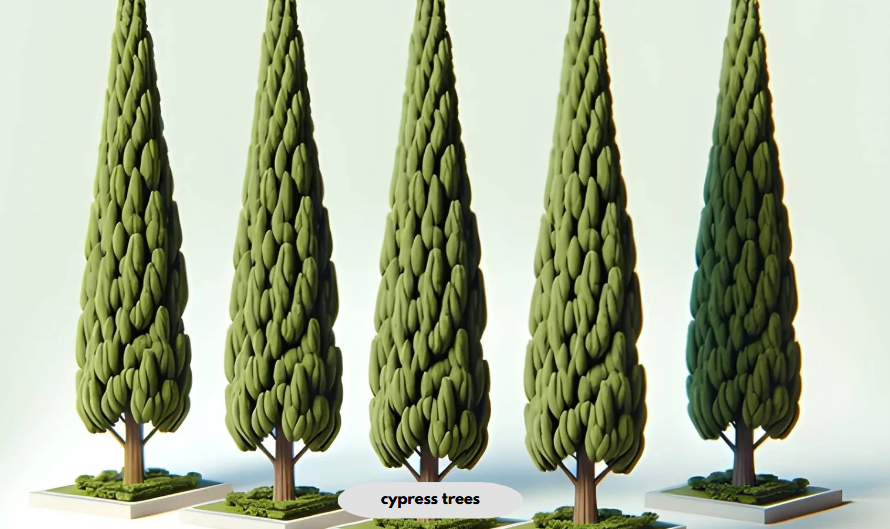
Cypress trees are cone-bearing conifers in the cypress family, grown in American yards for fast evergreen screens, windbreaks, and shade on wet ground.
The name covers true cypresses such as Arizona and Italian cypress, the hybrid Leyland cypress, and the deciduous bald cypress, which drops its needles each fall. The KDAGardenation Guide approach is simple: fix water, spacing, and pruning first, because those three choices decide growth speed far more than fertilizer does.
How Fast Do Cypress Trees Grow?
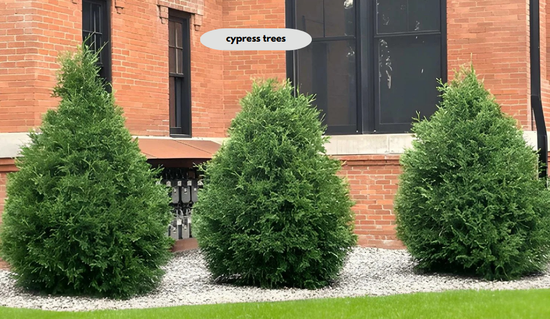
Leyland cypress is the fastest common type, while bald cypress grows at a moderate pace but lives for centuries. Expect little top growth in the first year, because new Cypress Trees spend that season building roots.
The University of Florida IFAS Extension fact sheet on Leyland cypress, revised in 2024, reports that young trees gain 3 to 4 feet a year, even where soil is poor.
Here is what that means for a typical 3-foot nursery tree planted in spring. If year one goes mostly to roots, the tree adds 3 to 4 feet in each of the next two seasons and stands roughly 9 to 11 feet tall by the end of year three, well above a 6-foot fence.
Planning around this timeline helps you buy the right size. A 6-foot tree saves about one season, but its larger root ball dries out faster, so it needs closer watering to hold that lead.
Which Cypress Trees Are Best for Your Yard?
Choose Leyland cypress for a fast evergreen screen, bald cypress for wet or low ground, Arizona cypress for hot, dry Western yards, and Italian cypress for narrow formal spaces. Each one struggles when planted outside its preferred conditions.
| Cypress type | Mature height | Typical growth rate | Cold hardiness | Best use | Source |
| Leyland cypress | 35–50 ft | 2–3 ft per year on typical southern sites | USDA Zone 6 | Fast privacy screen | UF/IFAS Extension (height); NC State Extension (growth, hardiness) |
| Bald cypress | 60–80 ft | 1–2 ft per year | USDA Zones 5–11 | Wet spots, pond edges, street shade | UF/IFAS Extension (height); Clemson Cooperative Extension (growth, zones) |
The Leyland growth rate in the table is lower than the young-tree pace above because it averages established trees on ordinary sites. Plan your screen around the faster number for the first few years, then expect growth to slow as the tree matures.
In Garden Design, a cypress should be sized by its mature width, not by the pot it came in. Measure the full spread listed on the nursery tag from the center of each trunk before you choose a spot.
How Do You Plant Cypress Trees for Fast Growth?
Plant in full sun, in a hole two to three times wider than the root ball but no deeper, and space trees for their mature width. Fall planting works best in the South, and spring planting works best where winters drop below zero.
Anyone learning how to design a garden layout should sketch the property line, mark utilities and the house foundation, and place each tree’s center point on paper before buying a single plant.
- Test drainage by filling the planting hole with water; if it still holds water after 12 hours, plant on a raised mound or choose bald cypress.
- Dig the hole two to three times the width of the root ball and set the top of the root ball about an inch above grade.
- Loosen circling roots by hand, or make three shallow vertical cuts down the sides of the root ball.
- Backfill with the native soil, not bagged compost, so roots do not stay trapped in a soft pocket.
- Water slowly until the backfill is soaked, then spread 2 to 3 inches of mulch in a wide ring that stops a few inches from the trunk.
Spacing is where most screens fail. UGA Cooperative Extension’s Towns/Union Extension Blog advises keeping Leyland cypress trees at least 15 feet apart to reduce disease.
On a 90-foot property line, that means 7 trees. Planting on 6-foot centers takes 16 trees, more than doubles the cost, and crowds branches until they brown from the inside.
For a fuller screen, use a staggered double row: 15 feet apart within each row, the second row offset by 7.5 feet, and rows 13 feet apart.
How Much Water and Fertilizer Do Cypress Trees Need?
Give young Cypress Trees about 1 inch of water per week for the first two summers, and feed them lightly once in early spring. After that, water during any dry spell longer than two weeks.
Water is also your main disease control. A November 2025 University of Arizona Cooperative Extension publication links drought stress to Seiridium canker in Leyland cypress and notes that no chemical treatment controls it.
So prevention has to come from the hose. Run a soaker hose along the drip line, not against the trunk, and check the soil 4 inches down first: water if it’s dry, and wait three days if it’s damp.
Every reliable garden guide gives the same fertilizer rule: use a slow-release, balanced product at half the label rate in early spring. Skip it entirely if the tree grew more than 2 feet last year, because heavy nitrogen produces soft shoots that brown first in summer drought.
Why Are My Cypress Trees Turning Brown?
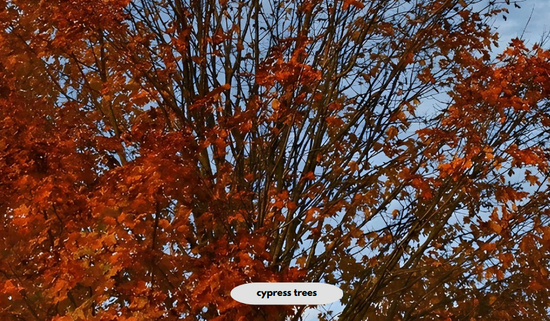
Brown patches usually come from drought stress, canker disease, crowding, or pruning into old wood. The pattern of the browning points to the cause.
Some fall browning is normal, since older interior needles shed each autumn while the outer foliage stays green. Browning anywhere else deserves a closer look.
Common Mistakes and Their Fixes
Most browning traces back to a handful of care habits, and each has a direct fix.
- Shearing past green growth: Trim only the outer, leafy few inches in late winter, before new growth starts.
- Scattered dead branches with oozing resin: Cut each one several inches below the canker in dry weather, and wipe pruners with rubbing alcohol between cuts.
- Browning on lower and inner branches: Shade from crowded neighbors is the cause, and it shows up most in tight yard designs, so thin out or remove every other tree.
- Whole tree yellowing after a wet winter: Root rot in poorly drained soil is likely, so replant on a mound or switch to bald cypress.
One exception applies to bald cypress and its close relative, pond cypress.These trees handle waterlogged ground for extended periods, so the earlier drainage check and mounded-planting tips are unnecessary, and a wet hollow that would quickly kill a Leyland cypress is ideal for them. They also turn rusty orange and drop every needle each fall, which is normal behavior, not a sign of drought or disease.
FAQ
How often should you water newly planted cypress trees?
Water new Cypress trees two to three times a week for the first month, then once a week through their first two summers. Deep, slow soakings that wet the whole root ball work better than daily light sprinkling, which keeps roots shallow.
What is the fastest-growing cypress tree for privacy?
Leyland cypress is the fastest-growing common cypress for a privacy screen in most of the United States. It fills in quickly but needs wide spacing and summer watering to avoid canker problems. Arizona cypress is a slower, sturdier choice for dry regions.
Will a cypress tree grow back after cutting?
A cypress tree regrows only from branches that still carry green foliage. Cuts into bare, brown wood leave permanent gaps, so trim lightly every year instead of cutting hard every few years.
Can cypress trees grow in clay soil?
Most cypress varieties thrive in clay, provided the planting hole empties of water in under 24 hours. In heavy clay, plant slightly high on a low mound, and choose bald cypress where water sits for days after rain.
When is the best time to plant cypress trees in the United States?
Early fall is the best planting time across most of the South and West, while spring is better in northern states with hard winters. Fall planting gives roots several cool months to grow before summer heat arrives.
Conclusion
Healthy cypress trees come from three habits: plant them in full sun with room to spread, water deeply through every dry spell, and trim only green growth. Get those right, and a 3-foot nursery tree becomes a dense screen taller than your fence within three seasons.