
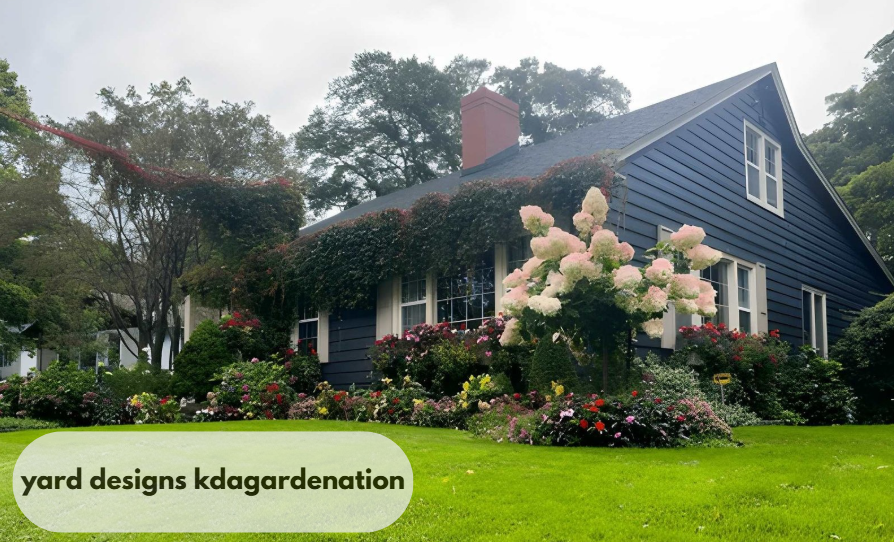
Yard designs kdagardenation are repeatable garden layouts that beginners can sketch in an afternoon and build one bed at a time, including 4-foot raised beds, border strips, and container garden corners. Pick the layout that fits your sunniest spot, keep beds narrow enough to reach across, and start with one or two beds.
Key Takeaways
- Fruiting vegetables need 6 to 8 hours of full sun a day, while many leafy crops manage on 5 to 6 hours, according to UF/IFAS Extension in Leon County.
- A bed you reach from both sides should be no wider than 4 feet, a limit shared by University of Tennessee Extension and UF/IFAS.
- A 4-by-8-foot raised bed with a 10-inch soil depth requires about 26.7 cubic feet of soil, nearly equal to one cubic yard.
- A two-bed starter layout takes 88 square feet, under 15 percent of a 20-by-30-foot backyard.
- Follow a largest-to-smallest planting sequence: trees first, followed by shrubs, perennials, and groundcover, as recommended in the City of Edmonton’s Natural Yards guide.
What Is Yard Designs Kdagardenation?
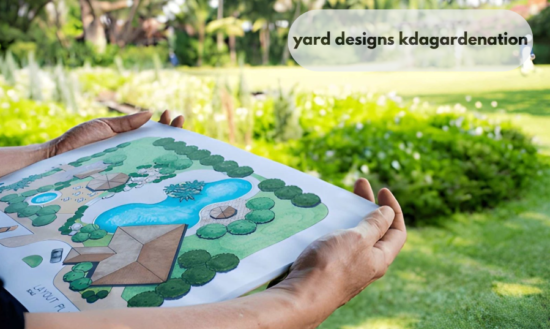
Yard designs kdagardenation are beginner-friendly yard and garden layouts built around simple shapes, beds no wider than 4 feet, and plants matched to the light each spot receives.
The Kdagardenation approach treats the layout as the first job and the plant list as the second. That order matters because a bed in the wrong place fails no matter what grows in it.
How Do You Design a Garden Layout Before Buying Plants?
You design a garden layout by mapping light and water first, then drawing beds and paths to fit what the map shows. Plants come last.
Garden Layout Planning takes one afternoon and a sheet of graph paper.Follow these steps in order:
- Measure your yard and draw a scaled plan on graph paper, using one square to represent one foot.
- Mark sunny, shady, dry, and wet areas, a step the City of Calgary’s YardSmart program lists first in its planning advice.
- Note the nearest tap. UF/IFAS advises building beds close to a water source so watering stays easy.
- Draw fixed features first: sheds, patios, paths, and fences. Beds fit around them.
- Use a garden hose to outline each planned bed on the ground, then walk around the shape to check its size and placement. The City of Edmonton recommends this test to check that the space feels right before you dig.
Step 5 costs nothing and catches most sizing errors. A garden bed that seems spacious on paper may obstruct the path to the gate when you mark it out on the lawn.
What Are the 11 Easiest Garden Layout Ideas for a Yard?
The 11 easiest layouts all use straight or gently curved beds no wider than 4 feet, placed where the light suits the crop. Each one below works as a first project.
- Two-bed starter. Build two 4-by-8-foot beds with a 3-foot aisle between them. WSU Extension notes that 8 feet is a convenient bed length.
- Fence-line border. Run a strip about 2 feet deep along a fence. You reach it from one side only, so it stays half the width of a free-standing bed.
- Container corner. Group pots on a patio near the tap. This suits renters and paved yards.
- U-shaped bed. Connect three 4-foot-wide sections around a central standing area, with an outer path that lets you access each section from both sides.
- Kitchen-door herb strip. Plant parsley and other herbs within a few steps of the door, so picking takes seconds.
- Leafy bed for the dimmer side. Lettuce, spinach, radishes, and peas grow in 4 to 6 hours of direct sun, according to University of Kentucky Cooperative Extension in Daviess County.
- Tiered border. Place trees and shrubs at the back, perennials in the middle, and groundcover at the front, following Edmonton’s largest-to-smallest planting order.
- Trellis end. Fix a trellis or cage to the end or side of a bed, as UF/IFAS describes, to grow climbers upward without widening the bed.
- Low-spot bed for thirsty plants. Calgary’s YardSmart guide recommends grouping plants with similar watering needs and placing those that require the most water in the lowest areas, where runoff gathers.
- Curved island bed. Shape a free-standing bed in the lawn with a hose outline, then cut the edge along it.
- Path-first grid. Set the paths before the beds. WSU Extension suggests measuring your mower and sizing grass paths to match it.
These landscape ideas combine well. Two starter beds paired with a border along the fence provide space for both vegetables and flowers in a small yard.
How Much Space and Soil Does a Starter Layout Need?

A two-bed starter layout needs 88 square feet of yard and about 2 cubic yards of soil. The numbers come from simple multiplication.
Worked example: two 4-by-8 beds
Two beds side by side with a 3-foot aisle measure 4 + 3 + 4 = 11 feet across and 8 feet long. That is 11 x 8 = 88 square feet of ground.
The planted area is 2 x 32 = 64 square feet. So 73 percent of the footprint grows plants, and 27 percent is path.
UF/IFAS recommends a bed height of 10 to 12 inches. At 10 inches (0.833 feet), one bed holds 4 x 8 x 0.833 = 26.7 cubic feet. A cubic yard is 27 cubic feet, so each bed takes one cubic yard and the pair takes two.
In a 20-by-30-foot backyard of 600 square feet, this layout uses under 15 percent of the space. Lawn, seating, and play areas keep the rest.
Size rules by layout type
| Layout element | Daily sun needed | Size rule | Source |
| Bed for tomatoes, peppers, squash | 6 to 8 hours | No wider than 4 feet | UF/IFAS Extension; University of Tennessee Extension |
| Bed for lettuce and spinach | 5 to 6 hours | No wider than 4 feet | UF/IFAS Extension |
| Bed against a wall or fence | Depends on the crop | About 2 feet deep | WSU Extension, Snohomish County |
| Aisle between beds | Not applicable | 2 to 4 feet | University of Kentucky Cooperative Extension |
| Wheelbarrow path | Not applicable | About 3 feet | WSU Extension, Snohomish County |
Leafy crops grow in 4 to 6 hours of sun, but harvests are best in full sun.
The most common layout mistake
The most common mistake is building one large bed, such as 6 by 6 feet, because a square looks tidy on paper. The center sits 3 feet from every edge, beyond a comfortable reach.
Gardeners then step into the bed to weed. UF/IFAS warns against ever stepping into a raised bed, since foot traffic presses the soil down.
The fix is to split the same 36 square feet into a 4-by-9-foot bed. Every plant then sits within 2 feet of an edge.
Which Plants Suit a Small Yard Layout?
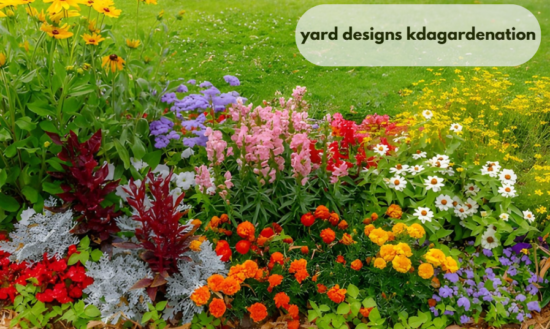
Choose plants for a small yard based on how many hours of sunlight each garden bed receives daily. Light decides the list, not the garden center display.
In regions with hot summers, placing a garden in the sunniest spot is not always the best approach. UF/IFAS notes that the morning sun is ideal and that crops benefit from late afternoon shade in late spring and through summer. In those climates, place beds where a tree or wall shades them after mid-afternoon.
Plant tomatoes, peppers, beans, and squash in beds that receive 6–8 hours of sunlight daily. For shadier beds, grow lettuce, spinach, radishes, parsley, and peas.
When choosing the best plants for small home garden decoration, pick ones that do two jobs at once. Parsley edges a path neatly and goes into dinner, and climbing peas turn a plain trellis into a green screen.
These three easy gardening tips for people with no experience keep the first season manageable:
- Start with one or two beds and expand next year.
- Give each bed plant the same water needs.
- Water at the base of the plant, since leaves that stay wet through the evening invite disease, according to the University of Kentucky Cooperative Extension.
Starting small also protects the budget. The National Gardening Survey 2026 Edition, published May 19, 2026, reports record spending of $740 per gardening household in 2025. That figure is an average across all households that garden, not the cost of a starter bed.
How Do You Match a Yard Layout to Your House Style?
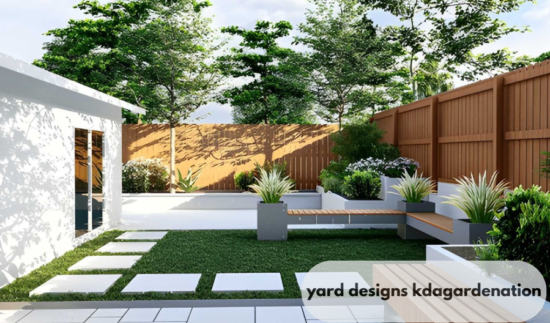
You match a yard to a house by repeating the building’s lines and materials in the beds. The yard then reads as part of the home.
Start by naming the basic architectural style of the house. A modern home with flat planes suits rectangular beds and straight paths, while a cottage with a pitched roof suits curved island beds and mixed borders.
For more on pairing a building with its yard, kdarchitects covers house styles in detail. The quickest ideas for landscaping are to copy one material from the house, such as brick or timber, into the bed edging.
Frequently Asked Questions
How do I start a garden layout with no experience?
Start with a scale sketch of your yard that marks sun, shade, and the nearest tap. Then add one or two beds no wider than 4 feet in the brightest area and test the shape with a hose before digging.
What is the best size for a beginner garden bed?
The best beginner size is 4 feet wide by 8 feet long. The 4-foot width lets you reach the center from either side, and Kdagardenation layouts use it for that reason.
How many hours of sun does a yard garden need?
Most vegetables require at least six hours of direct sunlight daily to grow well. Fruiting crops such as tomatoes produce best with 6 to 8 hours, and leafy crops grow in less.
How wide should garden paths be?
Garden paths should be 2 to 4 feet wide. Use about 3 feet wherever a wheelbarrow travels, and size grass paths to the width of your mower.
How much soil fills a 4-by-8 raised bed?
A 4-by-8-foot bed filled 10 inches deep needs about one cubic yard of soil. The exact volume is 26.7 cubic feet, and a cubic yard is 27.
Conclusion
Yard designs kdagardenation work because they put light, reach, and water ahead of plant shopping. A bed no wider than 4 feet, set in the right light and near a tap, outperforms a larger bed in the wrong place. Sketch first, test with a hose, and build two beds before you build ten.

5 thoughts on “Yard Designs Kdagardenation: 11 Easy Garden Layout Ideas ”