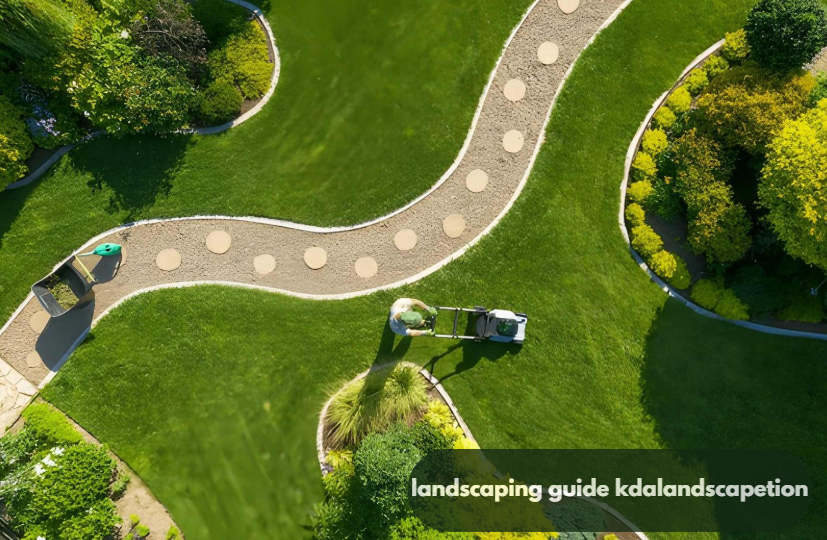
The landscaping guide kdalandscapetion approach is simple: a beautiful garden starts with a site map, a sun study, and a zoned layout drawn before you buy a single plant. Measure the yard, track the light for a full day, divide space by use, and then plant and water by zone.
Key Takeaways
- Most U.S. gardens are easiest to plan in three passes: measure the site, map sun and drainage, then give each area a job.
- In the continental United States, south-facing beds get the most direct sun, while north-facing beds stay shaded for much of the day.
- Fruiting vegetables such as tomatoes and peppers need at least six hours of direct sun, so they belong in the brightest zone.
- Grouping plants by water need lets each irrigation zone run on its own schedule and protects drought-tolerant shrubs from overwatering.
- A hand-drawn scale plan costs only paper and time, while a professional design fee usually runs into the thousands of dollars.
What Is Garden Landscape Design?
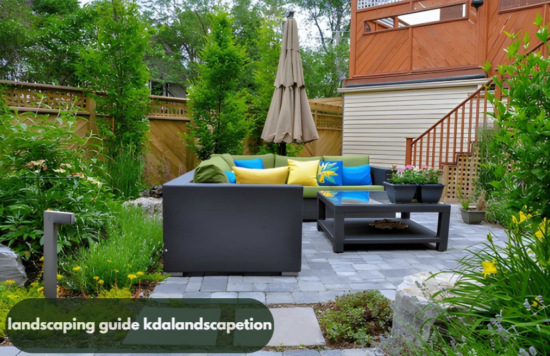
Garden landscape design is the process of arranging plants, paths, structures, and open space on a property so the yard looks unified and suits the way you use it. It covers hardscape, such as patios, walls, and walkways, and softscape, such as lawn, beds, shrubs, and trees.
Landscaping guide kdalandscapetion: What Are the Easy Steps to Design a Garden?
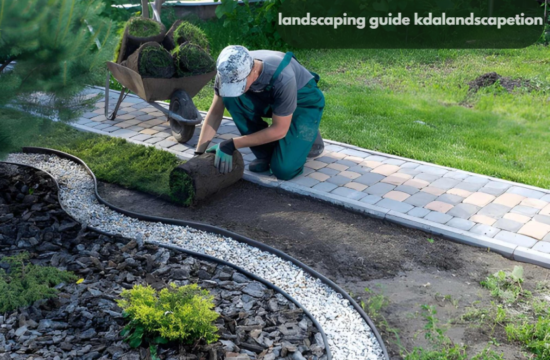
The easiest way to design a garden is to work from the ground up: measure, observe, zone, sketch, then plant. Heading straight to the nursery is the main reason gardens end up looking scattered.
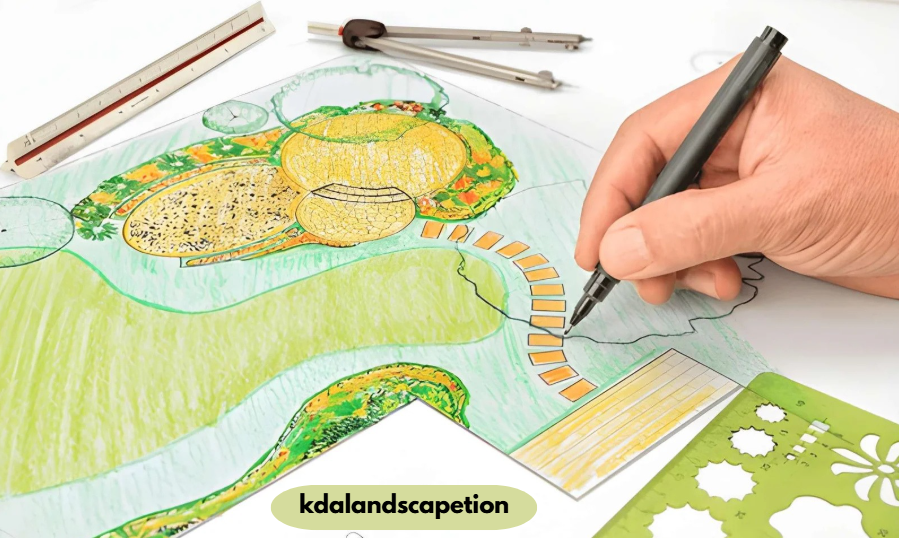
- Measure the property. Use a 100-foot tape to record lot lines, house walls, doors, windows, and existing trees, then draw everything on graph paper at one square per foot.
- Mark utilities and drainage. Call 811 before any digging so crews flag buried gas, power, and water lines, and note every spot where water pools after rain.
- Map the sun. Check the yard at 9 a.m., noon, 3 p.m., and 6 p.m., then label areas as full sun (6+ hours), part sun (3 to 6 hours), or shade (under 3 hours).
- Test the soil. A basic test through your county Cooperative Extension office reports pH and nutrient levels, so you can correct the soil before planting.
- List how you will use the yard. Write down every need, such as dining, kids’ play, vegetables, pets, storage, and privacy screening.
- Draw zones, then paths. Put high-use areas closest to the back door, and make main paths at least 3 feet wide, or 4 feet if two people will walk side by side.
- Plant in layers and phases. Install trees and shrubs first, then perennials, then annuals and groundcover, spreading purchases over two or three seasons.
Good Garden Layout Planning puts the permanent pieces, such as trees, patios, and paths, on paper first because they are the hardest to move later. When you design a garden layout in this order, choosing plants becomes a fill-in task instead of a guessing game.
Which Side of Your House Gets the Best Sun for a Garden?
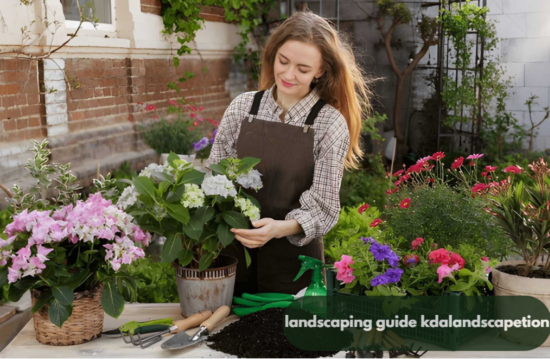
In the United States, a south-facing garden gets the most direct sun year-round, and a north-facing one gets the least. East-facing beds receive gentle morning light, while west-facing beds take the hottest afternoon sun.
The practical answer to which direction should your garden face depends on what you plan to grow. Vegetables, roses, and herbs want south or west exposure, while hostas, ferns, and hydrangeas do better on the east or north side.
What Is the Most Common Sun-Mapping Mistake?
The most common mistake is mapping sun on a single early-spring day and treating the result as permanent. Trees have not leafed out yet, and the sun sits lower, so a bed that looks bright in March can sit in deep shade by July.
The fix is to map twice: once in spring and again in midsummer when deciduous trees are full. If you can only map once, do it in June or July, since that matches the growing season most plants experience.
Reflected heat matters too. A west-facing bed beside a pale wall or concrete driveway runs noticeably hotter than open ground, which scorches leafy plants like lettuce and impatiens.
How Should You Divide Space in a Typical Backyard?
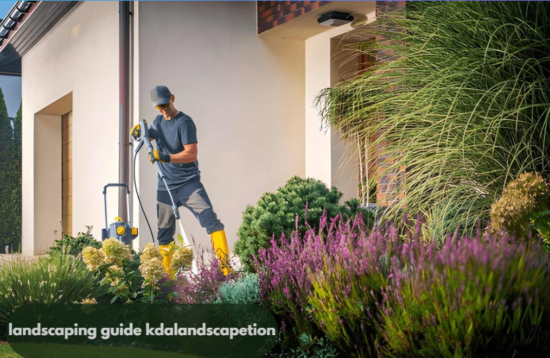
Divide the yard by function first, then fit lawn into whatever space remains. A worked example shows how the numbers add up.
Take a 40-by-60-foot backyard, which equals 2,400 square feet:
- Patio: 16 by 20 feet beside the back door, or 320 square feet, enough for a six-person table and a grill (13% of the yard).
- Perimeter beds: 4 feet deep along the 60-foot back fence (240 square feet) and both 40-foot side fences minus the corner overlap (288 square feet), for 528 square feet total (22%).
- Vegetable beds: two 4-by-8-foot raised beds in the south-facing section, or 64 square feet (3%).
- Path: a 3-foot-wide stepping-stone route running 40 feet from patio to beds, or 120 square feet (5%).
- Lawn: the remaining 1,368 square feet (57%).
Trimming lawn to just over half the yard cuts mowing and watering time, and the beds frame the space so it reads as a finished design. For more garden landscaping ideas, swap part of that lawn for a gravel seating nook or a pollinator strip without changing the zone plan.
How Much Does It Cost to Landscape a Garden in the US?
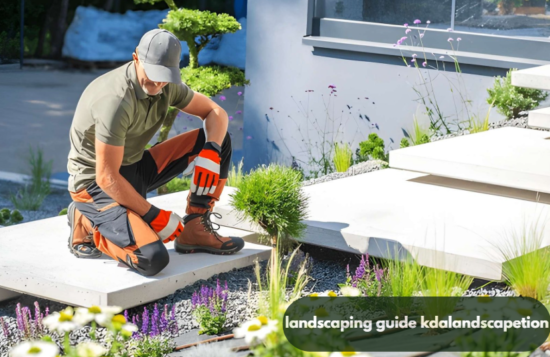
Landscaping costs fall into two separate buckets: the design fee, which pays for the plan, and installation, which pays for labor and materials. Mixing them up is how budgets break.
A professional plan averaged about $4,200 in LawnStarter’s 2025 pricing guide, with typical fees running from $2,200 to $6,180. That design fee alone is close to half the price of the overall landscape upgrade in the table below, which is an installation cost, not a design cost. For a small, flat yard, drawing your own plan and paying a designer for a single review visit leaves more money for plants and hardscape.
| Project | Typical installed cost | Source | Best for |
| Overall landscape upgrade | $9,000 | NAR & NALP, Remodeling Impact Report: Outdoor Features (2023) | Whole-yard refresh before a sale |
| New patio | $10,500 | NAR & NALP, Remodeling Impact Report: Outdoor Features (2023) | Outdoor dining zone |
| New wood deck | $16,900 | NAR & NALP, Remodeling Impact Report: Outdoor Features (2023) | Sloped or raised lots |
| Landscape lighting | $6,800 | NAR & NALP, Remodeling Impact Report: Outdoor Features (2023) | Evening use and safety |
| Irrigation system installation | $6,000 | NAR & NALP, Remodeling Impact Report: Outdoor Features (2023) | Large lawns in dry summers |
| Tree care | $2,875 | NAR & NALP, Remodeling Impact Report: Outdoor Features (2023) | Mature yards with old trees |
The table uses contractor cost estimates collected in 2023, and the design fee comes from 2025 data, so installation prices quoted today in your area may be higher. Whether you hire a firm such as kdarchitects or a solo designer, ask for a plan drawn to scale with a full plant list, because a loose concept sketch is hard for contractors to price.
How Can You Cut Water Use in a New Garden?
Group plants by water need and favor species native to your region. That one step lets every irrigation zone run on its own schedule.
Outdoor watering makes up about 30 percent of the water a typical U.S. household uses, and the EPA’s WaterSense program estimates that up to half of it is wasted through overwatering and inefficient irrigation. On a $600 annual water bill, roughly $180 goes outdoors, and as much as $90 of that never helps a plant.
Practical landscape ideas that reduce this waste include drip lines in beds, 2 to 3 inches of mulch, and a rain sensor on any sprinkler timer. Other water-smart ideas for landscaping include replacing narrow lawn strips, which sprinklers rarely cover evenly, with groundcover or gravel.
When Does the Usual Garden Advice Not Apply?
In the Desert Southwest and other hot, dry regions, the “south is best” rule flips for many plants. Intense afternoon sun and reflected heat scorch even sun-loving vegetables by midsummer, so gardeners in cities like Phoenix and Las Vegas often place beds on the east side of the house or add 30 to 40 percent shade cloth from June through August. Steep lots are a second exception: slopes need grading, terracing, or retaining walls before any layout work begins, and taller walls usually require a permit and an engineer, so check local rules first.
Frequently Asked Questions
How do I start designing my garden for free?
Start with graph paper, a tape measure, and a one-day sun map of your yard. Draw the house and fixed features to scale, then sketch zones in pencil so you can revise them before spending money.
What is the best direction for a vegetable garden?
A south-facing spot is best for vegetables in most of the United States because it gets the longest stretch of direct sun. West-facing beds are a solid second choice, though leafy greens there benefit from afternoon shade in summer.
How much of my backyard should be lawn?
No fixed rule exists, but many well-planned backyards keep lawns to about half the space or less. Less lawn means less mowing and watering, and the freed space works well for beds, seating, or a vegetable patch.
Should I hire a landscape designer or do it myself?
Do it yourself for simple, flat yards, and hire a designer for slopes, drainage problems, or large hardscape projects. A professional also helps when a project involves permits, retaining walls, or irrigation systems that must be sized correctly.
When is the best time to plant a new garden?
Fall is the best time to plant trees, shrubs, and most perennials across much of the United States. Cool air and warm soil help roots establish before winter, while vegetables and annuals go in during spring after your area’s last frost.
Conclusion
A beautiful garden comes from planning, not plant shopping, which is why the landscaping guide kdalandscapetion method puts measuring, sun mapping, and zoning first. Get the layout right on paper, and every plant you add afterward has a place and a purpose. Start with one zone this season and build outward from there.

2 thoughts on “Landscaping Guide Kdalandscapetion: Easy Steps to Design a Beautiful Garden”