The simplest answer to how to maintain a garden is a weekly routine: check soil moisture, water deeply, pull weeds while they are small, remove spent blooms, and inspect leaves for pests. Add mulch and compost each season, and match every plant to the light it actually receives.
Key Takeaways
- Most garden beds require roughly one inch of water each week from rain and irrigation together.
- One deep watering builds stronger roots than several light sprinklings.
- A 2-to-3-inch layer of organic mulch slows weeds and holds moisture in the soil.
- Indoor plants fail more often from too much water and too little light than from neglect.
- Twenty to thirty minutes of work each week keeps a small garden healthier than one long monthly session.
How to maintain a garden week by week
A healthy garden runs on five repeating jobs: watering, weeding, feeding, pruning, and checking for problems. Done weekly, they take 20 to 30 minutes for a small yard or balcony.
Work through the same order each week so nothing gets skipped:
- Test the soil with a finger. Push it two inches down and water only when that depth feels dry.
- Water at the base, early in the morning. Leaves that remain wet overnight encourage fungal disease.
- Pull weeds before they flower. A weed removed as a seedling never drops seed.
- Deadhead and trim. Cut off faded flowers and any dead, damaged, or crossing stems.
- Look under the leaves. Aphids, mites, and insect eggs hide on the underside, where early hand removal still works.
- Cover bare soil. Top up mulch wherever the ground shows through.
Feeding runs on a slower cycle. Spread an inch of compost over beds in spring and again in fall.
Container plants need liquid fertilizer every two to four weeks during active growth, because frequent watering washes nutrients out of the pot.
How much water does a garden need each week?
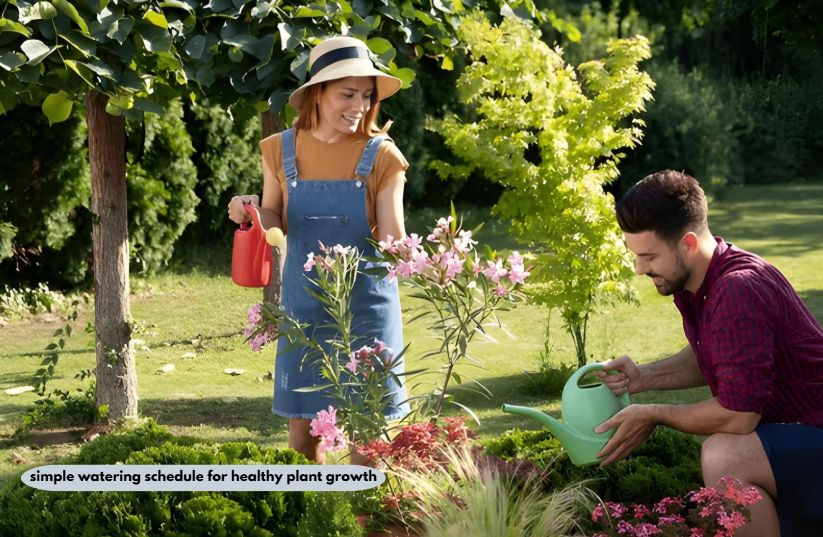
Most vegetable and flower beds require about one inch of water each week, including rainfall. Sandy soil needs that amount split into two sessions, while clay soil holds it longer.
One inch of water applied across 100 square feet totals 62 gallons, reports the University of Minnesota Extension. A standard 4-by-8-foot raised bed covers 32 square feet, so it needs about 20 gallons a week (62 x 0.32 = 19.8).
With a 2-gallon watering can, that is 10 full cans. A week that brings half an inch of rain cuts the job to five cans.
A rain gauge or a straight-sided tin can left in the bed shows how much rain has already fallen, so you only supply the difference.
What is the most common watering mistake?
The most frequent error is watering lightly each day. This occurs because the soil surface appears dry within hours, so a daily sprinkle seems like the correct response.
A light sprinkle moistens just the top inch. Roots remain near the surface, and the plant droops on the first hot afternoon
The fix is to water once or twice a week for long enough that moisture reaches six inches deep. Dig a small hole with a trowel 30 minutes after watering to confirm the depth.
How do you keep indoor plants healthy?
Indoor plants stay healthy when light, drainage, and watering are matched to each species. Light comes first, because no amount of fertilizer or water makes up for a dim corner.
A small indoor garden of six to ten pots fits on one bright windowsill or a two-tier plant stand. In the northern hemisphere, south and west windows suit herbs and succulents, while north windows suit pothos, snake plants, and ferns.
Follow these rules for every pot:
- Use a container with a drainage hole and empty the saucer 15 minutes after watering.
- Water when the top inch of potting mix is dry, not on a fixed calendar day.
- Turn each pot a quarter turn weekly so growth stays even.
- Wipe dust off leaves once a month so they absorb more light.
- Keep new plants apart from the others for two weeks to catch pests before they spread.
Growth slows in winter, so water less often and stop fertilizing until new leaves appear in spring.
How do you plan a layout that is easy to maintain?
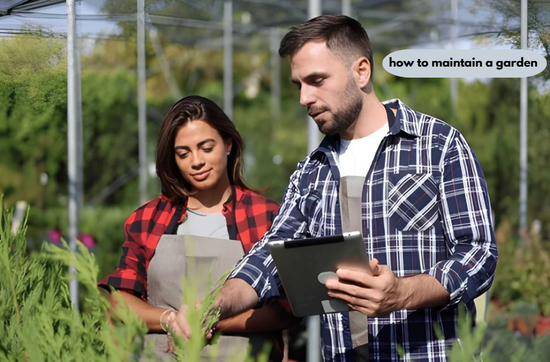
A layout is easy to maintain when plants are grouped by water and sun needs and every bed is reachable without stepping on the soil. Decisions made once at the planning stage remove hours of work every season.
Before you design a garden layout, watch the site for one full day and mark where sun falls at 9 a.m., noon, and 4 p.m. Six or more hours of direct sun counts as full sun, and three to six hours counts as part shade.
Up to half of outdoor household water never reaches plant roots because sprinklers lose it to evaporation, runoff, and wind, according to the U.S. Environmental Protection Agency’s WaterSense program. Put thirsty plants together on one drip line or soaker hose and drought-tolerant plants in a separate zone, so each area receives only what it uses.
How wide should beds and paths be?
Beds should be at most 4 feet wide if you can access them from both sides and 2.5 feet if they rest against a wall or fence. Those widths let you reach the center without stepping in.
When designing garden beds, leave paths 18 to 24 inches wide for walking and 3 feet wide where a wheelbarrow has to pass. Soil that is never walked on stays loose, drains better, and needs less digging.
How should flowers be arranged?
Flowers are easiest to care for when tall plants stand at the back, medium plants fill the middle, and low edging plants line the front. Plant in groups of three or five of the same variety.
A dense flower garden layout shades the soil, which blocks weed seedlings and slows evaporation. Leave only the spacing printed on the plant tag between mature plants.
To year-round flowers ,select one or more plants for every season: bulbs in early spring, perennials like coneflower in summer, sedum and asters in autumn, plus hellebores or winter pansies wherever winters stay mild.
The landscape ideas that cut upkeep most are replacing unused lawn with groundcover, choosing plants native to your region, and edging beds so grass cannot creep in.
Treat garden decoration as a fixed structure. A bench, a big pot, or a trellis set away from the hose and mower route brings interest without creating a single chore.
What garden jobs belong to each season?
Garden tasks change with the season: plant and mulch during spring, water and harvest during summer, tidy up and plant bulbs during autumn, then prune and plan during winter.
- Spring: Clear winter debris, spread compost, plant after the last frost date, and lay fresh mulch once the soil has warmed.
- Summer: Water thoroughly, deadhead weekly, support tall plants, and pick vegetables frequently so plants continue producing.
- Fall: Plant spring bulbs, divide crowded perennials, pull spent annuals, and compost healthy leaves.
- Winter: Trim dormant trees and shrubs, clean and sharpen tools, and purchase seeds for the year ahead.
What does it cost to hire help?
What you’ll pay for yard help comes down to three things: how big your yard is, how often someone comes out, and how much skill the job takes. Routine upkeep sits at the low end, and design or specialist work sits at the high end.
The answer to how much does a gardener cost starts with one question: is the job weekly upkeep or a one-time project?
Most U.S. homeowners spend between $150 and $300 a month on garden maintenance, and $225 is the figure that comes up most often, according to Fixr’s gardener cost guide (updated January 2025). At $225 a month, service costs $2,700 over 12 months, or $1,575 over a seven-month growing season.
| Type of help | Typical rate (USD per hour) | Source |
| Entry-level gardener | $30 to $40 | Fixr |
| Gardener, typical average range | $50 to $75 | TaskRabbit |
| Horticulture-trained specialist | $100 to $150 | Fixr |
| Landscaper, installation work | $50 to $100 | Fixr |
The monthly figure is a flat service price, while the table lists hourly rates, so the two measure different things. At the typical average hourly range in the table, $225 covers three to four and a half hours of work a month.
The weekly routine takes about two hours a month of your own time. Hire out the jobs that need tools or skills you lack, such as tree pruning, irrigation installation, or building new beds, and keep the routine yourself.
These are U.S. prices. Rates in other countries, and in large cities, differ with local wages.
The weekly deep-watering rule does not apply to containers or to desert plants. A pot holds little soil, and a small one dries out within a day in hot weather, so containers need a moisture check every day. Cacti, succulents, and established dryland natives rot with an inch of water each week, so allow their soil to dry fully between waterings.
Frequently Asked Questions
How often should you water a garden?
One or two deep waterings a week suit most in-ground garden beds. Water twice a week on sandy soil and once on clay or loam. Skip a session whenever the soil is still damp two inches down.
What is the easiest way to keep weeds down?
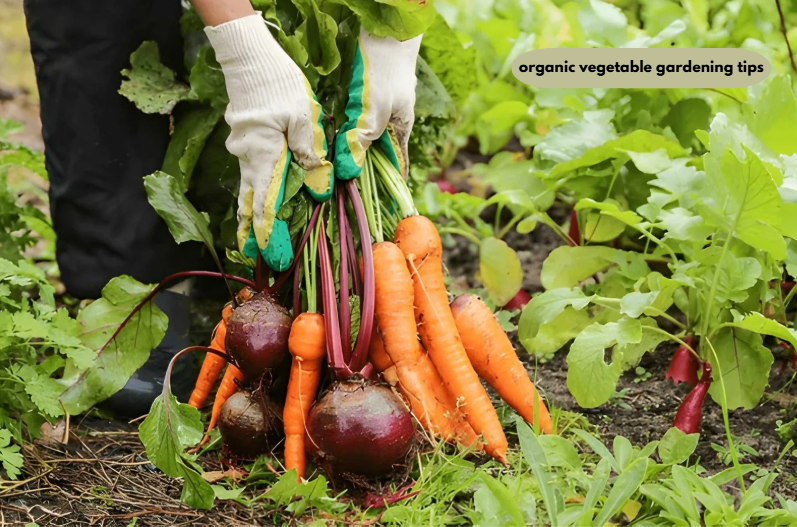
A layer of organic mulch 2 to 3 inches deep is the easiest way to keep weeds down. Mulch blocks the sunlight weed seeds require to germinate. The few weeds that do come through pull out easily because the soil underneath stays soft.
How many hours a week does a garden take?
A small established garden takes about 20 to 30 minutes a week. New gardens take longer in their first season because young plants need closer watering and bare soil grows more weeds. Time drops once plants fill in and shade the ground.
Can you keep a garden healthy without chemicals?
Yes, most home gardens stay healthy with compost, mulch, hand weeding, and early pest removal. Compost feeds the soil, and a weekly check under the leaves catches insects while a jet of water or a gloved hand still clears them.
Why are indoor plant leaves turning yellow?
Yellow leaves on indoor plants usually point to overwatering or poor drainage. Check that the pot has a drainage hole and that the saucer is empty. Let the top inch of mix dry before watering again, and move the plant closer to a window if lower leaves keep fading.
Is it cheaper to look after a garden yourself?
Yes, doing the routine work yourself costs only tools, mulch, and compost. Paying for a few skilled jobs a year, such as pruning large trees, gives most of the benefit of a professional at a fraction of a monthly contract.
Conclusion
Learning how to maintain a garden comes down to short, regular attention instead of occasional heavy effort. Water deeply instead of often, keep the soil covered, and put each plant where its light and water needs are already met. A garden planned for easy care stays healthy on half an hour a week.