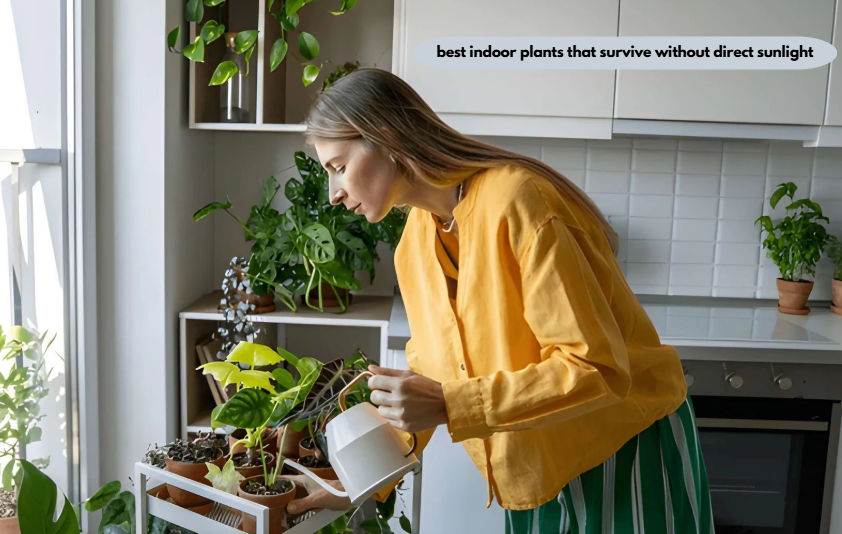
The best indoor plants that survive without direct sunlight are ZZ plant, snake plant, cast iron plant, pothos, Chinese evergreen, and peace lily, which university extension services list as low-light plants. They still need some light, about 25 to 250 foot-candles, and less water than plants in sunny rooms.
Key Takeaways
- The University of Minnesota Extension’s list of low-light houseplants includes ZZ plant, snake plant, cast iron plant, pothos, Chinese evergreen, and peace lily.
- The University of Maryland Extension defines low light as 25 to 100 foot-candles, while the Minnesota and Missouri extensions use 50 to 250 foot-candles.
- Plants in low light grow more slowly and use less water, so overwatering is the biggest avoidable risk in a dark room.
- Drexel University researchers calculated that 10 to 1,000 plants per square meter would be needed to match the air cleaning of a couple of open windows.
- The cast iron plant is rated non-toxic, while the ASPCA lists the snake plant as toxic to dogs and cats.
What Is a Low-Light Plant?
A low-light plant is a houseplant that stays healthy on indirect light alone, without sun rays reaching its leaves. According to the University of Minnesota Extension, many are understory plants that grow beneath larger plants in the wild.
Low light is far dimmer than it looks. The University of Maryland Extension puts peak outdoor sunlight at about 10,000 foot-candles, so a room reading 100 foot-candles delivers roughly 1 percent of full sun.
How Much Light Do Low-Light Plants Actually Need?
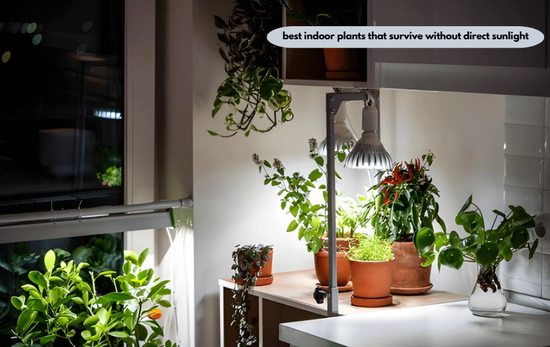
Low-light plants need about 25 to 250 foot-candles at leaf height, depending on the source. No houseplant survives long in total darkness.
The University of Maryland Extension defines low light as 25 to 100 foot-candles, typical of north-facing windows or lamp-lit rooms. The University of Minnesota and University of Missouri extensions use a wider band of 50 to 250 foot-candles.
These figures measure different things. The University of Arkansas Cooperative Extension Service separates a survival minimum of 25 foot-candles from a preferred level of 75 to 200 foot-candles, which is why published lists disagree.
How do you measure light in a dark room?
Use a light meter or a phone light meter app held exactly where the leaves will sit. A number replaces guesswork about whether a corner is “bright enough.”
- Take the reading at leaf height in the planned spot, since the University of Maryland Extension notes light intensity drops rapidly with distance.
- Measure around midday on a clear day and a cloudy day, then use the lower number.
- Divide lux by 10.76 to convert the reading to foot-candles.
- Pick a plant from the list below if the result falls between 25 and 250 foot-candles.
- Add a grow light or choose a brighter spot if the reading stays under 25 foot-candles.
What Are the 6 Best Indoor Plants That Survive Without Direct Sunlight?
ZZ plant, snake plant, cast iron plant, pothos, Chinese evergreen, and peace lily are the most dependable choices. All six are on the University of Minnesota Extension’s low-light list, and four also appear on the University of Maryland Extension’s list.
They also rank among the easy to grow plants for beginners, since their main need in a dark room is restraint with the watering can.
1. ZZ plant
The ZZ plant (Zamioculcas zamiifolia) is the top choice for the darkest corner you still use daily. It stores water in thick rhizomes and appears on both the Maryland and Minnesota low-light lists.
The UF/IFAS Extension office in Osceola County rates it very toxic to ingest, so keep it away from pets and small children.
2. Snake plant
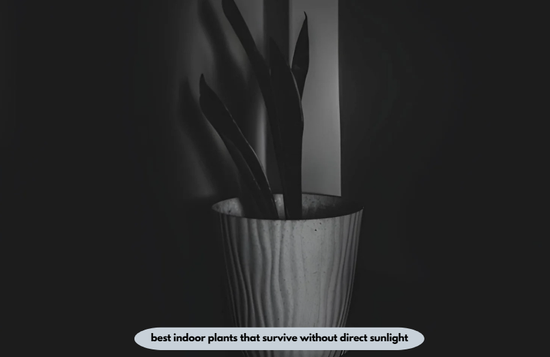
The snake plant suits narrow spots beside doors and furniture. The University of Minnesota Extension notes it is now classified as Dracaena trifasciata, formerly Sansevieria trifasciata.
The ASPCA lists it as toxic to dogs and cats, with symptoms including nausea, vomiting, and diarrhea.
3. Cast iron plant
The cast iron plant (Aspidistra elatior) is the best pick for homes with pets. UF/IFAS rates it non-toxic, and both the Maryland and Minnesota extensions list it for low light. If you want a second pet-safe option, parlor palm (Chamaedorea elegans) is also listed as non-toxic by the ASPCA and tolerates dim rooms.
4. Pothos
Pothos is the best trailing plant for dim shelves and cabinet tops. It is on the Minnesota low-light list, UF/IFAS rates it toxic to ingest, and its cuttings root in a glass of water.
5. Chinese evergreen
Chinese evergreen tolerates deep shade but gets conflicting ratings. A University of Missouri Extension guide says aglaonemas tolerate as little as 10 foot-candles, while the University of Maryland Extension places Chinese evergreen in its 100 to 500 foot-candle group.
Expect it to survive in a dim room but keep stronger leaf color with more light.
6. Peace lily
Peace lily is the most dependable low-light plant that also blooms. It is on both the Maryland and Minnesota lists, droops visibly when thirsty, and is toxic to cats and dogs, according to the ASPCA.
Toxicity ratings below come from the UF/IFAS Osceola County list unless noted.
| Plant | Botanical name | Low-light listing | Toxicity rating | Best dark-room spot |
| ZZ plant | Zamioculcas zamiifolia | Maryland, Minnesota | Very toxic to ingest | Floor pot in a dim corner |
| Snake plant | Dracaena trifasciata | Maryland, Minnesota | Toxic to dogs and cats, per ASPCA | Narrow wall or doorway |
| Cast iron plant | Aspidistra elatior | Maryland, Minnesota | Non-toxic | Hallway or pet room |
| Pothos | Epipremnum aureum | Minnesota | Toxic to ingest | High shelf or cabinet top |
| Chinese evergreen | Aglaonema | Minnesota, Missouri | Toxic to ingest | Tabletop near a lamp |
| Peace lily | Spathiphyllum | Maryland, Minnesota | Toxic to dogs and cats, per ASPCA | Bedroom or office |
Why Do Low-Light Plants Die in Dark Rooms?
The most common avoidable mistake is watering a dark-room plant on a sunny-room schedule. The University of Minnesota Extension notes that plants in low light grow more slowly and use less water, so a fixed weekly routine leaves roots sitting in wet soil.
The mistake happens because owners water by the calendar instead of by soil moisture. The fix is to check the soil first every time.
- Water only when the soil feels dry below the surface, and let ZZ plant and snake plant dry out fully.
- After watering, empty the saucer and use pots with drainage holes.
- Move a struggling plant closer to the window before giving it more water.
- Wipe dust from the leaves, which the UF/IFAS office list says these plants often need more than water.
Do Low-Light Plants Clean the Air in a Dark Room?
No, houseplants do not measurably clean indoor air at normal household numbers. A 2019 Drexel University review by Bryan Cummings and Michael Waring found that ordinary air exchange removes pollutants far faster than potted plants.
The researchers reanalyzed 12 sealed-chamber studies and calculated that 10 to 1,000 plants per square meter of floor space would be needed to match a building’s ventilation or a couple of open windows. Waring traced the air-purifying reputation largely to a 1989 NASA study run in sealed chambers.
What does that mean for a real bedroom?
A 12-by-12-foot bedroom would need at least 134 plants to match a couple of open windows. The area of that room is 144 square feet, or roughly 13.4 square meters.
At 10 plants per square meter, that is 134 plants; at 1,000, it is 13,400. Six plants in the same room equal about 0.45 per square meter, roughly one-twentieth of the lowest estimate.
Buy low-light plants for looks and mood, and open a window or run ventilation for air quality.
How Do You Arrange Low-Light Plants in a Small Apartment?
Group plants into light zones, with the toughest species farthest from the window. This zone approach is the basis of apartment gardening in rooms without direct sun.
The logic used to design a garden layout outdoors works indoors: map where light falls, then match plants to it. Put pothos on high shelves, snake plant along narrow walls, and ZZ plant or cast iron plants in floor-level corners.
Several container gardening tips for small spaces and patios transfer directly. Choose pots with drainage, size each pot to its root ball, and use lightweight pots on shelves.
For room makeover ideas, borrow a rule from designing gardens and repeat one species in two or three spots so the room looks planned. The same pattern of one tall anchor, one filler, and one trailing plant shows up in many outdoor landscape ideas , and it works just as well on a shelf or in a corner.
Do plants in a dark room help mental health?
Evidence on how gardening affects mental health is mostly positive for indoor plants, but not uniform. A 2025 University of South Dakota honors thesis reviewed studies of houseplants and anxiety and depression in college students.
Study type changed the result. Of six experimental studies, three found significant improvement and three found no effect, while all four observational studies found a positive link, which shows association rather than cause.
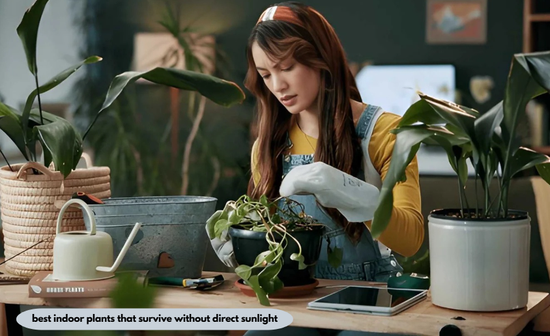
Hands-on care shows a clearer short-term effect. In a Journal of Physiological Anthropology study reported by TIME, people who repotted a houseplant felt more comfortable and soothed than after a computer task, and their blood pressure dropped.
What If a Room Has No Windows?
A windowless room is the one case where choosing a low-light species is not enough, because the plant depends entirely on the lamp. The University of Missouri Extension recommends 10 to 15 watts of fluorescent light per square foot of growing space for low-light plants, advises keeping most plant tips 6 to 12 inches from the light source, and notes a few low-light species can be maintained at 10 foot-candles under artificial light. In a windowless bathroom or office, a grow light on a daily timer matters more than which plant you buy.
Frequently Asked Questions
Can a plant survive in a room with no windows?
Yes, a plant can survive without windows if it gets artificial light on a regular daily schedule. ZZ plant, snake plant, and pothos are the safest species to try, placed close to the light source.
What is the easiest plant to keep alive in a dark room?
The ZZ plant is the simplest Option: Its rhizomes hold water, so it handles low light and forgotten waterings. Snake plant ranks just behind, and the University of Maryland Extension lists both as low-light plants.
How often should you water plants in a dark room?
Water only when the soil feels dry below the surface, not on a fixed weekly schedule. Plants in dim light need less water, so space out waterings further in shaded rooms and during brief winter days.
Which low-light plants are safe for cats and dogs?
Cast iron plant and parlor palm (Chamaedorea elegans) are the safest common choices, since the ASPCA lists both as non-toxic to cats and dogs. ZZ plant, snake plant, pothos, Chinese evergreen, and peace lily all carry toxicity ratings, so keep them out of reach of pets.
Does a north-facing window count as low light?
Yes, the University of Maryland Extension treats north-facing window light as low light. That exposure suits ZZ plant, snake plant, cast iron plant, and peace lily, which the same source lists for that range.
Do snake plants really purify the air in a bedroom?
No, snake plants do not clean bedroom air enough to make a measurable difference. The Drexel analysis found that even the most efficient scenario required 10 plants per square meter, far more than a typical bedroom holds.
Conclusion
The best indoor plants that survive without direct sunlight include ZZ plant, snake plant, cast iron plant, pothos, Chinese evergreen, and peace lily, if given 25 to 250 foot-candles. and less water than sunroom plants. Measure the light, water by touch, and choose cast iron plant when pets share the room. Grow them for how they look and feel, and open a window for cleaner air.