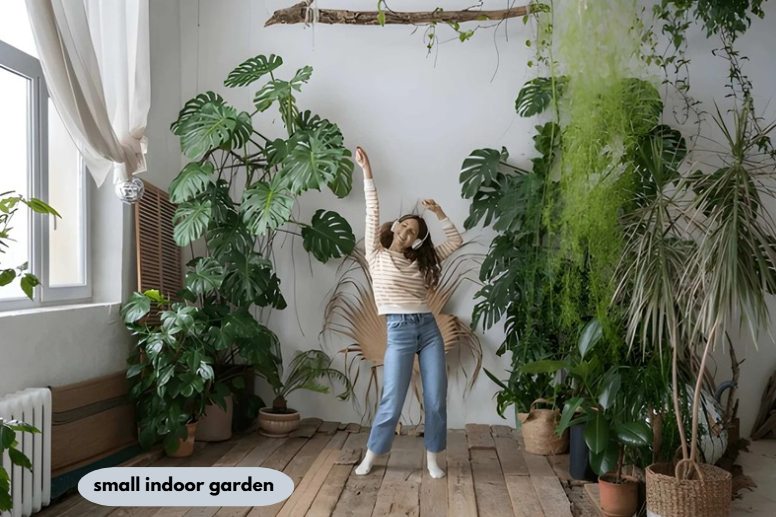
A small indoor garden starts with three to five easy plants in pots with drainage holes, placed where your apartment’s light suits them and watered only when the top inch of soil is dry. Measure the light first, buy plants second, and arrange them third. Most beginners fail by reversing that order, choosing plants for looks and hoping the window cooperates.
The one fact that changes everything is which way your windows face. North-facing and south-facing rooms suit very different plants. Pick the wrong one and all the care in the world won’t save it.
The end result is a handful of healthy potted plants matched to your windows, set up in a single afternoon.
Measure the light your windows give you
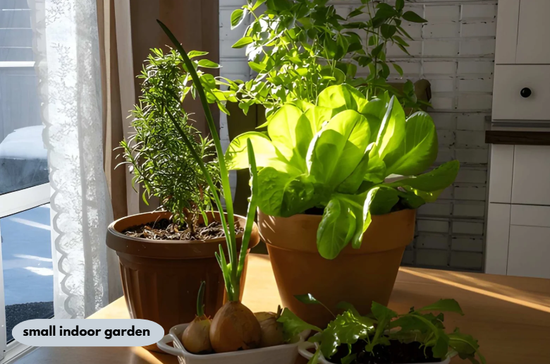
The direction a window faces tells you most of what you need to know. University of Minnesota Extension rates a north-facing window as low light, an east-facing one as medium, and a south or southwest one as high. An unobstructed south window gives the most natural light of any. Knowing this is the first step in how to design a garden that lasts.
Extension services measure light in foot-candles, and their bands do not line up. Minnesota calls 50 to 250 foot-candles low and anything above 1,000 high. The University of Maryland Extension puts a north window at 25 to 100 and a south window at 500 to 1,000. The two are sorting plants into categories differently, not disagreeing about the sun, so treat any single number as a rough guide.
Light also drops quickly as you move away from the glass, according to the Maryland guidance. A shelf across the room from a bright window may only offer low light, so judge the spot where the pot will sit, not the sill.
| Window | Light level | Plants that suit it |
| North | Low | Snake plant, ZZ plant, pothos, peace lily |
| East, or west out of direct sun | Medium | Spider plant, peperomia, rubber plant |
| South or southwest | High | Jade plant, succulents, basil, thyme |
Choose easy plants that match that light
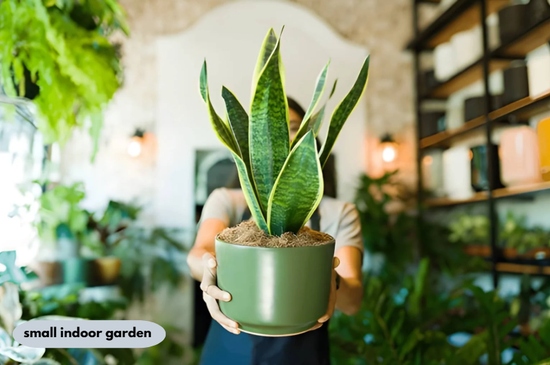
KDAGardenation recommends starting with three to five plants from the row of the table that matches your window. Starting small is one of the most useful and easy gardening tips for people with no experience, because you get to know how quickly each pot dries out before you have twenty to manage.
For low and medium light, the easy to grow plants are the ones that tolerate neglect: snake plant, ZZ plant, pothos, and spider plant. They are the safest first purchases for apartment gardening.
Herbs are harder. Iowa State University Extension says most herbs want about 8 hours of direct light a day, though some manage on 6. That means basil on a north sill will fail no matter how well you water it. Grow herbs in a south window or under a lamp.
If there are animals in your home, look into it before buying. The ASPCA reported in March 2026 that plants ranked sixth among the toxins its poison control line handled in 2025, making up 7.5% of exposures. Pothos and peace lily are both harmful to cats and dogs if chewed, while spider plant is not. The organization’s list of toxic and non-toxic plants covers each species by name.
Design the layout before you buy pots
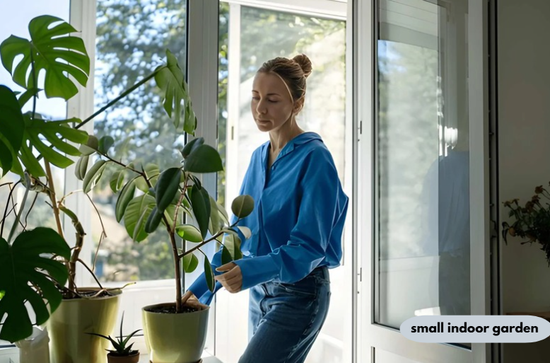
Sketch the room and mark where the light is strong, moderate, and weak. If you have wondered “can I design my own garden in a rental?” the answer is yes, and Light decides the position, and style comes second.
To design a garden layout, follow three rules:
- Group by need. Put plants with the same light and watering needs together, so one routine covers the group.
- Use height. A narrow shelf unit, a wall bracket, or a hanging pot adds growing space without using floor area.
- Keep access. Every pot should be reachable without moving furniture, or it will not get checked.
Designing gardens indoors also means protecting surfaces. Each pot needs a saucer, and wooden sills need a tray underneath.
Leave garden decoration until the plants are placed. Matching pot colors, a trailing pothos on a high shelf, or one tall plant beside a group of short ones makes a few pots look planned. Decorative pots without holes work as outer covers: keep the plant in a plain inner pot and lift it out to water.
Pot and water your small indoor garden in six steps
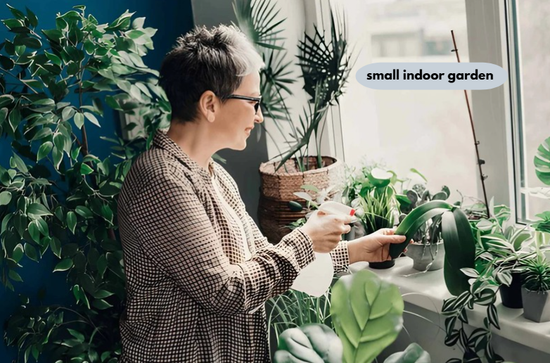
Water by touch, not by calendar. It is one of those simple gardening ideas that saves more plants than any product. University of Connecticut’s home gardening guidance names improper watering as the leading cause of houseplant death, so this routine matters more than fertilizer or pot style.
- Choose a pot with a drainage hole that is only slightly larger than the root ball. Oversized pots hold wet soil for too long.
- Fill it with bagged potting mix, not soil from outdoors, and set the plant at the same depth it sat in its nursery pot.
- Water slowly until water runs from the hole. That takes about a minute of steady pouring.
- Empty the saucer within about an hour so the roots are not standing in water.
- Before watering again, push a finger about an inch into the mix. Water only if it feels dry.
- Use room-temperature water each time.
A drooping plant is not always thirsty. Roots damaged by soggy soil cannot take up water, so the leaves wilt even though the pot is wet. Test the soil by touch first, then decide whether to water.
Correct two beliefs that kill apartment plants.
Two common beliefs cause the most trouble, and each has a simple fix.
Belief: gravel in the bottom of a pot improves drainage. The University of Illinois Extension calls this a myth. Water sits in the soil above the gravel and only moves down once the soil is saturated, so roots stay wet for longer. The fix is a pot with a hole or a plain inner pot inside a decorative one.
Belief: houseplants clean the air. Drexel University researchers reviewed a dozen studies spanning 30 years and concluded in 2019 that potted plants do not clean indoor air at a useful rate. The high end of their estimate was 1,000 plants per square meter of floor to match ordinary ventilation. Even one-hundredth of that would mean 500 pots in a 50-square-meter flat. Open a window for air, and grow plants because you enjoy them.
The standard process does not fit a room with no usable window. There, a full-spectrum grow light replaces the sun. Run it 12 to 16 hours a day on a timer, 6 to 12 inches above herbs. Foliage plants can sit 12 to 24 inches below it.
What do new apartment gardeners ask most?
What is the easiest plant to grow in an apartment with little light?
Snake plant, ZZ plant, and pothos are the easiest choices for a dim apartment because all three tolerate the weak light of a north-facing window. They also forgive missed waterings, which matters more than anything in the first few months. Pothos is the exception for pet owners, since it is harmful to cats and dogs if chewed.
How often should I water indoor plants?
Water indoor plants when the top inch of potting mix feels dry, not on fixed days of the week. In practice that could mean every few days for basil on a sunny sill and every few weeks for a snake plant in a dim hallway. Pot material changes the pace too, because unglazed clay dries faster than plastic.
Can I design my own indoor garden without any experience?
Yes, you can design your own indoor garden with no experience by letting light decide where each plant goes. Sketch the room, mark the bright and dim spots, then group plants with similar needs so one watering routine covers each group. Style choices such as pot color and shelf height come last. The KDAGardenation rule is light first, style last.
Do I need a grow light for herbs indoors?
You need a grow light for herbs unless you have a south-facing window with many hours of direct sun. Basil, thyme, and most kitchen herbs are highlight plants and turn thin and pale on a dim sill. A full-spectrum LED on a timer solves the problem in any room, including one with no window.
Start with one window this week
A small indoor garden succeeds when the plants match the light and the watering follows the soil, not the calendar. Everything else, from pot color to shelf style, can change later without harming a single leaf.
- Find out which direction your brightest window faces, using the compass on your phone.
- Pick three plants from the matching row of the light table, and check each against the ASPCA plant list if you have pets.
- Buy pots with drainage holes and saucers, then do your first finger test a few days after planting.