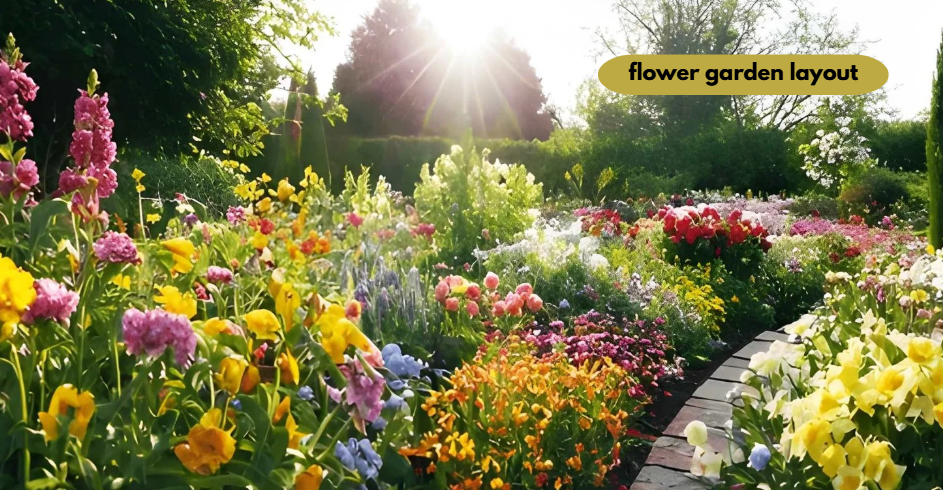
A flower garden layout starts with measuring your site’s sunlight, sizing the bed so you can reach every plant, and spacing flowers by their mature height. Sketch the bed to scale, place tall plants at the back, repeat a few varieties, and mulch right after planting.
Key Takeaways
- Flower beds do best in spots that get at least six hours of direct sunlight daily, the threshold Cornell Cooperative Extension uses to define full sun.
- A border you work from the lawn stays easy to reach at 2 to 3 feet deep, based on Colorado State University Extension guidance.
- Give each perennial room based on its adult height: about 12 inches for plants under 2 feet, 18 to 24 inches for mid-height plants, and 2 to 3 feet for taller ones, following Penn State Extension.
- A 36-square-foot border fits roughly 20 perennials and uses 6 to 9 cubic feet of mulch plus about 22 gallons of water a week after plants settle in.
- Roughly half of the U.S. landed in a warmer half zone on USDA’s 2023 hardiness map, so confirm your current zone before you shop for perennials.
What Is a Flower Garden Layout?
A flower garden layout is a scaled plan showing where each plant goes in a bed, based on sunlight, mature size, height, and bloom time. It turns a cart of nursery pots into a bed that still fits together three summers later.
Planning matters more as costs climb. The National Gardening Association’s 2026 National Gardening Survey, published May 19, 2026, reports:
- Per-household lawn and garden spending hit a record $740 in 2025, up 18.3% from 2024.
- Household participation fell from 84.1% to 79.2% over the same year.
The participation figures cover all lawn and garden activities, including lawn care, not flower gardening alone.
How Do You Plan a Flower Garden Layout Step by Step?
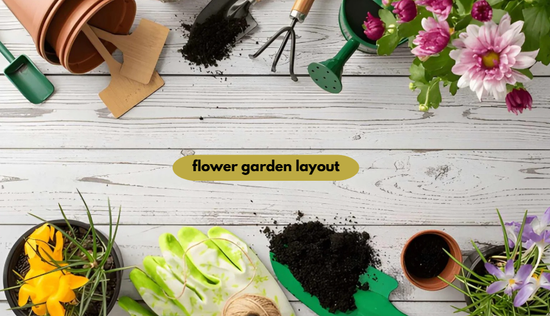
Plan a flower garden layout in seven steps, in this order, so you buy plants that fit the site. If you’ve never drawn a plan before, these steps show you how to design a garden layout from scratch.
- Map the sunlight. Total the hours of direct sun on a clear day. Cornell Cooperative Extension says most flower garden plants prefer full sun.
- Find your hardiness zone. On the USDA Plant Hardiness Zone Map, enter your ZIP code. The 2023 edition shifted about half the country into the next warmer half zone.
- Test the soil. Your county extension office can test it. Penn State Extension says most perennials prefer a pH of 6.0 to 7.0.
- Size the bed. Make it narrow enough that you can reach every plant without stepping on the soil.
- Sketch it to scale. Use graph paper at one square per foot, and mark north, buildings, and trees.
- Place plants by height. Put the tallest at the back or center, and repeat a few varieties along the bed.
- Plant, mulch, and water. Spread 2 to 3 inches of mulch and water deeply right after planting, per Penn State Extension.
How Tall Should the Back Row Be?
The tallest plants should reach no more than about two-thirds of the bed’s width in a border, or half its width in an island bed. By that Cornell guideline, a 3-foot-deep border tops out near 2 feet.
How Far Apart Should You Space Flowers in a Bed?
Space perennials by their mature height, not their pot size. The table uses Penn State Extension’s spacing guidance, with plant counts for one 10-foot row.
| Mature plant height | Spacing between plants | Plants per 10-foot row | Usual position |
| Under 2 feet | 1 foot | 10 | Front edge |
| 2 to 3 feet | 1.5 to 2 feet | 5 to 6 | Middle |
| 3 feet or taller | 2 to 3 feet | 3 to 5 | Back or center |
Raised beds follow tighter width rules, according to Iowa State University Extension:
- A raised bed you can reach from both sides can be 3 to 4 feet wide.
- A raised bed against a fence or wall should be 1.5 to 2 feet wide.
Worked Example: A 3-by-12-Foot Beginner Border
A 3-by-12-foot border holds about 20 perennials, needs 6 to 9 cubic feet of mulch, and uses roughly 22 gallons of water a week once established.
| Item | Calculation | Result |
| Bed area | 3 ft × 12 ft | 36 sq ft |
| Back-row height limit | 3 ft × 2/3 | 2 ft tall |
| Back row, 2-ft plants at 1.5-ft spacing | 12 ÷ 1.5 | 8 plants |
| Front row, plants under 2 ft at 1-ft spacing | 12 ÷ 1 | 12 plants |
| Mulch, 2 to 3 inches deep | 36 × 2/12 to 36 × 3/12 | 6 to 9 cu ft |
| Water, 1 inch per week | 36 × 144 × 1 ÷ 231 | About 22 gallons |
- The 231 in the water math converts cubic inches to gallons, because one U.S. gallon equals 231 cubic inches.
- Iowa State University Extension puts many perennials at 1 to 1.5 inches of water per week. In hot, dry stretches, that means up to about 34 gallons for this bed, and rainfall counts toward the total.
- With 2-cubic-foot mulch bags, buy three for a 2-inch layer or five for 3 inches.
How Do You Get Year-Round Flowers From One Bed?
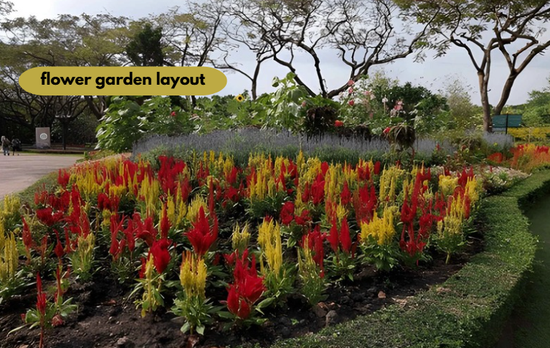
You get year-round flowers by choosing plants for each season and writing their bloom months on your sketch. In cold zones, year-round means year-round interest rather than constant bloom.
- Spring: daffodils and other bulbs planted the fall before.
- Summer: perennials such as coneflower and salvia.
- Fall: asters, sedum, and ornamental grasses.
- Winter: evergreen shrubs and grasses left uncut.
Repeat each season’s group in at least two spots so color moves along the bed. Your USDA zone, based on each location’s average coldest winter night, decides which of these survive.
What Is the Most Common Flower Garden Layout Mistake?
The most common mistake is spacing plants based on their nursery-pot size rather than their mature size. Small pots invite overcrowding, and by the second or third summer the plants compete for space.
Why crowding causes problems:
- Penn State Extension says densely planted gardens are hard to maintain. It also notes most perennials need division every three to four years, even at correct spacing.
- Cornell advises leaving at least 2 feet between back-row shrubs and perennials for airflow and access.
How to fix it:
- Plant at full mature spacing, and fill the gaps with annuals for a season or two.
- Group plants with similar water needs, as the University of Wyoming Extension recommends.
Can I Design My Own Garden Without Hiring a Designer?
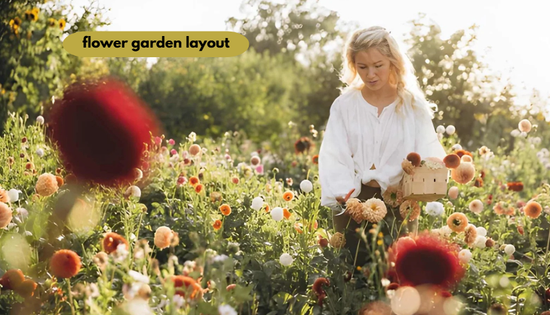
Yes. A beginner can design a working flower bed with a tape measure, graph paper, and a few days of sun observation. Most people asking can I design my own garden need a smaller first project, not more expertise.
Start with these easy gardening tips for people with no experience:
- Start with one bed of 30 to 40 square feet before planting the whole yard.
- Water deeply and less often. Iowa State recommends soaking beds 8 to 10 inches deep.
- Keep mulch off plant stems.
- Limit the bed to three to five kinds of plants, repeated in groups.
For whole-yard direction, the KDAGardenation Guide coverage of landscape ideas from Morph favors native plants and rain gardens, which are adapted to local weather and need less care.
When Does the Standard Layout Advice Not Apply?
Renters and balcony gardeners can skip bed widths and row spacing, because container size sets the limits instead. Hanging plants are the clearest case. Colorado State University Extension says hanging baskets dry out faster than any other container and often need checking once or twice a day, and Iowa State notes that plastic baskets hold moisture longer than lined wire frames.
Frequently Asked Questions
What is the easiest flower garden layout for beginners?
A straight border 2 to 3 feet deep, with taller plants behind shorter ones, is the easiest layout for beginners. You tend it from the lawn or path without stepping on the soil, and it needs only two rows of plants.
How many plants do I need for a flower bed?
Divide the length of each row by its recommended spacing, then add the rows together. A 10-foot row of short plants at 1-foot spacing takes 10 plants, while taller plants at 2-foot spacing take 5.
How many hours of sun does a flower garden need?
The majority of plants in flower gardens require at least six hours of direct sunlight each day. Some grow in less light but bloom better in full sun, according to Cornell Cooperative Extension, so reserve shady spots for shade-tolerant flowers.
Which flowers bloom all year long?
No single flower blooms year-round in most U.S. climates, so continuous color comes from combining plants with different bloom seasons. Pair spring bulbs, summer perennials, fall bloomers, and evergreens, and confirm each one suits your USDA hardiness zone.
Is there a free way to plan a flower garden layout?
Yes, graph paper, the free USDA zone map, and university Extension guides cover every planning step at no cost. KDAGardenation also publishes free beginner guides on garden layout and landscape design.
How thick should mulch be in a flower bed?
Cover the bed with mulch that is two to three inches deep. Both Iowa State University Extension and Penn State Extension suggest this depth and suggest protecting plant crowns by keeping mulch off of them.
Conclusion
A successful flower garden layout comes from four measurements taken before buying a single plant: sun hours, hardiness zone, reachable bed depth, and mature plant spacing. Sketch those numbers to scale, and a 36-square-foot border becomes an exact shopping list of about 20 plants, up to 9 cubic feet of mulch, and a weekly watering target of 22 gallons.