The best goldfish plant varieties for American homes are Columnea gloriosa, C. microphylla, C. × banksii, ‘Early Bird,’ and six other trailing or upright types with red, orange, or yellow fish-shaped flowers. All grow well in bright indirect light, 65–80°F temperatures, 50%+ humidity, and a loose, fast-draining mix.
Key Takeaways
- Goldfish plants belong to the genus Columnea, a group of tropical American plants in the same family as African violets.
- Columnea × banksii is the easiest variety for beginners because its waxy leaves handle average indoor humidity.
- Most goldfish plants bloom best when slightly root-bound and fed with a half-strength, high-phosphorus fertilizer.
- Temperatures below 55°F cause leaf drop, so most U.S. gardeners keep these plants indoors for most of the year.
- Only USDA zones 10 and 11 are warm enough to keep Columnea outdoors year-round.
What Is a Goldfish Plant?
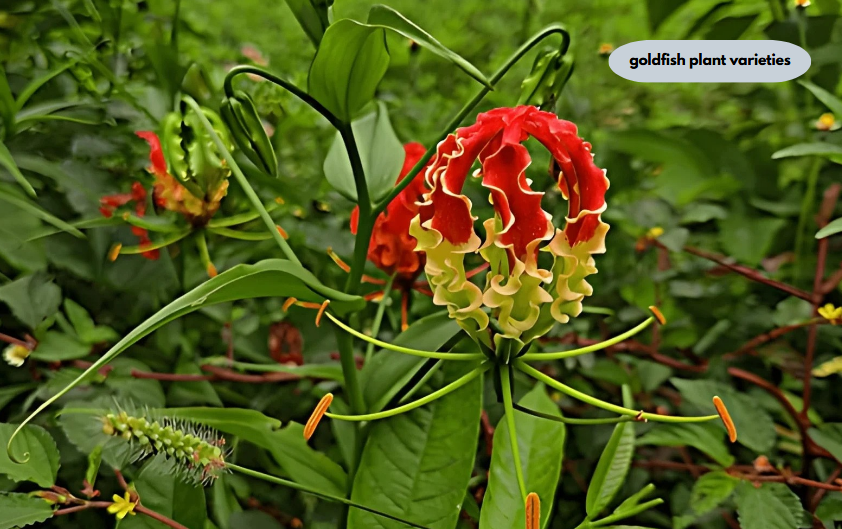
A goldfish plant is a tropical houseplant in the genus Columnea whose curved, tubular flowers look like small fish jumping out of the leaves.
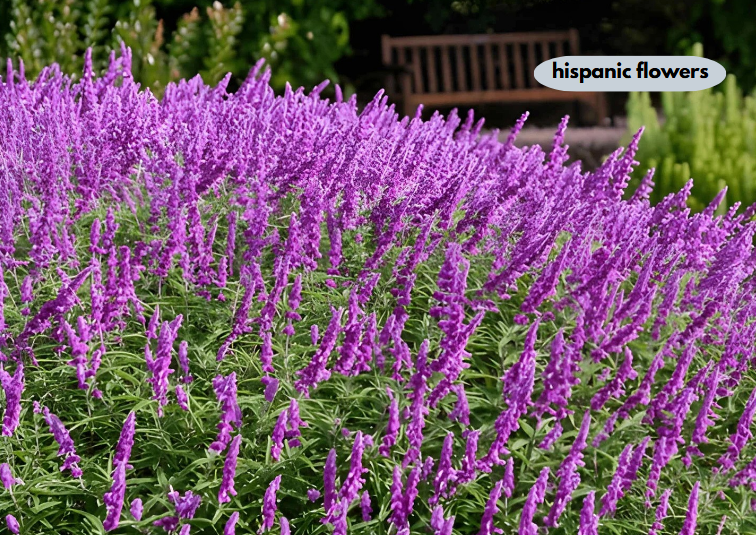
In the wild, these plants grow on rainforest tree branches from southern Mexico to South America. That range is why collectors often group them with hispanic flowers from the same region.
Botanists recognize more than 220 Columnea species, according to a 2026 study in the journal PhytoKeys. Only a small share are sold as houseplants, so start with the proven names below before hunting for rare species.
What Are the Best Goldfish Plant Varieties?
The ten most reliable types of goldfish plants fall into three groups: hairy-leaf trailers, glossy-leaf hybrids, and variegated or upright forms. Your home’s humidity decides which group suits you.
Hairy-Leaf Trailers
These types have the showiest flowers but need humidity near 50%.
- Columnea gloriosa: The classic goldfish plant, with red-tinged hairy leaves and scarlet flowers with yellow throats.
- Columnea microphylla: Tiny round leaves on very long, wiry stems, with bright orange-red flowers.
- Columnea hirta: Reddish hairy stems that root wherever they touch moist mix, which makes it the easiest to propagate.
- Columnea schiedeana: A native of Mexico with yellow blooms flecked in reddish-brown, favored by growers who collect mexican flowers.
Glossy-Leaf Hybrids
These are the easiest picks for dry, heated homes.
- Columnea × banksii: Thick, waxy leaves and scarlet flowers. It holds the Royal Horticultural Society’s Award of Garden Merit, which is granted only after strong trial performance, so it is the safest first purchase.
- Columnea ‘Early Bird’: A compact hybrid that blooms while small, with orange flowers and yellow tubes for much of the year.
Variegated and Upright Forms
Choose these when you want color from the leaves as well as the flowers.
- Columnea microphylla ‘Variegata’: Cream-edged tiny leaves that need brighter light to hold their color.
- Columnea ‘Broget Stavanger’: Cream-edged dark leaves and very large red flowers on vigorous stems, a strong fit for shaded porch landscape ideas.
- Columnea ‘Kewensis Variegata’: Gray-green and cream mottled leaves, with red flowers mainly in summer.
- Columnea crassifolia: An upright species with narrow, leathery leaves that handles drier air well.
Columnea Comparison Table
| Variety | Leaf type | Flower color | Habit | Flower length | Source |
| C. gloriosa | Hairy, red-tinged | Scarlet, yellow throat | Long trailer | — | — |
| C. microphylla | Tiny, fuzzy | Orange-red | Very long trailer | — | — |
| C. hirta | Hairy, reddish | Orange-red | Creeping trailer | — | — |
| C. schiedeana | Hairy, green | Yellow with red-brown marks | Arching | — | — |
| C. × banksii | Glossy, waxy | Scarlet | Trailer | 6 cm (2.4 in) | RHS Columnea × banksii plant profile |
| C. ‘Early Bird’ | Small, glossy | Orange, yellow tube | Compact | — | — |
| C. microphylla ‘Variegata’ | Tiny, cream-edged | Orange-red | Trailer | — | — |
| C. ‘Broget Stavanger’ | Cream-edged | Scarlet | Vigorous trailer | Up to 10 cm (3.9 in) | RHS Columnea ‘Broget Stavanger’ plant profile |
| C. ‘Kewensis Variegata’ | Mottled gray-green | Red | Trailer | 5 cm (2 in) | RHS Columnea ‘Kewensis Variegata’ plant profile |
| C. crassifolia | Narrow, leathery | Red | Upright | — | — |
Which Columnea Varieties Suit Your Home?
The right Columnea varieties for you depend first on winter humidity and second on light. Dry air damages hairy-leaf types faster than any other problem.
For Indoor Rooms
- Heated rooms under 40% humidity: C. × banksii, ‘Early Bird,’ or C. crassifolia.
- Bathrooms or kitchens near 50% humidity: C. gloriosa, C. hirta, or C. microphylla.
- North-facing rooms: C. × banksii with a full-spectrum grow light for 12 hours a day.
- Small spaces: ‘Early Bird’ or C. crassifolia, which stay compact without heavy pruning.
For Patios and Porches
Trailing types with strong stems, such as ‘Broget Stavanger’ and C. gloriosa, hold up best outdoors. When you design a garden layout around a covered patio, place these baskets on the north or east side, where they get morning light and afternoon shade.
How Do You Grow a Goldfish Plant Indoors?
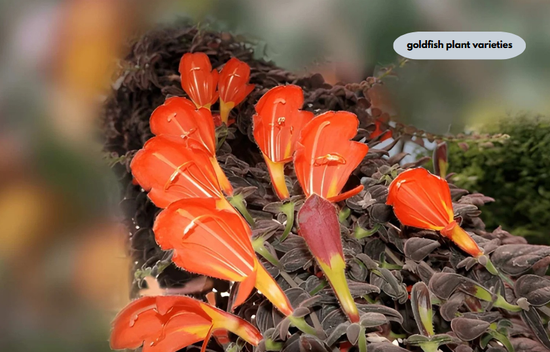
Give it bright indirect light, warm air, light but steady moisture, and humidity of 50% or more, then prune after each round of flowers.
Step-by-Step Care
- Light: Use an east window, or set the plant 3 feet back from a south or west window.
- Mix: Blend African violet mix with one-third extra perlite in a pot with drainage holes.
- Water: Use room-temperature water when the top inch feels dry, and switch to filtered or rainwater if your tap water is hard.
- Humidity: Add a pebble tray, a small humidifier, or group plants together, and skip misting fuzzy leaves in winter.
- Temperature: Keep it between 65°F and 80°F and never below 55°F.
- Feeding: Apply a half-strength, high-phosphorus fertilizer every 2 weeks in spring and summer, then monthly in winter.
- Pruning: Cut stems back by about one-third after blooming to force branching and more flower sites.
The KDAGardenation Guide approach for fuller baskets is to pinch new tips once a month during spring growth instead of waiting for one hard cut.
Moving It Outside for Summer
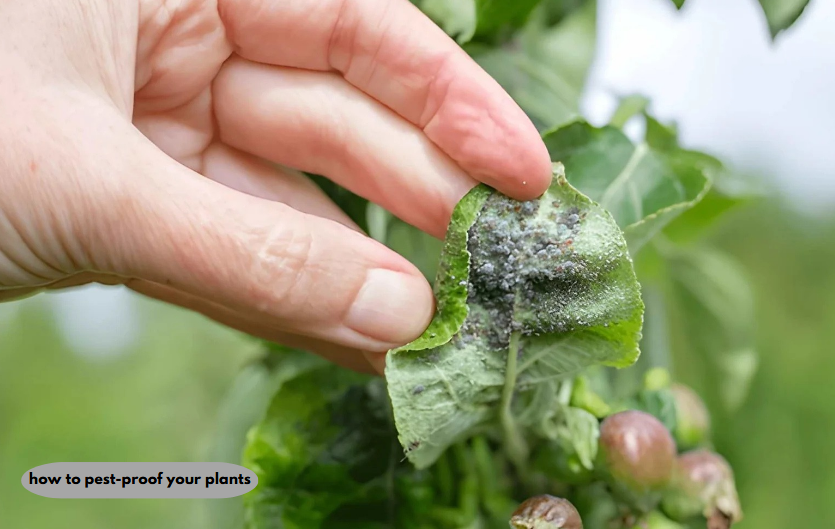
A summer stay in a shaded Backyard spot boosts growth once nights stay above 55°F. Before bringing it back indoors, check under the leaves for mealybugs and aphids.
Why Won’t My Goldfish Plant Bloom?
Most goldfish plants that refuse to bloom sit in a pot that is too large, get too little light, or never get pruned.
The Oversized Pot Mistake
New owners often repot into a much bigger container right after purchase. Roots then spend months filling the extra mix instead of feeding buds, and the wet soil around them starts to rot. Move up only 1 inch in pot diameter, and only every 2 to 3 years when roots circle the pot.
Worked Example: One Pruning, Five New Plants
Take a mature basket with 8 stems, each 30 inches long, and cut every stem back to 12 inches. That removes 144 inches of stem, which yields 36 cuttings at 4 inches each.
If you assume 20% fail, about 29 will root. Planted 5 per 4-inch pot, which gives you 5 full pots plus 4 spares, enough to repeat the same plant across small yard designs.
In 2025, the average U.S. household spent a record $740 on lawn and garden purchases, the National Gardening Association reports in its National Gardening Survey 2026 Edition. Rooting your own cuttings only costs mix and pots, so your budget goes way further than with new plants.
Can Goldfish Plants Grow Outdoors in the U.S.?
Year-round outdoor growing works only in USDA zones 10 and 11, such as South Florida, coastal Southern California, and Hawaii. Everywhere else, keep plants outside only while nights stay above 55°F.
Containers vs. In-Ground Planting
Columnea makes a poor in-ground plant. Dense soil in garden beds holds too much water for its fine, air-loving roots, so keep it in baskets or containers even in the warmest zones.
Where to Hang Baskets
Filtered shade is essential. Brackets beneath tall cypress trees or under a porch roof block harsh afternoon sun while keeping light bright.
Pairing With Other Plants
Mixed baskets of Columnea, ferns, and begonias add hummingbird-attracting color to shady corners. Because the baskets hang at eye level, they fit tropical garden designs without using ground space.
Exception: the usual “keep it warm year-round” advice fails for some hairy-leaf types from high-elevation cloud forests. These plants set more buds after 4 to 6 weeks of cooler nights near 60°F in late winter, with slightly drier soil. If a healthy, mature plant in a warm room never flowers, move it to a cooler, bright room for that period before changing anything else.
Frequently Asked Questions
Are goldfish plants toxic to cats and dogs?
No, goldfish plants are not considered toxic to cats or dogs. Pets that chew the leaves can still get an upset stomach, so keep hanging baskets out of their reach.
What is the difference between Columnea and Nematanthus?
Both are sold as goldfish plants, but Columnea usually trails with slender flowers while Nematanthus grows more upright with puffy, pouch-shaped flowers. Nematanthus has glossy leaves and handles drier air, so humidity matters most for Columnea.
How often does a goldfish plant bloom?
Most goldfish plants bloom heavily in spring and summer and lightly through the rest of the year in good light. Hybrids such as C. × banksii and ‘Early Bird’ flower most continuously.
Why are my goldfish plant’s leaves falling off?
Leaf drop usually comes from cold drafts, cold water, or soil that stayed too wet or too dry. Check the temperature first, then adjust watering so only the top inch dries between drinks.
How do you propagate a goldfish plant?
Root 3- to 4-inch stem tip cuttings in moist perlite or seed-starting mix under a clear plastic cover. Roots form in about 3 to 4 weeks at 70–75°F, and potting 3 to 5 cuttings together gives a full plant.
Conclusion
The best goldfish plant varieties all reward the same routine: bright indirect light, warm air, room-temperature water, and a snug pot. Among Columnea varieties, start with C. × banksii if your home is dry, then add a hairy-leaf type like C. gloriosa once you can hold humidity near 50%. Every pruning turns one plant into several new types of goldfish plants for your collection.