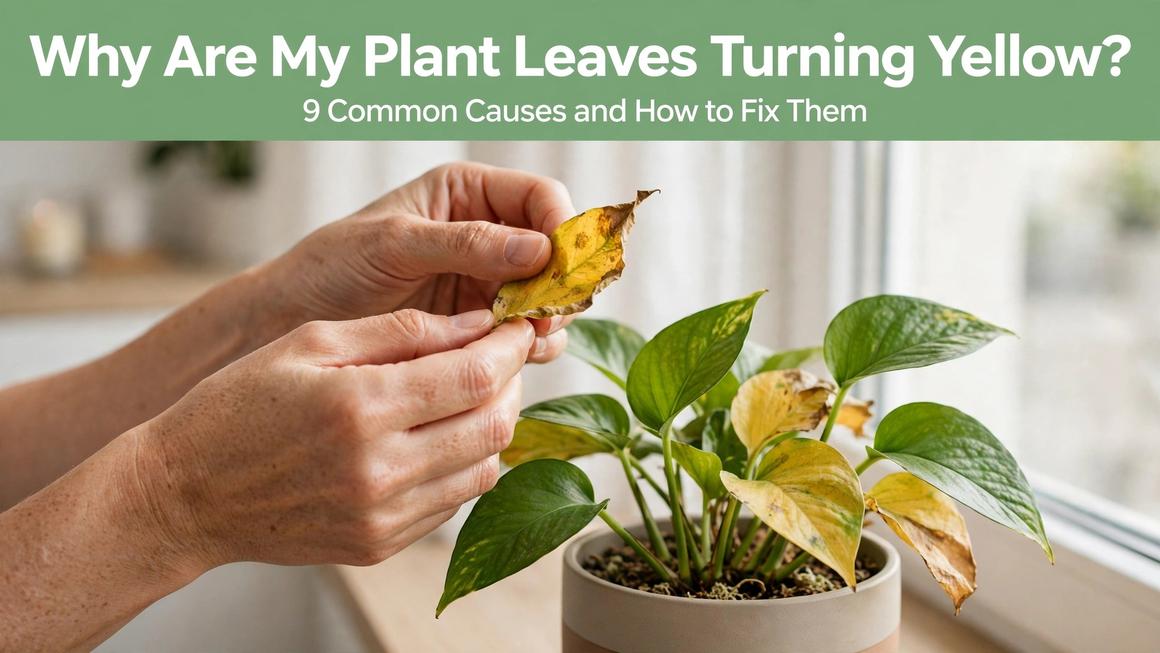
Why are my plant leaves turning yellow? Plant leaves usually turn yellow because of one of nine problems: overwatering, underwatering, nitrogen deficiency, iron deficiency, high soil pH, poor light, temperature stress, pests, or root damage. A quick clue: yellowing on older, lower leaves often points to nitrogen deficiency, while yellow new leaves with green veins suggest iron deficiency. Check where the yellowing starts, test soil moisture and pH, and fix that one cause before adding fertilizer.
Key Takeaways
- Overwatering ranks among the most common causes of yellow leaves because waterlogged soil starves roots of oxygen.
- Yellowing that starts on old, lower leaves usually signals a nitrogen shortage, while yellow new growth with green veins signals an iron problem.
- Alkaline soil can lock iron away from roots even when the ground contains plenty of it.
- A soil test identifies pH and nutrient problems that guesswork feeding misses.
- One or two fading leaves at the base of an otherwise healthy plant are normal aging, not a disease.
What Is Chlorosis?
Chlorosis is the yellowing of normally green leaf tissue that happens when a plant cannot make enough chlorophyll, the pigment it uses to capture light.
Yellow color is a symptom, not a diagnosis. The right fix depends entirely on what blocked chlorophyll production in the first place.
Why Are My Plant Leaves Turning Yellow? The 9 Causes
Nine problems explain nearly every case of yellow foliage. Rule out watering first; it takes two minutes.
- Overwatering. Soggy soil suffocates roots, so lower leaves go soft and pale. Let the top 2 inches dry, and use pots with drainage holes.
- Underwatering. Leaves yellow, curl, and crisp at the edges. Soak until water drains out, then water by soil feel, not the calendar.
- Nitrogen deficiency. The plant robs its oldest leaves first, so lower foliage yellows evenly. Feed a balanced fertilizer at the label rate.
- Iron deficiency. New leaves are yellow while veins stay green. Chelated iron spray brings quick color; pH correction makes it last.
- High soil pH. Alkaline soil locks up iron, manganese, and zinc. Test it, then lower pH with elemental sulfur.
- Wrong light. Low light causes pale, stretched growth; harsh sun bleaches patches. Move the plant gradually over a week.
- Temperature stress. Drafts, vents, and heat waves shock foliage. Keep houseplants away from doors and radiators. In outdoor living spaces, raise patio pots off hot concrete with pot feet or a plant stand.
- Pests. Spider mites, aphids, and scale leave stippled yellow specks. Rinse the plant and spray insecticidal soap weekly; use horticultural oil for scale.
- Root damage. Crowding, transplant shock, fertilizer burn, and rot choke nutrient uptake. Remove soft, brown roots and move the plant into new, fresh soil.
How Do You Tell Which Cause Is Making Leaves Yellow?
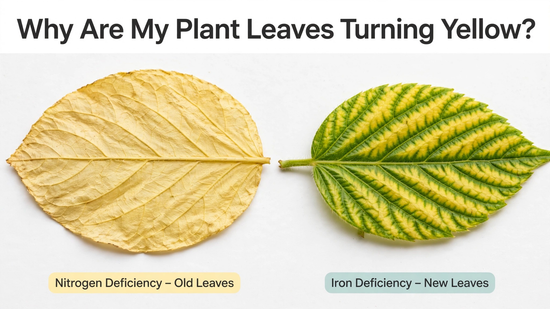
Where the yellow starts and the pattern it forms narrows down to two or three. Mobile nutrients like nitrogen show up on old leaves first; immobile ones like iron show up on new growth.
| Yellowing pattern | Where it starts | Most likely cause | First check |
| Even yellow, soft leaves, damp soil | Lower leaves | Overwatering or root rot | Finger test 2 inches deep; smell the roots. |
| Yellow with crispy brown edges | Lower and outer leaves | Underwatering | Pot feels light when lifted. |
| Uniform pale yellow, veins included | Oldest leaves | Nitrogen deficiency | Date of last feeding |
| Yellow between green veins | Newest leaves | Iron deficiency or high pH | Soil pH test |
| Tiny yellow specks or stippling | Scattered, worst on undersides | Pests | Tap a branch over white paper. |
| Bleached yellow-white patches | Side facing the sun | Too much light | Compare with shaded leaves. |
| Pale, leggy growth | Whole plant | Too little light | Distance from the window |
| Sudden yellowing after a change | Whole plant | Temperature or transplant shock | Recent move, draft, or repotting |
Treat the cause of the table flags first, and judge results by new leaves. The same method works for garden beds. If you’re planning a new yard, browsing landscape ideas from morph helps you match plants to sun and drainage before yellowing starts
How Does Soil pH Turn Leaves Yellow?
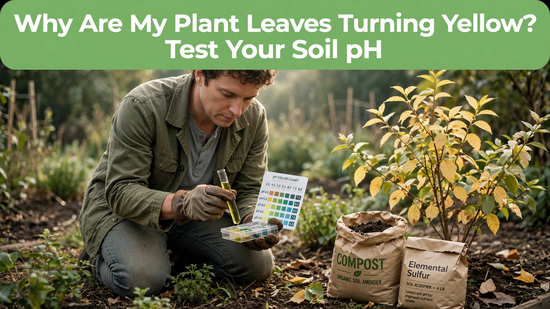
Soil pH controls how much iron roots can absorb, so plants in alkaline soil turn yellow even when iron is present.
The University of Illinois Extension reports that most plants can take up iron in its free-ion form only between pH 5.0 and 6.5 and that iron keeps getting less soluble as soil rises past 6.5 to 6.7.
Worked example: a soil test reading of 7.4 sits 0.9 units above that window. Lowering it takes time, and the amount of sulfur you need depends on your soil’s texture and lime content, so follow the rate on your soil test report. Soils with free lime may never acidify in practice; in that case, choose tolerant plants or grow in containers.
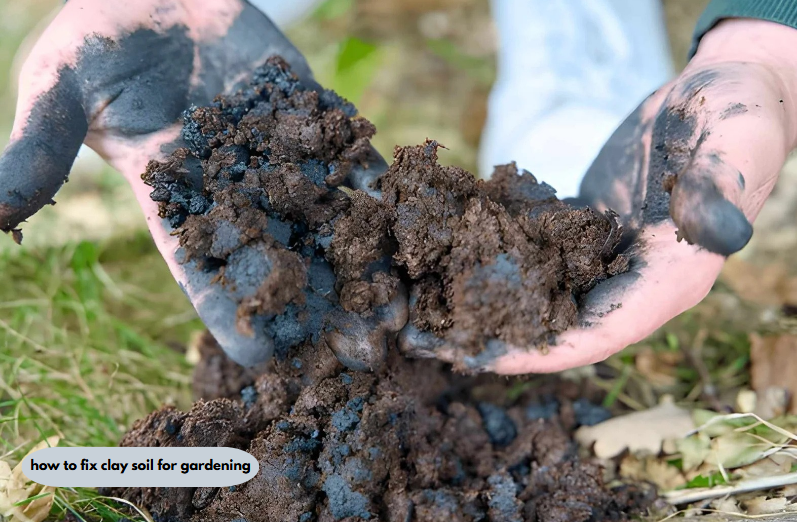
Use these soil improvement tips for better plant growth at home, and expect results in months, not days:
- Test first, then apply elemental sulfur at your report’s rate, split into two doses.
- Work 2 to 3 inches of compost into new beds to improve drainage.
- Grow blueberries and azaleas in containers if native soil stays alkaline.
Apply sulfur in the spring, because soil bacteria need warm, moist months to turn it into acid.
What Is the Biggest Mistake People Make With Yellow Leaves?
The biggest mistake is feeding before diagnosing. Fertilizer fixes only one of the nine causes and adds salt stress to the rest.
Yellow looks like hunger, so people buy fertilizer first. American households spent a record $79.0 billion on lawn and garden activities in 2025, up 13.5% from 2024, according to the National Gardening Association’s National Gardening Survey 2026 Edition. Keep your share of that out of the wrong bottle with this sequence:
- Stop feeding.
- Check soil moisture 2 inches down.
- Match the pattern to the table, and test pH if veins stay green.
- Change one thing, then wait two to three weeks.
When designing gardens, build this order into your routine: test the soil before the first fertilizer purchase, not after the first yellow leaf.
Can Your Garden Layout Cause Yellow Leaves Outdoors?
Yes. Placement sets light, drainage, and soil chemistry, so a bad spot yellows leaves no matter how well you water.
To design a garden layout that stays green, map sun hours and soggy spots first. Plant acid-lovers away from foundations, since concrete leaches lime into nearby soil.
North Dakota State University Extension notes that most soils producing iron chlorosis test above pH 7.5. Symptoms show at that level, but iron starts losing solubility at 6.5 to 6.7, so beds between those values need tolerant species or amendment.
How Do You Prevent Heat-Stress Yellowing in Summer?
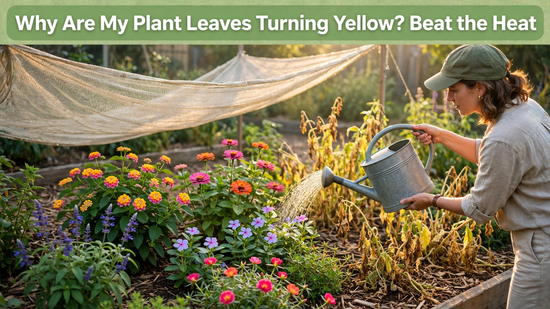
Heat-tolerant species stay green where tender bedding plants yellow. Heat stress shows as afternoon wilting and yellowing, even in moist soil.
The most reliable fix is choosing plants that handle heat. Across the South and Southwest, easy flowers to grow in hot weather climates include lantana, zinnia, vinca, portulaca, and salvia.
Three habits help any summer bed:
- Water deeply in the early morning.
- Mulch 2 to 3 inches deep to keep roots cool.
- Use 30% to 40% shade cloth during long heat waves.
When Are Yellow Leaves Normal?
Some yellowing is normal. Deciduous shrubs yellow in fall, houseplants shed an old bottom leaf now and then, and golden cultivars like ‘Neon’ pothos stay chartreuse by design. If new growth looks healthy, pull the old leaf and change nothing.
FAQ
Can yellow leaves turn green again?
Usually not, because a fully yellow leaf has broken down its chlorophyll for good. Leaves with mild nitrogen or iron yellowing sometimes regain partial color within weeks of correction. Watch new growth to confirm the fix.
Should I cut off yellow leaves?
Yes, remove leaves that are more than half yellow once you have identified the cause. Use clean snips, and bag leaves with pest or disease damage instead of composting them.
Do Epsom salts fix yellow leaves?
Epsom salts help only when the plant truly lacks magnesium. Magnesium shortage shows as yellow tissue between veins on older leaves, and a soil test confirms it. Extra magnesium does nothing for soil that already has plenty, except add to salt buildup.
Why do leaves turn yellow after repotting?
Transplant shock is the usual reason, since torn root hairs cannot supply the foliage for a week or two. Keep the plant out of direct sun, water lightly, and skip fertilizer for about a month.
Can too much fertilizer turn leaves yellow?
Yes, excess fertilizer salts burn roots and cause yellow leaves with brown, crispy tips. A white crust on the soil surface or pot rim confirms salt buildup. Flush the pot by running plain water through it for several minutes, then let it drain fully.
Conclusion
The fastest answer to why are my plant leaves turning yellow comes from the plant itself, because the position and pattern of the yellow point straight to the cause. Fix water and light first, test soil pH before you feed, and judge every correction by the next set of new leaves.