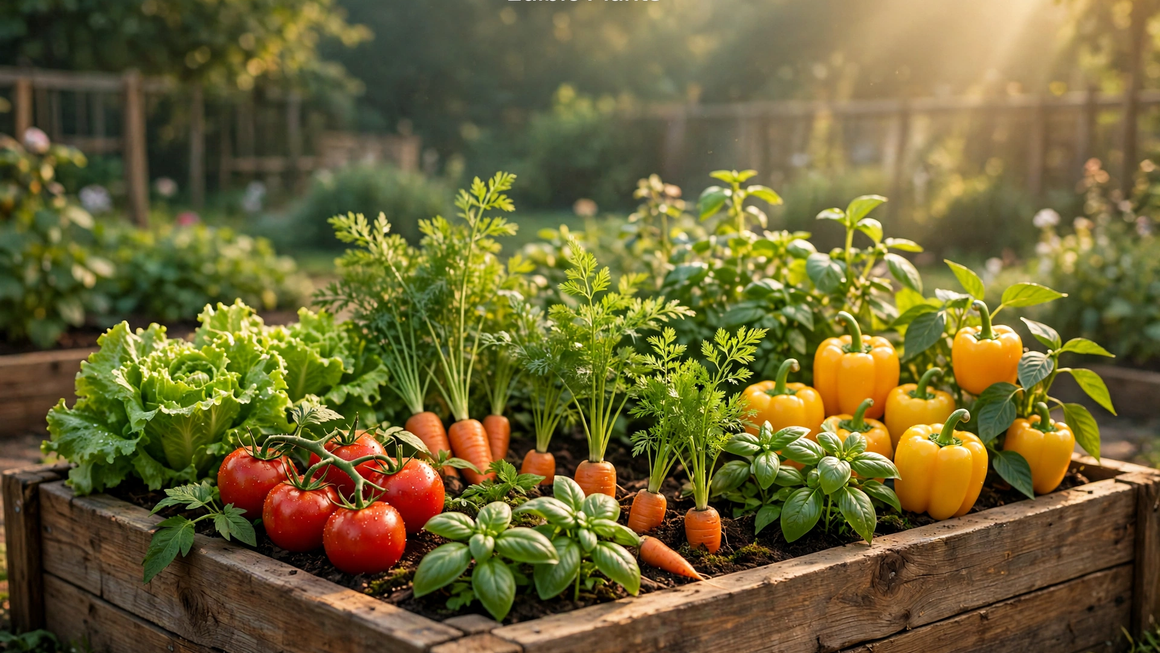
Edible plants are any vegetables, herbs, fruits, or flowers you can grow and safely eat, and most beginners succeed by starting with fast, forgiving crops in one sunny raised bed. Match each plant to your hardiness zone and sunlight, feed the soil with compost, and water deeply twice weekly.
Key Takeaways
- A single 4-by-8-foot raised bed holds 32 square feet, enough room for about 180 plants when you plant by the square foot.
- Leafy greens and radishes tolerate four to six hours of direct sun, while tomatoes, peppers, and beans need six to eight.
- Your USDA hardiness zone and local frost dates decide when each crop goes into the ground.
- Overcrowding is one of the most common beginner mistakes, because packed plants compete for light, water, and airflow.
- Soil testing matters most in older urban yards, where lead from old paint and past gasoline use can linger.
What Are Edible Plants?
Edible plants are species with at least one part, such as a leaf, root, fruit, seed, stem, or flower, that people can eat safely when it is grown and prepared correctly.
The category stretches well past the produce aisle.
Gardeners sort food crops into four groups, and each group asks for different care:
- Annual vegetables such as lettuce, beans, and tomatoes complete their life cycle in one season, so you replant them every year.
- Culinary herbs split between tender annuals like basil and cilantro and woody perennials like thyme, sage, and rosemary.
- Perennial fruits and vegetables such as asparagus, rhubarb, strawberries, and blueberries return each spring from the same roots.
- Edible flowers like nasturtiums, calendula, and squash blossoms brighten salads and pull pollinators into the bed.
Edibility also depends on the part. Rhubarb stalks belong in pie, but the leaves carry oxalic acid and stay out of the kitchen; tomato and potato foliage are off the menu too.
Edible Plants vs. Wild Edibles
This guide covers edible plants you grow yourself. Wild edibles such as dandelion, purslane, and wild garlic are foraged rather than planted, and many have toxic look-alikes. Learn to identify them with a regional field guide or a local foraging class before you eat anything picked from the wild.
Which Edible Plants Should Beginners Grow First?
Start with crops that mature fast and forgive mistakes: radishes, leaf lettuce, kale, bush beans, basil, and cherry tomatoes. Each one delivers a harvest inside a single season, which builds the skills slower crops demand.
| Crop | Minimum direct sun | Plants per square foot | Days to harvest | Best season |
| Radish | 4–6 hours | 16 | 25–30 from seed | Spring, fall |
| Leaf lettuce | 4–6 hours | 4 | 45–55 from seed | Spring, fall |
| Kale | 4–6 hours | 1 | 50–65 from seed | Spring, fall |
| Bush beans | 6–8 hours | 9 | 50–60 from seed | Summer |
| Carrots | 6 hours | 16 | 60–75 from seed | Spring, fall |
| Basil | 6–8 hours | 1 | About 30 from transplant | Summer |
| Sweet peppers | 6–8 hours | 1 | 60–90 from transplant | Summer |
| Cherry tomatoes, staked | 8 hours | 1 | 60–70 from transplant | Summer |
Use the days column as a countdown. If your first fall frost sits 70 days away, carrots sown this week will finish in time, while peppers set out today will not.
Cool-season vs. warm-season crops
Cool-season crops grow best between roughly 40°F and 75°F and shrug off light frost, while warm-season crops stall below 50°F and die at the first freeze. Peas, spinach, lettuce, kale, radishes, and carrots sit in the cool group; tomatoes, peppers, beans, squash, cucumbers, and basil sit in the warm group.
Split your calendar to match. Plant cool crops in early spring, swap in warm crops after the last frost, then return to greens and roots in late summer for a fall harvest.
How Do You Grow Vegetables at Home Step by Step?
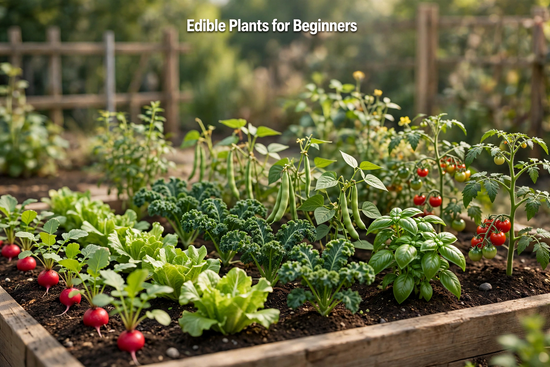
Pick a spot with at least six hours of sun, build rich soil, plant on the right date for your zone, and then water and harvest on a routine. If you’re asking how to grow vegetables at home, these same six steps work every season.
- Find your zone and frost dates. Enter your ZIP code in the USDA hardiness map, then ask your county extension office for your average last spring frost.
- Track the sun for one full day. Check the site at 9 a.m., noon, 3 p.m., and 6 p.m., and count the hours of direct light.
- Build the soil. Work 2–3 inches of finished compost into the top 6–8 inches of ground, or fill a raised bed with a topsoil and compost blend.
- Plant on schedule. Sow cool-season crops two to four weeks before the last frost; hold tomatoes and peppers until nights stay above 50°F.
- Water deeply and mulch. Deliver about an inch of water per week in two long soakings, then spread 2 inches of straw or shredded leaves.
- Harvest early and often. Pick beans, herbs, and greens every few days so the plants keep producing.
Recheck your zone even if you planted years ago. With its 2023 Plant Hardiness Zone Map, the USDA Agricultural Research Service moved roughly half of the U.S. up by one 5-degree half zone. A one-step warmer rating stretches your fall window, so try an early-August sowing of lettuce or kale this season.
Should you start from seed or buy transplants?
Sow fast crops directly from seed and buy transplants for slow, heat-loving ones. Radishes, beans, carrots, peas, and squash sprout quickly in garden soil, and carrots in particular resent being moved.
Tomatoes, peppers, and eggplant need six to eight weeks indoors under lights before they go outside. A six-pack of nursery seedlings skips that work, so buy transplants your first year and try seed-starting once the bed runs smoothly.
How often should you water a vegetable garden?
Water when the top inch of soil feels dry, which usually works out to two deep soakings a week in summer. Push a finger into the soil beside the plants, and if it comes out dry to the first knuckle, water until moisture reaches 6 inches down.
Morning beats evening. Leaves dry fast in daylight, and dry leaves resist fungal diseases such as powdery mildew and early blight; a soaker hose on a simple timer puts water at the roots and keeps foliage dry.
How Should You Plan Your First Vegetable Bed?
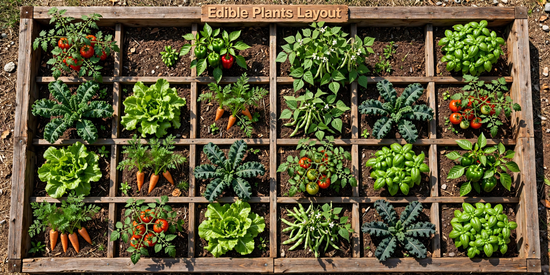
Put tall crops on the north side (in the Northern Hemisphere), group plants with similar water needs, and keep each bed narrow enough to reach the center without stepping on the soil. Four feet is generally the widest that works well for the average adult.
Before you design a garden layout on paper, measure the sunny area and sketch where morning and afternoon shade falls across it. That shade map, not personal preference, decides where every crop goes.
Worked example: one 4-by-8-foot raised bed
One 4-by-8-foot bed gives you 32 one-foot squares, enough to supply salads, herbs, and summer vegetables for one or two people.
- Row 1 (north), 8 squares: 4 staked cherry tomatoes and 4 sweet peppers.
- Row 2, 8 squares: 6 squares of bush beans at 9 per square (54 plants) and 2 kale plants.
- Row 3, 8 squares: 2 kale plants, 4 squares of lettuce (16 heads), and 2 basil plants.
- Row 4 (south), 8 squares: 6 squares of carrots (96 roots) and 2 basil plants.
That plan fits 182 plants into the frame. Filling it 12 inches deep takes 32 cubic feet of mix, about 1.2 cubic yards, or sixteen 2-cubic-foot bags.
Budget for the build separately from the planting. The National Gardening Association found that U.S. households spent an average of $88.24 on food gardening in 2021. Expect a first-year bed to exceed that figure because lumber and soil are one-time purchases, then plan on seeds, compost, and transplants as your main yearly costs.
Which plants grow well together?
Pair plants that use space at different heights or depths, and separate crops that compete or share pests. Basil tucked beside tomatoes fills the shaded ground under the vines, and quick radishes sown between slow carrots come out before the carrots need the room.
Rotate crop families every year. Tomatoes, peppers, eggplant, and potatoes all belong to the nightshade family and share soil-borne diseases, so move them to a fresh spot on a three-year cycle.
Which Edible Plants Grow Well in Containers?
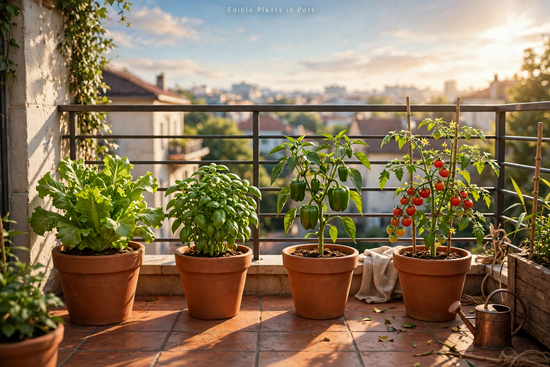
Herbs, lettuce, bush beans, peppers, and dwarf or determinate tomatoes all produce well in pots, provided each container is deep enough and drains freely. Any patio, balcony, or driveway with six or more hours of sun works.
Match the pot to the crop’s root zone:
- Lettuce, spinach, and radishes: 6 to 8 inches deep, any width.
- Basil, parsley, and thyme: a 1-gallon pot per plant.
- Peppers and bush beans: 3 to 5 gallons per plant.
- Dwarf or determinate tomatoes: at least 5 gallons, and 10 gallons for steadier moisture.
Fill containers with bagged potting mix, never garden soil, which compacts and suffocates roots in a pot. Containers dry out much faster than beds, so check them daily in July and August and feed with a liquid fertilizer every two weeks, since frequent watering flushes nutrients out the drainage holes.
Pick pots that suit your patio’s style, but judge the material by how it handles heat and water. Dark plastic overheats in full sun, unglazed terracotta wicks moisture away, and glazed ceramic or fabric grow bags land between the two.
How Do You Add Edible Plants to Your Landscape?
Mix edible plants into existing borders and foundation beds instead of hiding them in a back corner. Rainbow chard, purple basil, curly kale, and blueberry shrubs hold their own beside ornamentals.
Some of the most practical landscape ideas from morph plantings work the same way: a border shifts from ornamentals to edibles a few plants at a time, so you can test what thrives before ripping anything out. Keep evergreen shrubs as the permanent frame and rotate annual crops through the open spaces.
Which perennial edibles come back every year?
Asparagus, rhubarb, strawberries, blueberries, and woody herbs return every year once established, which cuts replanting work. Asparagus rewards patience: skip harvesting the first year, take a light picking the second, and cut freely from the third spring onward.
Blueberries demand acidic soil with a pH between 4.5 and 5.5, so test before planting and work in elemental sulfur if your reading runs higher. Strawberry beds need renewing every three to four years because aging plants set fewer and smaller berries.
Is Growing Your Own Food Cheaper Than Buying It?
Yes, for high-value crops like herbs, salad greens, and cherry tomatoes, though cheap staples such as potatoes and onions rarely earn back the space. A Kitchen Garden pays off fastest when it grows what you already buy every week.
The USDA Economic Research Service’s September 2026 Food Price Outlook projected retail fresh vegetable prices to rise 5.7% in 2026, against a 1.7% long-run average for the category. On a $40 weekly vegetable bill, that forecast adds about $119 a year, so growing your own herbs and greens trims the fastest-rising costs.
Here’s how the savings work in practice. If you buy one $3 clamshell of fresh basil a week from June through September, that’s about $48 a season. Two basil transplants at around $4 each can supply the same amount, which saves roughly $40 on a single herb. Adjust these prices to what you pay locally.
What Mistakes Do New Food Gardeners Make?
Overcrowding is the mistake beginners make most often. Seedlings look tiny at planting time and give no hint of their mature size, so beginners keep every one, and the crowded plants starve each other of light, water, and air.
The fix takes scissors, not courage. Thin to the spacing in the table once seedlings show their first true leaves, and snip extras at soil level instead of pulling them, which protects the roots of the keepers.
A related error when designing gardens is placing beds where they look tidy rather than where the sun actually falls. A bed in a maple’s afternoon shade grows decent lettuce but never ripens a tomato.
Two watering and sowing habits also cause trouble: light daily sprinkling, which trains roots to stay shallow, and sowing all the lettuce on one weekend. Water deeply twice a week instead, and sow a short row of greens every two weeks for a steady supply.
How do you control pests without harsh chemicals?
Start with barriers and hand-picking, and reach for sprays only when damage spreads. Lightweight row covers keep cabbage worms off kale and flea beetles off young greens; pull the covers from squash and cucumbers once flowers open so bees can pollinate.
Inspect leaf undersides twice a week. Blast aphids off with a strong stream of water, drop tomato hornworms into soapy water, and plant dill, sweet alyssum, and calendula nearby to attract lacewings and parasitic wasps that hunt pests for you.
Planting straight into the ground works for most yards, but not for older city lots near busy roads or aging painted houses. Mail a soil sample to your state extension service for testing before you start planting. If lead readings come back high, grow in raised beds lined with landscape fabric and filled with imported soil, and favor fruiting crops like tomatoes over root vegetables and leafy greens, which take up more lead.
Frequently Asked Questions
What is the easiest edible plant to grow?
Radishes are the easiest edible plant for most beginners because they sprout within days and finish in about a month. Sow them thinly in spring or fall, keep the soil evenly moist, and pull them promptly so the roots stay crisp instead of turning woody.
How much space do you need to grow your own food?
A 4-by-8-foot bed of about 32 square feet supplies steady greens, herbs, and summer vegetables for one or two people. Families aiming to replace most store-bought produce usually need three or four beds of that size.
Can you grow edible plants indoors?
Yes, herbs, microgreens, and leaf lettuce grow well indoors under a full-spectrum LED light running 12 to 16 hours a day. Fruiting crops such as tomatoes need far more light plus hand pollination, so most growers keep them outdoors.
When should you start a vegetable garden in the United States?
Start cool-season crops two to four weeks before your average last spring frost, and plant warm-season crops after that date passes. In zones 9 and warmer, fall and winter become the prime seasons for lettuce, carrots, and kale.
Do edible plants need fertilizer?
Most edible plants need little fertilizer when the soil already holds plenty of compost. Heavy feeders such as tomatoes and peppers benefit from a balanced organic fertilizer at planting and again when the first fruits set, while leafy greens respond to a nitrogen-rich side dressing at midseason.
Conclusion
Edible plants pay you back fastest when you start small, plant by the square foot, and time every crop to your zone. One well-planned bed of greens, herbs, and tomatoes teaches more than a sprawling plot you cannot keep up with. Grow what your household eats most, and expand only after your first harvest proves the system works.