
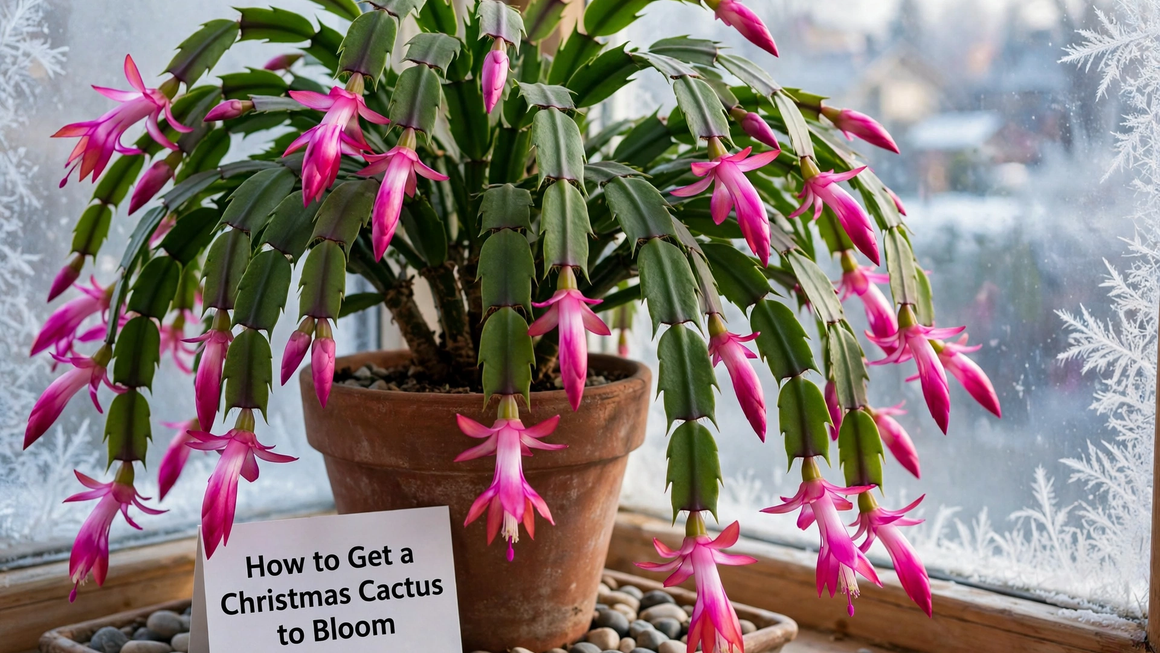
To learn how to get a Christmas cactus to bloom, copy the plant’s natural autumn: give it long, unbroken nights and cool temperatures for several weeks starting in October, while cutting back on water and fertilizer. Once buds appear, keep conditions steady so the plant holds them until they open.
Key Takeaways
- A Christmas cactus forms flower buds in response to long nights, cool temperatures, or both together.
- Stray light from lamps, TVs, or streetlights during the dark period can stop buds from forming.
- Starting long-night treatment in early October gives the best odds of open flowers on December 25.
- Sudden moves, heat vents, cold drafts, and soggy soil cause most bud drop.
- A fast-draining mix, a snug pot, and spring pruning lead to more flowers each year.
What Is a Christmas Cactus?
A Christmas cactus (Schlumbergera) is a tree-dwelling succulent from the mountain forests of southeastern Brazil that stores water in flat, jointed stems and flowers when autumn nights turn long and cool.
In the wild, its roots grip bark and mossy branch forks, not sand. That habitat explains its care: filtered light, airy roots, and regular but never soggy moisture.
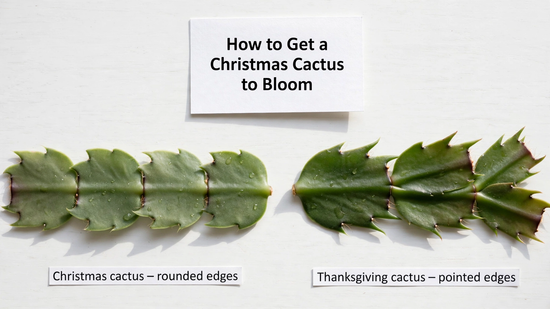
Check your plant first. Many plants sold as Christmas cactus are actually Thanksgiving cactus. Look at the stem edges: rounded scallops mean Christmas cactus, while pointed, claw-like teeth mean Thanksgiving cactus, which blooms about a month earlier. The flowers give a second clue: the Thanksgiving cactus has yellow pollen, and the Christmas cactus has purplish-brown pollen.
How to Get a Christmas Cactus to Bloom: 9 Tips That Work
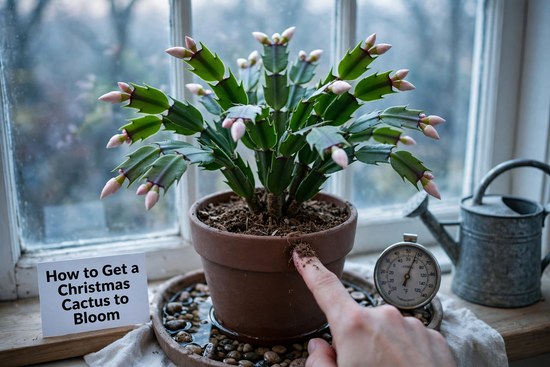
Darkness and cool nights trigger the buds. Water, food, and a steady location decide whether those buds survive to open.
- Long, unbroken nights. University of Illinois Extension recommends at least 12 hours of continuous darkness each night for five to six weeks. Even switching on a lamp in the room partway through the night breaks it. A closet routine from 6 p.m. to 8 a.m. gives you 14 hours, a two-hour cushion for nights you run late.
- Cool evenings. Aim for nights of 50–55°F. In a warmer room, between about 55 and 70°F, the plant relies on darkness alone, so stick strictly to the 13- to 14-hour dark routine. Keep it away from radiators, heat registers, and sunny glass that holds warmth after dark.
- Less water in fall. Water only when the top inch of soil feels dry. Wet roots rot, and a plant fighting rot drops flowers first.
- No fertilizer after summer. Stop feeding by early September so the plant shifts energy from new stems to buds.
- A snug pot. Mildly crowded roots push the plant toward flowering. Repot every three years or so, always in spring.
- Bright, indirect daylight. An east window is ideal. Stems that turn reddish or purple are getting too much direct sun.
- One location once buds form. Pick the display spot early and leave the plant there through bloom.
- Moderate humidity. Furnace air dries buds. A pebble tray filled with water raises humidity right around the pot.
- Spring pinching for more stem tips. Flowers form only at stem tips. Twist off one or two segments per stem in early June, and each stem branches into two or three new tips. Don’t throw the pinched pieces away: set three-segment cuttings 1 inch deep in damp mix, and they usually root in three to eight weeks. Those young plants make easy fillers for shady pots next summer, a handy option if you’re designing garden beds and pots for a covered porch.
When Should You Start the Dark Treatment for Christmas Blooms?
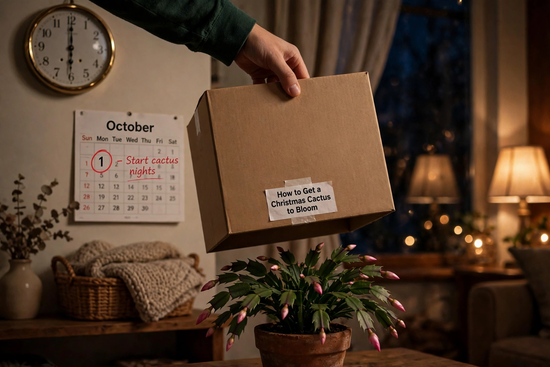
Start between October 1 and October 15 if you want flowers on Christmas Day. A November start usually pushes the show into January.
Purdue University’s consumer horticulture team says nights held near 50 to 55°F can replace the darkness routine completely and that plants on this cool method by early November should flower for the holidays. That deadline is later than the one for the darkness method, and it only holds if the room truly stays that cold every night. If your “cool” room creeps into the 60s, use the darkness schedule and its October dates.
The planner below counts forward from four start dates, using Purdue Extension’s guideline of 6–8 weeks of dark treatment before buds form. The flower column adds a two-to-three-week buffer for buds to swell and open.
| Dark treatment starts | Buds visible | Likely first flowers |
| Oct 1 | Nov 12 – Nov 26 | Nov 26 – Dec 17 |
| Oct 15 | Nov 26 – Dec 10 | Dec 10 – Dec 31 |
| Nov 1 | Dec 13 – Dec 27 | Dec 27 – Jan 17 |
| Nov 15 | Dec 27 – Jan 10 | Jan 10 – Jan 31 |
The Oct 15 row hides a trap. A slow plant started and won’t open until New Year’s Eve. To guarantee color on a set date, count back 12 weeks and start then.
Most late blooms come from a forgotten start date. The simplest fix is to add “Start cactus nights – Oct 1” to the seasonal task list you use when you design a garden layout each spring, so the reminder comes back every year.
Started Late? What to Do in Mid-November
If you missed October, start the darkness routine tonight and keep the plant as cool as you can, ideally 50–55°F at night. Both together are the fastest trigger. Going by the planner above, a mid-November start usually means first flowers in January rather than at Christmas. Don’t fertilize or repot to hurry it along, because both delay buds. If your plant has pointed stem edges, it’s a Thanksgiving cactus and may already be budding. In that case, leave it exactly where it is.
Why Is My Christmas Cactus Dropping Buds?
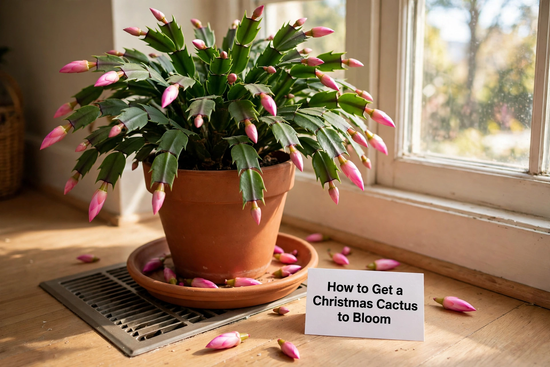
Bud drop almost always follows a sudden change in temperature, light, water, or location. A stressed plant sheds flowers it can’t support.
The classic mistake happens the week buds appear. The plant leaves a cool, dim closet for a warm, bright living room near a heat vent, and the buds fall within days. Run the darkness routine in the final display spot instead, with a cardboard box over the plant at night, so nothing changes when buds form.
Cold is the other half of the problem. It’s tempting to use a budded plant as garden decoration on the front steps, but near-freezing nights and wind kill buds, and they rarely survive even one frost. To have the cactus in your holiday display, keep it indoors in a window that faces the porch and away from exterior doors that blast cold air every time they open.
Overwatering rounds out the list. Check the soil before each watering, and empty the saucer 15 minutes after.
What Potting Mix and Pot Work Best?
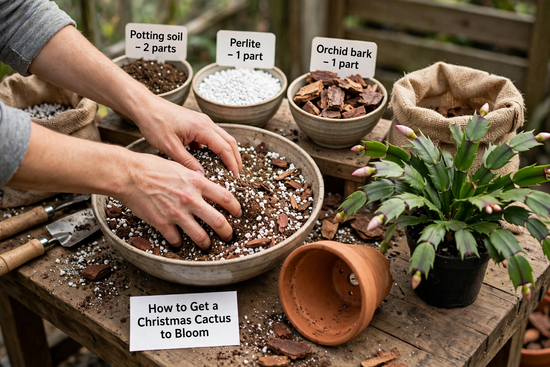
Use a loose, fast-draining mix in a pot with a drainage hole, one size larger than the root ball. Build the mix and choose the container with these guidelines:
- Potting soil, two parts: Forms the base and holds enough moisture between waterings.
- Perlite, one part: Opens air pockets so water drains fast and roots never sit wet.
- Orchid bark, one part: Mimics the bark crevices these plants cling to in the wild.
- Screened compost, optional: Adds slow-release nutrients; keep it to no more than one part in five.
- Terra cotta pot: Dries faster than plastic, which helps if you tend to overwater.
- Plastic pot: Holds moisture longer, which suits dry, heated homes where soil dries within days.
- Drainage hole: Non-negotiable; a decorative pot without one should only serve as an outer sleeve.
If you add compost to the mix, use only fully finished compost that smells earthy and crumbles in your hand. Unfinished compost can heat up and damage the fine roots. If you don’t have a bin yet, our guide on how to make compost at home covers the setup, and spent cactus flowers and spring trimmings can go straight onto the pile.
What Should You Do With a Christmas Cactus After It Blooms?
Give it a rest of about a month with slightly less water once the last flower fades. In spring, resume regular watering and feed every two to four weeks with a balanced houseplant fertilizer at half strength.
Many growers also add 1 teaspoon of Epsom salt per gallon of water once a month from spring through summer and find it keeps stems greener, since magnesium deficiency shows up as yellowing. Skip it in any month you feed with a fertilizer that already lists magnesium.
Watch for mealybugs in the stem joints during this rest period. Dab the white, cottony clusters with a cotton swab dipped in rubbing alcohol.
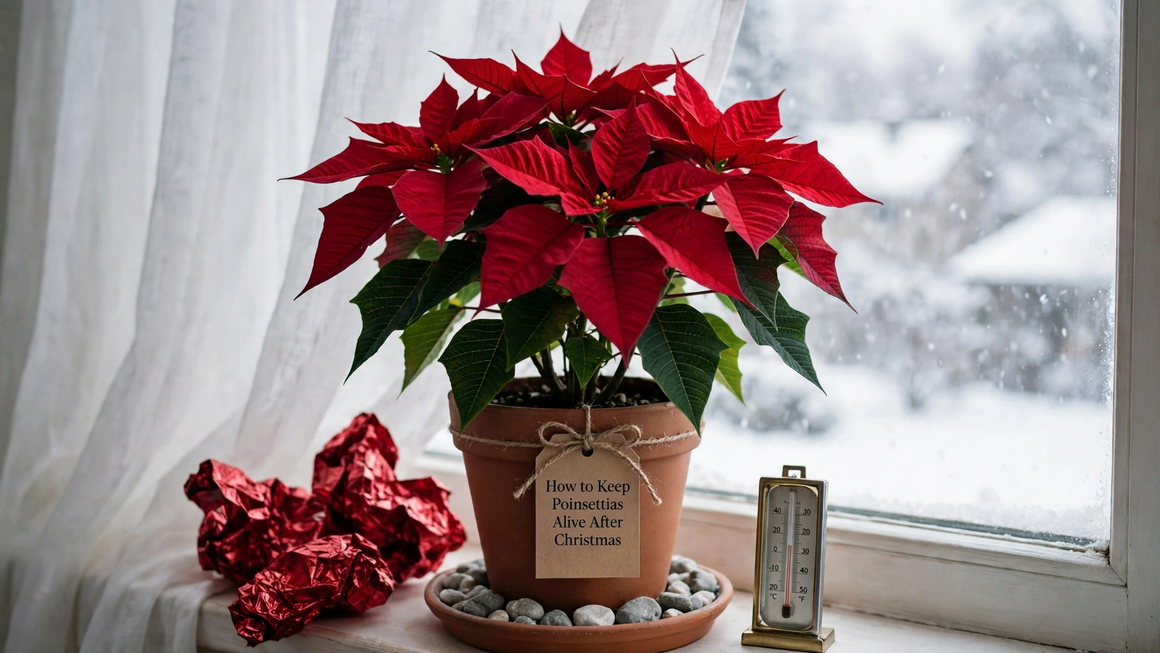
If a poinsettia shares the windowsill, the same habits carry over: steady temperatures, no drafts, and water only when the soil surface is dry. For its full after-holiday routine, see how to keep poinsettias alive after Christmas.
Can a Christmas Cactus Live Outdoors in Summer?
Yes. Once nights stay above 50°F, it can spend summer outside in bright shade, then return indoors before fall frosts.
A potted cactus on a shaded porch is one of the lowest-effort ways to keep gardening through summer, even if you’ve cut back on everything else.
In garden design terms, these pots belong where filtered light and foot traffic meet. Hang them at eye level under a covered patio, or group them with ferns and hostas beneath a tree canopy, where the arching stems hide the basket rims.
Outdoor summering helps flowering. Cool September nights start bud formation naturally, so bring the plant in gradually, adding a few indoor hours each day over a week.
The Exception: Easter Cactus and Grow-Light Plants
Not every holiday cactus follows this schedule. An Easter cactus (Rhipsalidopsis gaertneri) flowers in spring. It needs a cool, fairly dry winter rest—about 8–10 weeks of nights at 50–55°F with 14+ hours of darkness in late winter—rather than a fall darkness routine. A Thanksgiving cactus on a natural day length opens weeks before a true Christmas cactus. Plants under grow lights on long timers won’t set buds until you cut the light schedule to 10 hours or less.
FAQ
Why won’t my Christmas cactus bloom?
Warm nights, light leaking into its dark period, or late-season fertilizer are the usual reasons. A recent repotting or a very young cutting can also delay flowers by a full season.
Can a Christmas cactus bloom twice a year?
Yes, a healthy plant sometimes reblooms in late winter or spring. Repeating the long-night routine for several weeks after the first flush ends gives it a good chance.
Should I keep my Christmas cactus in the dark all day?
No, it needs bright daytime light to grow buds and only needs darkness overnight. Days of total darkness weaken the plant and stall flowering.
How often should you water a Christmas cactus while it’s blooming?
Water when the top inch of soil feels dry, which usually means every week or two indoors. Let excess water drain, and never leave the pot in a full saucer.
How long do Christmas cactus flowers last?
Each flower lasts several days, but a well-budded plant stays in color for several weeks. Cooler rooms stretch the display; warm rooms shorten it.
How can you tell a Christmas cactus from a Thanksgiving cactus?
Look at the stem edges: a Christmas cactus has rounded scallops, while a Thanksgiving cactus has sharp, claw-like points. The difference matters because the Thanksgiving type blooms weeks earlier.
Conclusion
The secret to how to get a Christmas cactus to bloom comes down to long nights, cool rooms, and patience. Start the darkness routine in early October, stop moving the plant once buds appear, and water only when the soil dries. Repeat those habits every fall, and the same plant can flower for decades. Missed October? Start tonight, keep nights cool, and expect flowers in January.

One thought on “How to Get a Christmas Cactus to Bloom: 9 Simple Tips for More Flowers ”