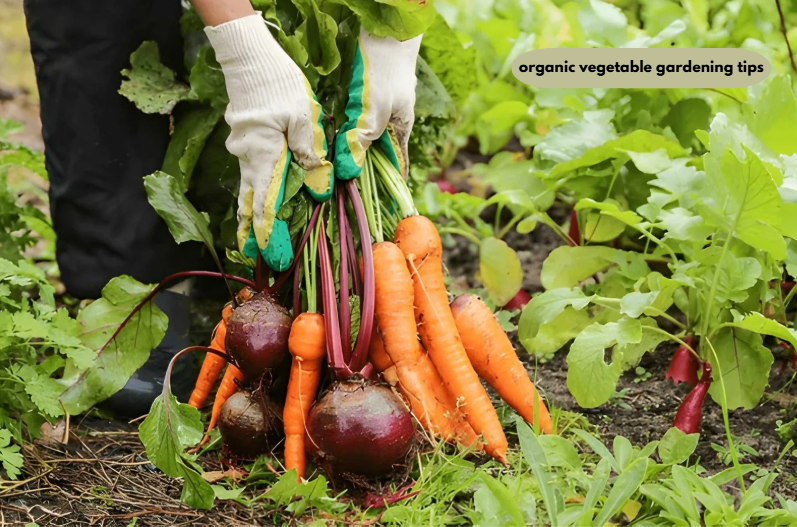
The most effective organic vegetable gardening tips are to build soil with compost, give plants six to eight hours of sun, water deeply at the roots, mulch, and rotate crops yearly. Start with one 4-by-8-foot raised bed and five or six easy crops, then expand once the soil improves.
Key Takeaways
- Healthy soil does most of the work in an organic garden, so compost matters more than any fertilizer or spray.
- Vegetables need six to eight hours of direct sunlight and about one inch of water per week.
- A single 4-by-8-foot bed covers 32 square feet and takes about one cubic yard of soil to fill 10 inches deep.
- Mulch, crop rotation, and hand-picking solve most weed, disease, and pest problems without synthetic chemicals.
- Beginners get the most food per square foot from lettuce, bush beans, tomatoes, peppers, and cucumbers.
What is organic vegetable gardening?
Organic vegetable gardening is growing food crops with natural soil builders such as compost and with non-synthetic pest controls instead of manufactured fertilizers, herbicides, and pesticides.
What are the best organic vegetable gardening tips for beginners?
The best tips put soil, sun, water, and timing ahead of products. These 15 habits run in season order, from the first soil test to fall cleanup.
- Test your soil first. A lab test through your state extension office shows pH and nutrient levels. Most vegetables do best in soil with a pH of 6.0 to 7.0.
- Add compost every season. Spread 1 to 2 inches over the bed each spring and mix it into the top few inches.
- Pick the sunniest spot. Tomatoes, peppers, and squash need eight hours of direct sun. Leafy greens produce on four to six.
- Start small. One bed you can weed in ten minutes outperforms a large plot you abandon in July.
- Choose resistant varieties. Buy organic or untreated seed and look for disease resistance on the label.
- Plant by frost dates. Plant cool-season crops ahead of the final spring frost. Warm-season crops go in after it.
- Water deeply, not daily. Soak the root zone once or twice a week, in the morning, at soil level.
- Mulch 2 inches deep. Straw, shredded leaves, or untreated grass clippings hold moisture and block weeds.
- Feed with organic sources. Compost covers most crops. Give heavy feeders such as tomatoes and corn aged manure or fish emulsion at midseason.
- Rotate crop families every year. Give each family’s spot a three-year break so soil-borne diseases and pests can’t build up. The four main families to rotate:
- Nightshades (Solanaceae): Tomatoes, peppers, potatoes, and eggplants. Hungry feeders, prone to blight.
- Legumes (Fabaceae): Bush beans, pole beans, and peas. They put nitrogen back into the soil.
- Cucurbits (Cucurbitaceae): Cucumbers, squash, zucchini, and melons.
- Brassicas (Brassicaceae): Broccoli, cabbage, kale, and radishes.
- Grow flowers nearby. Marigolds, sweet alyssum, and zinnias draw pollinators and insects that eat aphids.
- Scout twice a week. Check leaf undersides and remove pests and egg clusters by hand.
- Use barriers before sprays. Floating row cover keeps moths and beetles off young plants.
- Harvest often. Harvesting beans, cucumbers, and zucchini while they’re small encourages the plants to keep bearing.
- Cover the soil in fall. Sow crimson clover or lay shredded leaves so bare ground never sits through winter.
Food scraps and yard waste make up 20 to 30 percent of household trash, according to the U.S. Environmental Protection Agency. Send that material to a backyard bin, and as many as three of every ten trash bags become free compost for tip 2.
How do you start a vegetable garden with no experience?
Choose a sunny, level spot near a hose, build one bed, fill it with a soil and compost blend, and plant after your last frost date. If you are working out how to start a veggie garden from scratch, four numbers come first.
- Area: 4 feet × 8 feet = 32 square feet.
- Soil: 32 square feet × 0.83 feet, which is 10 inches, = 26.7 cubic feet, or about 1 cubic yard. A 60/40 blend needs 16 cubic feet of topsoil and 10.7 cubic feet of compost.
- Mulch: 32 square feet × 0.17 feet, which is 2 inches, = 5.3 cubic feet, or three 2-cubic-foot bags.
- Water: one inch of water on one square foot equals 0.62 gallons, so the bed needs about 20 gallons a week, rain included.
The common mistake is buying soil by the bag without doing this math. One cubic yard equals eighteen 1.5-cubic-foot bags, so price a bulk delivery against 18 bags before you buy.
In clay soil, raised garden beds warm faster in spring and drain better than flat ground.
Compared with the 2012 edition, the 2023 USDA Plant Hardiness Zone Map moved about half the country into a warmer half zone, according to the U.S. Department of Agriculture. Look up your ZIP code on the current map before trusting the zone printed on an old seed packet or planting calendar.
Which vegetables are easiest for a first garden?
Leaf lettuce, bush beans, tomatoes, bell peppers, cucumbers, and carrots are the easiest productive crops for a first garden. All of them forgive uneven watering and fit in a single bed.
The best vegetables to grow at home are the ones your household already eats every week.
Shoppers spent $21.5 billion on organic produce in 2024, according to the Organic Trade Association’s 2025 Organic Market Report. Every head of lettuce or pound of tomatoes you pick comes off that grocery bill, so check your last few receipts and plant what shows up most.
This plan fills one 4-by-8-foot bed exactly.
| Crop | Spacing | Square feet | Plants | When to plant |
| Tomatoes, staked | 1 per 4 sq ft | 8 | 2 | After last frost |
| Bell peppers | 1 per sq ft | 4 | 4 | After last frost |
| Cucumbers on a trellis | 2 per sq ft | 4 | 8 | After last frost |
| Bush beans | 9 per sq ft | 4 | 36 | After last frost |
| Leaf lettuce | 4 per sq ft | 4 | 16 | Early spring and fall |
| Carrots | 16 per sq ft | 4 | 64 | Early spring and late summer |
| Basil and marigolds | 1 per sq ft | 4 | 4 | After last frost |
| Total | 32 | 134 |
How should you arrange a vegetable garden in your yard?
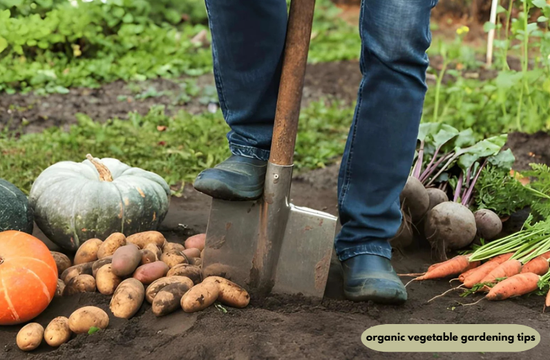
Run beds north to south, keep them no wider than 4 feet, and put tall crops at the north end so they never shade shorter ones. At 4 feet wide, the bed lets you reach its middle from both sides without walking on the soil.
When you design a garden layout, leave paths 18 to 24 inches wide for walking and 3 feet wide for a wheelbarrow.
Most yard designs push vegetables into a back corner. Put the bed within sight of the kitchen door and within reach of a hose, because a garden you walk past daily gets watered and picked on time.
A sound landscaping guide starts with a sun map. Sketch the yard, mark the shade at 9 a.m., noon, and 3 p.m., and place the bed where all three marks stay in sun.
Good garden design also plans for rotation. Divide the bed into four blocks by crop family and shift each block one position every spring.
How do you control pests and weeds without chemicals?
Prevention handles most problems: healthy soil, mulch, rotation, and physical barriers stop pests and weeds before any spray is needed. Follow this order when damage appears.
- Identify the insect. Most garden insects are harmless or helpful, so name the pest before acting.
- Hand-pick first. Drop beetles, hornworms, and egg clusters into soapy water.
- Cover the crop. Row cover stops repeat attacks on cabbage, squash, and young beans.
- Spray last. Insecticidal soap controls aphids, and Bt controls caterpillars. Apply either at dusk, when bees are inactive.
Pull weeds while they are under 2 inches tall and the soil is damp, then replace the mulch.
Planting straight into the ground is the wrong choice next to old painted buildings or busy roads, where lead builds up in soil. Test for lead there, and grow in raised beds filled with purchased soil or in containers. Renters and apartment growers use the same fix: one 5-gallon pot holds a single tomato or pepper plant.
Frequently Asked Questions
How much sun does an organic vegetable garden need?
Most vegetables need six to eight hours of direct sunlight a day. Fruiting crops such as tomatoes and peppers sit at the top of that range, while lettuce, spinach, and kale still yield with four to six hours.
Is organic gardening more expensive than regular gardening?
Organic gardening costs about the same as conventional gardening once you make your own compost. The main expense is filling the first bed. After that, homemade compost and fallen leaves replace purchased fertilizer and mulch.
What is the best organic fertilizer for vegetables?
Finished compost is the best all-purpose organic fertilizer for vegetables. It releases nutrients slowly and improves drainage in clay and water-holding in sand. Add fish emulsion or aged manure only for heavy feeders or when a soil test shows a shortage.
How often should you water a vegetable garden?
Water once or twice a week so the bed receives about one inch of water in total. Push a finger 2 inches into the soil before watering. Dry soil at that depth means water now, and damp soil means wait a day.
When should you start an organic vegetable garden?
Plant cool-season crops two to four weeks before your last spring frost and warm-season crops after it. Fall is the best time to build the bed, because compost and leaves break down over winter and the soil is ready by spring.
Conclusion
Organic vegetable gardening tips work because they build the soil first: feed it compost, cover it with mulch, and rotate what grows in it. One 32-square-foot bed, one cubic yard of soil, and about 20 gallons of water a week are enough to put fresh vegetables on the table. Start with that single bed this season and let the harvest decide how far you expand.