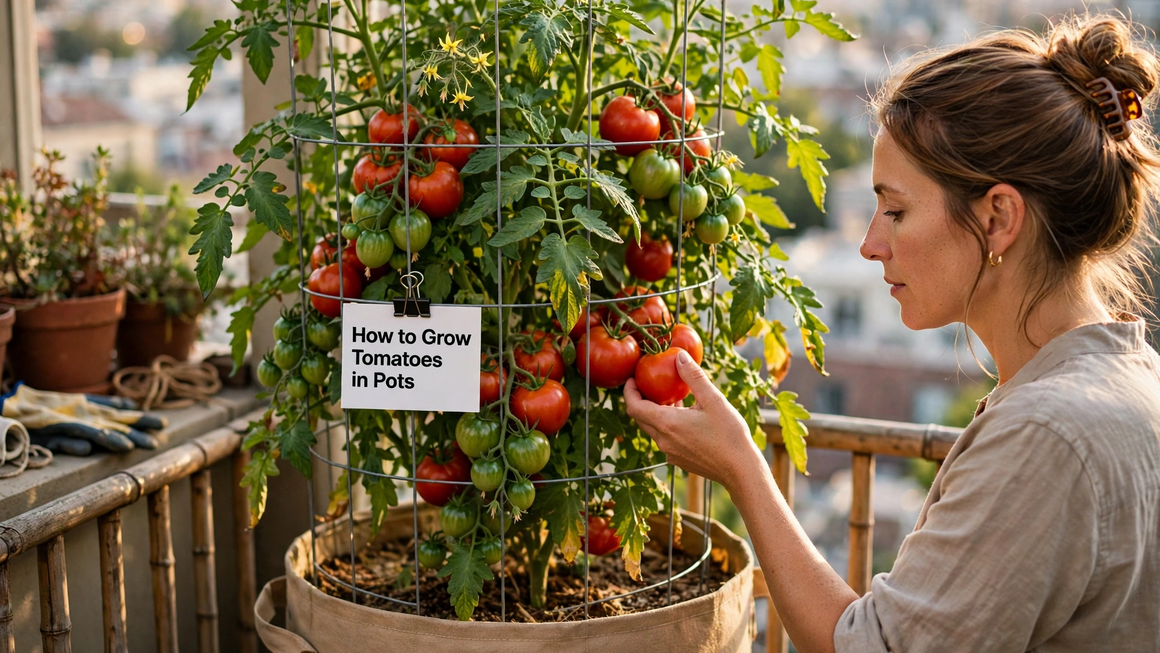
Learning how to grow tomatoes in pots comes down to a 5-gallon-plus container with drainage, fresh potting mix, and six to eight hours of direct sun. Pick a compact or cherry variety, water deeply when the top inch dries, and feed every two weeks after flowering.
Key Takeaways
- A container tomato needs at least six hours of direct sun daily, and eight hours supports heavier fruit set.
- Determinate, dwarf, and cherry varieties handle life in a pot better than full-size vining slicers.
- Bagged potting mix keeps container roots supplied with air and water, while garden soil compacts and suffocates them.
- Uneven watering is the leading trigger for blossom end rot and split fruit in potted tomatoes.
- One potted plant rarely covers its first-year setup cost, but reusing the pot and cage cuts year-two costs enough that a typical harvest pays for that season.
What size pot do tomatoes need?
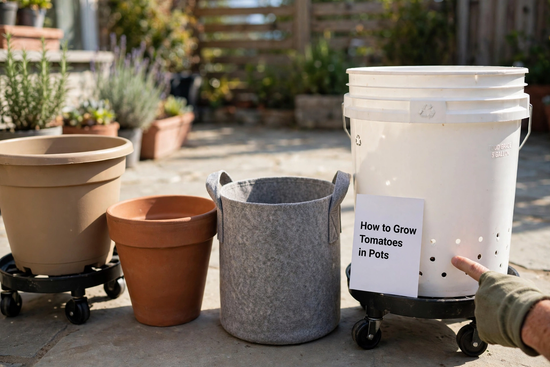
Most tomatoes need at least 5 gallons of mix, and vigorous vining types do better in 10 gallons or more. Soil volume is your water reserve; a small pot can go bone-dry in one July afternoon.
The University of Tennessee Extension recommends 2 to 5 gallons and 12 to 18 inches of depth for patio and determinate cherry plants and a 5-gallon minimum for determinate slicers and indeterminate cherries. Treat those as floors: if you can water only once a day, buy one size up.
Plastic, terracotta, or fabric?
Plastic suits most beginners because it holds moisture longest:
- Plastic or glazed ceramic: Best for hot, windy balconies.
- Terracotta: Breathes nicely but dries quickly; great for cool or humid climates.
- Fabric grow bags: Drain quickly and naturally prune roots, but get thirsty in full sun.
Avoid black pots in hot climates; tan, white, or gray pots keep roots cooler.
How should you arrange several tomato pots?
Space pots about 2 feet apart so leaves never touch; moving air dries foliage and helps prevent fungal spots.
Before you buy pots, it pays to design a garden layout on paper: line the tallest plants along the north edge so they never shade shorter ones. Set heavy pots on wheeled caddies before filling them, so you can roll a wet 10-gallon container out of a storm or into shade.
Which tomato varieties grow best in containers?
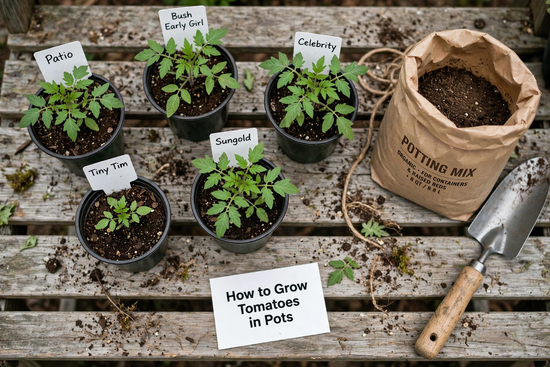
Determinate (“bush” or “patio”) and dwarf tomatoes suit containers best because they stop growing at a set height and ripen most of their crop within a few weeks. Indeterminate cherry types also thrive in pots when you give them a tall cage or a sturdy stake.
Reliable beginner choices for containers:
- ‘Patio’: A compact, determinate breed specifically for pots.
- ‘Bush Early Girl’: An early-ripening bush slicer.
- ‘Celebrity’: A sturdy, disease-resistant all-purpose tomato.
- ‘Tiny Tim’: A dwarf cherry small enough for a windowsill.
- ‘Sungold’: A sweet vining cherry that needs a tall cage.
Tomatoes are the classic first crop in any guide on how to grow vegetables at home in pots for beginners, and for good reason: one plant teaches you watering, feeding, staking, and pest scouting in a single season.
Washington State University Extension puts the average harvest at 4 to 10 pounds per bush, depending on variety. For weekly sandwich slicers from July through September, grow two containers.
Check the plant tag for disease-resistance codes: V, F, and N mean resistance to verticillium wilt, fusarium wilt, and root-knot nematodes, which matters most if you reuse an old pot or mix.
How to grow tomatoes in pots, step by step
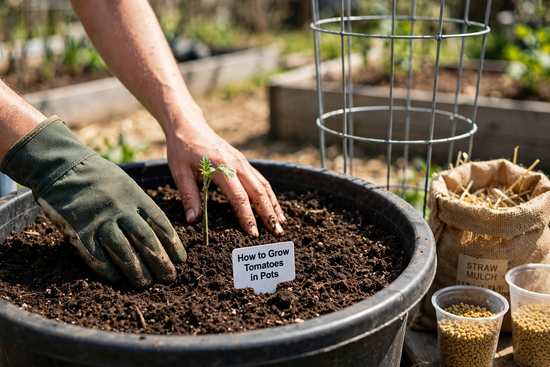
Plant one seedling per container in full sun once frost danger has passed and nights stay warm, usually one to two weeks after your last frost date.
- Buy a stocky seedling. Choose one with a thick stem and dark green leaves, and skip plants already carrying fruit, because they stall after transplanting.
- Harden it off. Set the seedling outdoors for a few hours each day over about a week, lengthening its time in direct sun, so the leaves don’t scorch on planting day.
- Confirm drainage. Every pot needs open holes in the base, and a bucket needs at least four or five drilled holes.
- Fill with fresh potting mix. Use a bagged mix labeled for containers and leave about 2 inches of space below the rim. Pots and beds need different soil: the best soil for raised garden beds is a rich topsoil-and-compost blend that thrives in open ground, but inside a pot it packs down and starves roots of oxygen.
- Plant deep. Strip the lower leaves and bury about two-thirds of the stem, which will sprout new roots.
- Install the cage or stake on planting day. Pushing a stake in later tears through established roots.
- Water slowly until liquid runs from the holes, then spread 1 to 2 inches of straw or shredded leaves over the surface.
- Mix slow-release fertilizer in at planting, then switch to a liquid tomato fertilizer every two weeks once the first flowers open.
Container tomato numbers at a glance
| What you’re measuring | Figure | Source |
| Container width for most compact cultivars | 14 to 20 inches | Clemson Cooperative Extension |
| Side drainage holes for a container with no base holes | ¼ to ½ inch above the bottom | University of New Hampshire Extension |
| Potting mix to fill one 5-gallon container | One 25-quart bag | University of Wisconsin–Madison Extension, Marinette County |
| Slow-release fertilizer at planting, one plant | ¼ cup | University of Wisconsin–Madison Extension, Marinette County |
| Air temperature range for best growth | 70°F to 90°F | University of Arizona Cooperative Extension |
| Temperature above which red pigment stops forming | 85°F | University of Minnesota Extension |
How often should you water and feed potted tomatoes?
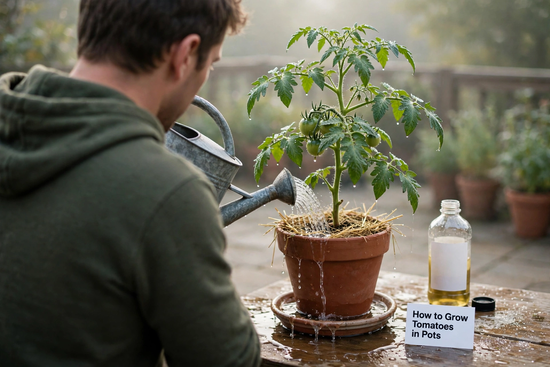
Water once the upper inch of soil dries out. In midsummer, that means daily for a 5-gallon pot and sometimes twice a day in heat waves. Soak slowly until water drains from the bottom; a quick splash wets only the surface.
Self-watering containers or a timed drip line remove the guesswork. Water at the soil line in the morning so the leaves dry before nightfall.
Container mix loses nutrients every time water drains out, so potted tomatoes need feeding far more often than garden beds. Watch the foliage: huge, dark leaves with few flowers mean too much nitrogen, so switch to a lower-nitrogen tomato formula.
If you prefer to grow organically, two organic vegetable gardening tips adapt perfectly to pots: use fish emulsion or liquid seaweed at half strength weekly in place of the synthetic feed, and top-dress the mix with an inch of finished compost in midsummer. Both feed steadily without the salt buildup that heavy synthetic doses leave in a closed container.
Should you prune potted tomatoes?
Prune indeterminate types lightly and leave determinates alone. On vining plants, pinch off suckers (shoots between the main stem and a leaf branch) below the first flower cluster, keeping one or two main stems.
Determinates fruit on those side shoots, so pruning cuts your harvest. On every type, remove leaves touching the mix, since soil splash spreads early blight.
How do you get more flowers to set fruit?
Tomato flowers pollinate themselves but need vibration to release pollen. Wind and bees do that in open gardens; on a sheltered balcony, tap each flowering stem or the cage for a few seconds around midday.
Heat is the other fruit-set killer. South Dakota State University Extension links daytime highs above 90°F and nights above 70°F to flowers that drop before fruit forms, which is why a lush vine in Phoenix or Houston can sit fruitless in July. Gardeners in hot climates should plant in late winter and again in late summer, roll pots into afternoon shade during heat waves, and grow heat-set varieties such as ‘Heatmaster’ or ‘Phoenix’.
How much money can container tomatoes save?
A potted tomato rarely repays its setup cost in year one, but reusing the pot and cage cuts year-two costs enough that a typical harvest pays for that season.
Field-grown tomatoes averaged $2.69 a pound in U.S. cities in April 2026, according to the U.S. Bureau of Labor Statistics. If your pot, mix, cage, seedling, and fertilizer cost $35, you need about 13 pounds to break even, which is more than the 10-pound top of the per-bush range.
In year two you buy only fresh mix, a seedling, and fertilizer for about $12, so break-even drops to roughly 4.5 pounds. A 7-pound harvest, the midpoint of the range, is then worth $18.83, or $6.83 ahead of that season’s cost.
If you usually buy cherry or heirloom tomatoes, use your store’s price instead; the BLS figure covers only round red field-grown fruit.
When should you pick potted tomatoes?
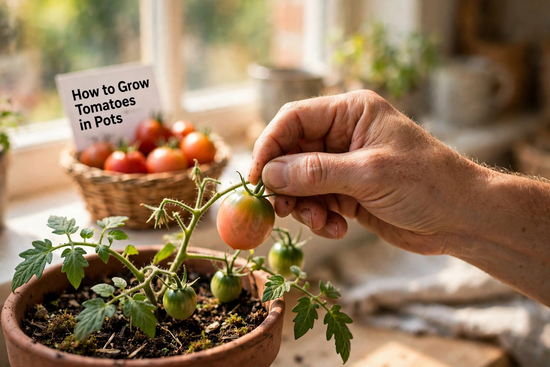
Pick once the fruit shows its first blush of color. Tomatoes picked at that stage finish ripening on the counter with full flavor, and the plant puts its energy into the next fruit.
Early picking also saves your harvest from squirrels, birds, and splitting after heavy rain, and it matters even more in heat waves: The University of Minnesota Extension notes that red color stops developing above 85°F. Don’t refrigerate fruit that’s still ripening; cold mutes its taste and makes the texture mealy.
Why do container tomatoes fail, and how do you fix it?
Most container failures trace back to a handful of habits, and each has a simple fix:
- Pot too small:Roots dry out by afternoon. Use at least 5 gallons, or 10 for vining types.
- Uneven watering: Moisture swings block calcium uptake and cause blossom end rot, a leathery black patch on the fruit’s base. Mulch, and check moisture at the same time daily instead of adding calcium.
- Too much nitrogen: Lush leaves, few flowers. Switch to a lower-nitrogen formula.
- Late staking: Midseason stakes tear roots. Stake on planting day.
- Reused diseased mix: Wilt and blight spores survive winter in old soil. Bin it rather than composting it, and scrub the pot with a 1-to-9 bleach solution.
Pests hit potted plants as hard as in-ground ones. The easiest way to learn how to pest-proof your plants is a two-minute daily check under the leaves for aphids and the dark droppings of tomato hornworms. Handpick hornworms into soapy water, hose off aphids, and grow basil or marigolds nearby to attract beneficial insects.
Frequently Asked Questions
Can you grow tomatoes in a 5-gallon bucket?
Yes, a 5-gallon bucket works well for a determinate or dwarf tomato as long as you drill drainage holes in the base. Use a food-grade bucket filled with potting mix. Expect to water daily in July and August, and skip full-size vining types, which outgrow a bucket by midsummer.
How many tomato plants can you put in one pot?
Grow one tomato plant per pot unless the container holds 20 gallons or more. Two plants in a standard pot compete for water and nutrients, and both end up smaller with lighter harvests.
Why are the leaves on my potted tomato turning yellow?
Yellowing lower leaves on a potted tomato usually point to a nitrogen shortage or waterlogged roots. Check drainage first by pressing a finger into the mix. If it drains freely, apply a balanced liquid fertilizer and watch whether new growth comes in green.
Should you put gravel in the bottom of a tomato pot?
No, a gravel layer raises the soggy zone of soil higher in the pot rather than improving drainage. Fill the entire container with potting mix and keep the drainage holes clear.
Can you bring a potted tomato indoors for winter?
You can bring one indoors, but it sets little fruit without strong grow lights and steady warmth. Dwarf varieties such as ‘Tiny Tim’ cope best in a bright south window. Many gardeners instead root a 6-inch cutting in water in September for a head start next spring.
Conclusion
Learning how to grow tomatoes in pots rewards the basics: a big enough container, fresh potting mix, full sun, and water that arrives on schedule. Get those four right in your first season, reuse the pot and cage the next, and one balcony container becomes a dependable summer harvest.