A thick, green lawn needs many things, but water tops the list. Yet most people still water their grass by pure guesswork. They turn on the sprinkler, walk away, and hope for the best.
As a result, some areas stay soggy while others dry out and fade. Fortunately, a water flow meter ends that guesswork for good. It measures the exact volume your hose delivers to the grass.
With that number in hand, you can give your lawn what it needs and nothing more. Here is how to use one for smarter, more efficient outdoor watering.
Why Guesswork Wastes Water on Your Lawn
Most watering mistakes start with one habit: watering by the clock. Many homeowners run their sprinklers for a fixed number of minutes. However, minutes tell you nothing about volume.
Water pressure shifts throughout the day, and each sprinkler sprays at its own rate. Thus, the same ten minutes can deliver very different amounts of water.
Too much water creates real problems. Roots stay shallow, fungus spreads, and fertilizer washes away with the runoff. On the other hand, too little water leaves grass thin, stressed, and patchy.
Your monthly water bill also lumps indoor and outdoor use together. Therefore, you never learn what your garden alone consumes.
What a Water Flow Meter Does for Your Garden
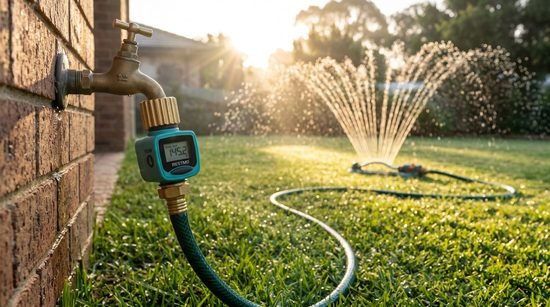
A garden hose flow meter is a compact device that fits between your outdoor tap and hose. It counts every gallon or liter that passes through it.
In addition, many digital models display the current flow rate. Some even keep a running total across several watering sessions.
This kind of measurement changes how you water. Rather than guessing, you read precise numbers after every session. A reliable water flow meter lets you compare usage across your lawn, beds, and vegetable patch. Soon, you will know exactly where your outdoor water goes.
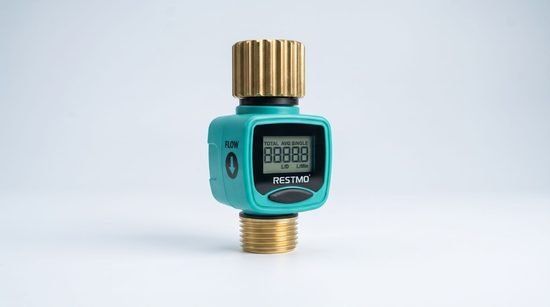
Key Features of a Good Garden Flow Meter
Not every meter suits outdoor use, so choose carefully. Look for these practical features before you buy:
- A large LCD screen that stays readable in bright sunlight
- Durable brass inlet and outlet fittings
- Standard 3/4-inch hose threads that fit most outdoor taps
- Easy switching between gallons and liters
- An accuracy rating of about ±5% or better
- Modes for single-session volume and long-term totals
Some smart models even sync your readings to a phone app.
How to Set Up a Flow Meter on Your Garden Hose
Setup takes only a few minutes, and you need no special tools. Follow these simple steps:
- Turn off the outdoor tap completely.
- Check the flow arrow on the meter, and then screw it onto the tap by hand.
- Next, attach your garden hose to the meter’s outlet.
- After that, open the tap slowly and look for drips at each joint.
- Finally, reset the display and pick your preferred unit.
If a joint leaks, add a fresh rubber washer and tighten it gently. Also, avoid overtightening plastic threads because they can crack under pressure. Before each watering season, check the battery and inspect the seals.
How Much Water Does Your Lawn Really Need?
Most lawns need about one inch of water per week, including rainfall. During hot, dry spells, that figure may climb higher. Conversely, cooler months usually call for less. The trick is turning that inch into a volume your meter can read.
Convert Inches Into Gallons
One inch of water over 1,000 square feet equals roughly 623 gallons. In metric terms, that works out to about 25 liters per square meter.
First, multiply your lawn’s length by its width to find the area. Next, scale the 623-gallon figure up or down to match your lawn. For instance, a 2,000-square-foot lawn needs about 1,250 gallons each week.
Use the Meter to Hit Your Target
Split your weekly target into two or three deep watering sessions. Then, watch the display and turn off the tap when it reaches each session’s goal.
For a 1,000-square-foot lawn, that could mean two sessions of about 310 gallons each. Because you track volume directly, pressure changes no longer skew your results.
Still, set a few empty tuna cans across the grass to confirm even coverage. If some cans collect much less water, adjust or move your sprinkler.
Read the Signs of a Thirsty Lawn
Numbers matter, but your grass also sends clear signals. Thirsty turf often takes on a dull, bluish-gray tint. Footprints may stay visible instead of springing back quickly.
Likewise, grass blades may curl or fold to save moisture. When these signs appear, compare your recent meter readings with your weekly target.
Smart Watering Habits That Save Water
A meter gives you data, but good habits turn that data into real savings. Pair your readings with these proven outdoor watering tips.
Water Early in the Morning
Early morning is the best time to water your lawn. At that hour, cooler air and calmer winds reduce evaporation.
Furthermore, the grass dries quickly after sunrise, which lowers disease risk. By contrast, midday watering loses far more moisture to heat and wind.
Water Deeply but Less Often
Deep, infrequent watering encourages roots to grow downward. Consequently, your lawn handles heat and drought far better.
Light daily sprinkling, however, keeps roots near the surface. Your meter makes deep watering easy, since you know exactly when to stop.
Adjust for Rain and Seasons
Always subtract rainfall from your weekly target. For example, if half an inch of rain falls, cut your watering volume in half.
Similarly, water less in spring and fall, when cooler weather slows evaporation. Adding a simple rain gauge makes these adjustments even easier.
Catch Hidden Leaks Early
A flow meter also helps you spot leaks you might otherwise miss. With the tap on, close the hose nozzle and watch the display for a minute.
If the reading keeps rising, water is escaping somewhere along the hose or fittings. Even a slow drip adds up over a long watering season.
Track Your Outdoor Water Usage Over Time
Keep a simple log of every watering session. Note the date, the gallons you applied, and the recent weather. After a few weeks, clear patterns start to appear.
You might notice, for instance, that one shady corner needs far less water. With that insight, you can adjust each zone and cut waste without stressing your grass. Ultimately, these small tweaks trim your water bill and build a healthier lawn.
Final Thoughts on Efficient Lawn Watering
Watering by feel often leads to waste, weak roots, and patchy grass. A water flow meter swaps that guesswork for clear, reliable numbers. Once you know your lawn’s weekly needs, you can water with total confidence.
In the end, you save water, money, and effort while your lawn thrives. So, connect a meter, measure every session, and let the numbers guide you.