
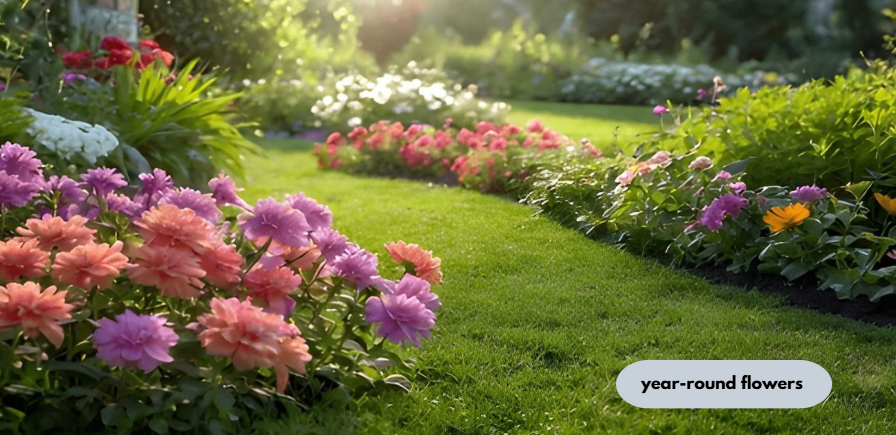
A year-round flower garden is a strategic planting design that uses overlapping bloom cycles across a region’s frost-free season to ensure continuous floral color. A bed stays in color when each plant’s bloom window starts before the previous one ends, closing the gaps that cause bare patches.
Continuous color depends on sequencing, not just variety count. Homeowners typically need six to eight distinct flowering species, timed by bloom duration and USDA hardiness zone, to keep a bed active from the first frost-free week through late fall, with structural plants covering winter in colder regions.
Key Takeaways
- Year-round flowers means continuous, overlapping bloom cycles across a region’s frost-free window, not one single planting event.
- Most flowering perennials bloom for four to six weeks; closing seasonal gaps requires layering species with staggered bloom start dates.
- The USDA Plant Hardiness Zone Map, last updated in 2023, remains the baseline reference for the 2025 and 2026 planting seasons.
- Frost-free season length, not hardiness zone alone, determines how many flower varieties a garden actually needs.
- The most common layout mistake is clustering spring bloomers together, which creates an eight-to-ten-week color gap in mid-summer.
What Is a Year-Round Flower Garden?
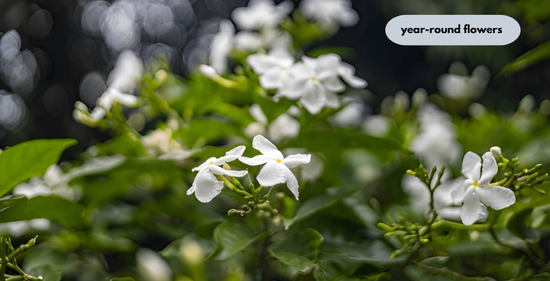
A year-round flower garden is a planting design where at least one species is actively blooming or providing visual color during every month a region’s climate allows outdoor growth. In cold-winter zones, this means continuous bloom from the last spring frost to the first fall frost, backed by structural or evergreen interest through winter. In frost-free zones, it can mean a literal twelve-month bloom, supported by basic companion planting basics that keep soil and pest conditions stable across seasons.
The Bloom-Gap Calculation: How Many Flower Varieties You Actually Need
Divide a region’s frost-free growing season length in weeks by the average four-to-six-week bloom duration of a flowering perennial to find the minimum number of staggered varieties needed for continuous color. This calculation is rarely shown in general planting guides, and it gives homeowners a concrete target instead of vague seasonal advice.
For example, a Zone 7 Mid-Atlantic garden has roughly a 28-week frost-free season, running from early April to late October. Divided by a five-week average bloom window, that garden needs a minimum of six sequenced varieties with staggered start dates. This approach works especially well when planning year-round flowers or building a front yard flower garden that stays colorful through multiple seasons.
Not six random flowers planted at once, but six chosen so each one begins blooming as the prior one fades.
This sequencing gap is the planning error most generic flower advice skips: buying color for today instead of mapping bloom dates across the full season.
Year-Round Flowers by USDA Hardiness Zone
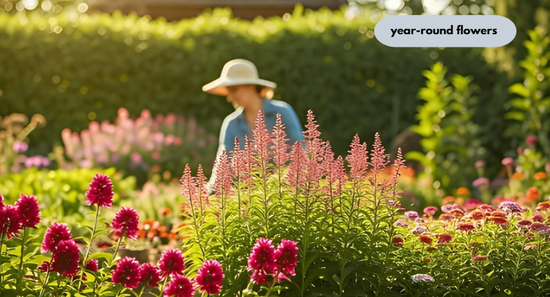
Hardiness zone, as defined by the USDA Plant Hardiness Zone Map, measures average annual minimum winter temperature. It does not measure frost-free growing season length, which depends on regional spring and fall frost dates instead. These are two different metrics often treated as interchangeable, and conflating them is the reason many “year-round flower” plant lists fail once applied outside their original region.
Zone 5 (Midwest)
Zone 5 gardens have roughly a 20-to-24-week frost-free window, requiring tightly staggered bloom sequencing and a hard shift to structural winter interest once frost arrives. Reliable sequence: tulips and daffodils in April, peonies and irises in May through June, coneflower and black-eyed Susan in July and August, asters and sedum in September and October, then ornamental grasses and red-twig dogwood for winter structure.
Zone 7 (Mid-Atlantic)
Zone 7 gardens have close to a 28-week frost-free season and serve as the baseline case for the six-variety bloom-gap calculation above. Reliable sequence: pansies and daffodils in March, roses and salvia through summer, mums and asters in fall, then camellias and hellebores carrying bloom through a mild winter.
Zone 9 (Gulf Coast / Coastal South)
Zone 9 gardens can maintain flowering color in every calendar month, so the bloom-gap calculation shifts from closing seasonal gaps to avoiding summer heat dormancy instead. Reliable sequence: camellias and violas in winter, azaleas in spring, lantana and zinnias through summer heat, then chrysanthemums returning color in fall before winter bloomers restart.
Designing a Continuous Bloom Garden Plan: Step-by-Step Bed Sequencing
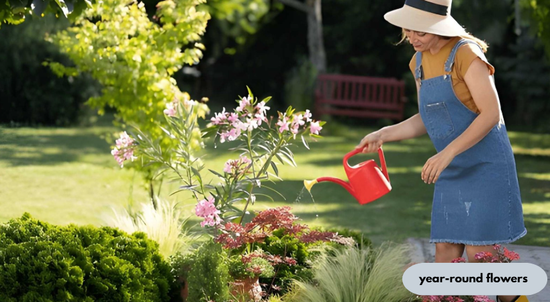
Understanding how to design a garden layout for continuous bloom starts with sequencing plants by bloom date across the bed, not by height or color alone. The most common mistake homeowners make is clustering every spring bloomer into one section, which looks striking in April and bare by July.
Steps for a bloom-sequenced layout:
- List every flower variety planned, with its typical bloom start and end date for the local zone.
- Sort the list chronologically by bloom start date.
- Distribute varieties across the bed so at least one early, one mid, and one late bloomer sit in every section, instead of clustering by season.
- Fill any calendar gap identified in the bloom-gap calculation with a new variety, not a repeat of an existing one.
- Add one structural or evergreen anchor plant per section for off-season texture.
Soil condition ahead of planting affects how quickly new varieties establish on schedule; a basic soil preparation guide covering drainage and pH is a useful companion step here. This sequencing approach reflects standard garden layout planning practice in professional landscape design, where designing garden beds around a bloom calendar comes first, followed by aesthetic grouping. It also makes it easier to plan year-round flowers so the garden continues to have seasonal interest instead of fading after one main bloom period.
Common Exceptions and Edge Cases
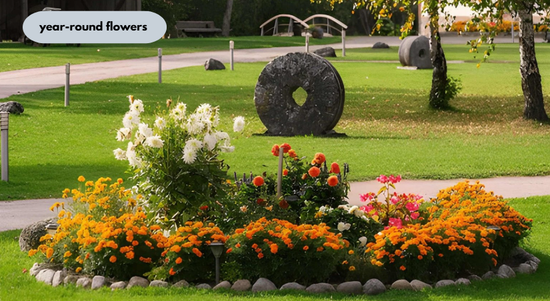
The bloom-gap calculation assumes typical regional frost dates, but microclimates change the math. A bed against a south-facing wall, in an urban heat pocket, or at elevation within the same USDA zone can run two to four weeks ahead of or behind the zone average. Factors such as which direction should your garden face can also affect sunlight, temperature, and bloom timing. Homeowners in these conditions should track their own bed’s actual first and last bloom dates for one full season before finalizing a sequenced layout, making it easier to choose year-round flowers that perform well in the garden’s specific conditions rather than relying on zone averages alone.
Pairing that tracking with a seasonal pruning schedule keeps spent blooms from delaying the next variety’s emergence. The table below reflects the zone data kdarchitects uses when mapping bloom sequences for residential beds across different U.S. regions.
Zone Comparison Table
| USDA Zone | Frost-Free Window | Minimum Varieties Needed | Winter Strategy |
| Zone 5 (Midwest) | ~20–24 weeks | 4–5 | Structural plants: grasses, dogwood |
| Zone 7 (Mid-Atlantic) | ~28 weeks | 5–6 | Camellias and hellebores continue bloom |
| Zone 9 (Gulf Coast) | Year-round | 6–8 | Heat-dormancy planning, not cold |
Frequently Asked Question
What flowers bloom year-round in the USA?
No single flower blooms twelve months in every U.S. region; true year-round color comes from sequencing multiple species. In Zone 9 and warmer, camellias, violas, and lantana combine to cover every month. In colder zones, structural plants replace live bloom through winter.
How many flowers do I need for a year-round garden?
Most temperate U.S. gardens need six to eight sequenced flowering varieties, based on season length divided by average bloom duration. Colder zones need fewer varieties over a shorter window; warmer zones need more to fill a longer season.
What is the best garden layout for continuous bloom?
The best layout distributes early, mid, and late bloomers across every section of a bed instead of grouping plants by season or color. This prevents one area from going bare while another section stays active.
Do perennials or annuals work better for year-round color?
Perennials return each year and anchor the bloom-gap calculation, while annuals fill short-term calendar gaps a perennial sequence misses. Most sequenced layouts use perennials for structure and annuals for flexible gap-filling.
What is the most common mistake in year-round flower planning?
The most common mistake is clustering all spring-blooming varieties together, which creates an eight-to-ten-week color gap once they finish in mid-summer. Spreading bloom times across the bed prevents this seasonal dead zone.
Does the USDA hardiness zone tell me my growing season length?
No. Hardiness zone measures average annual minimum winter temperature, not frost-free growing season length, which is a separate regional measurement. Gardeners need both figures, not one substituted for the other.
When should I plant for year-round flowers?
Planting should begin as soon as the local frost-free date allows spring bloomers, with mid- and late-season varieties added on their own recommended windows rather than all at once. Following a bloom-sequenced layout prevents overcrowding on a single planting date.
Conclusion
Year-round flowers come from sequencing bloom windows against a region’s actual frost-free length, not from planting more flowers at once. The bloom-gap calculation gives an exact variety count by zone, and a bloom-sequenced layout, the core method behind kdagardenation garden guide‘s planting approach, closes the seasonal gaps that leave most home gardens bare for months at a time.


One thought on “How to Grow Year-Round Flowers in Your Home Garden Easily”