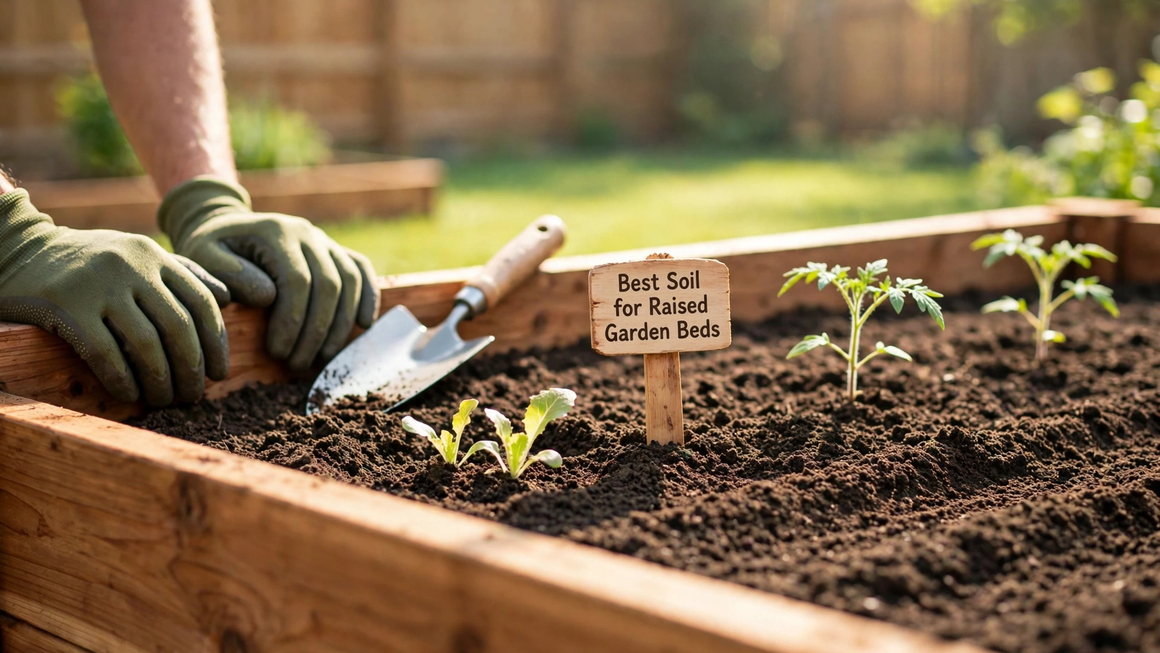
The best soil for raised garden beds is a 60/30/10 blend by volume: 60% screened topsoil, 30% finished compost, and 10% perlite or coarse sand. It holds enough moisture to carry your crops through summer, drains quickly after a heavy storm, and won’t sink nearly as much as a bed filled with bagged potting mix alone.
Key Takeaways
- A 60/30/10 blend of topsoil, compost, and perlite or coarse sand suits most vegetables, herbs, and flowers.
- A 4-by-8-foot bed filled 12 inches deep holds 32 cubic feet, and 10% extra covers first-season settling.
- Beds filled only with compost or bagged potting mix shrink as microbes consume the organic matter.
- A yearly compost top-dressing replaces what crops use, so a well-built bed never needs a full soil swap.
What Is Raised Bed Soil?
Raised bed soil is a blended growing medium of mineral soil, organic matter, and coarse particles that fills a framed bed and drains faster than ordinary yard dirt.
What Is the Best Soil for Raised Garden Beds?
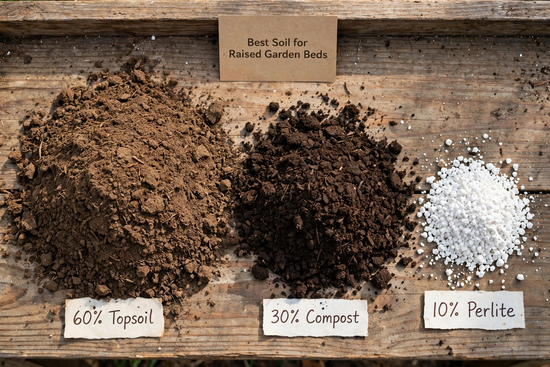
A 60/30/10 mix by volume works for nearly every vegetable, herb, and annual flower in a home raised bed.
The mix doesn’t change with style: whether your garden designs call for tidy rows of lettuce or a loose cottage planting of herbs and flowers, the same 60/30/10 fill supports both.
Topsoil (60%): The Weight That Stays Put
Screened topsoil gives the bed its mineral skeleton, and because its particles never decompose, it holds the bed’s height year after year. Choose loam or sandy loam: a damp handful should form a ball that crumbles when poked, not smear into a shiny clay ribbon.
Iowa State University Extension lists roughly 70% topsoil and 30% compost as one sound option for typical sites (it suggests a different three-part mix with coarse sand for wet ground, shown in the table below). Move 10 of those topsoil points into perlite or coarse sand, and the bed drains faster through heavy summer storms.
Compost (30%): Food and Water Storage
Finished compost feeds soil microbes, releases nitrogen slowly, and hands stored water back to roots during dry spells. Ready compost is dark, crumbly, and cool to the touch; visible bark chunks or food scraps mean it needs another month.
Perlite or Coarse Sand (10%): Air for Roots
This slice keeps pore spaces open so roots get oxygen after a soaking rain. Perlite is light; coarse builder’s sand costs less and adds weight. Skip fine play sand, because it plugs pores.
What pH Should the Finished Mix Have?
Aim for pH 6.0 to 7.0, the range where most vegetables absorb nutrients best. Test once the mix settles, then raise a low reading with garden lime or lower a high one with elemental sulfur.
| Recipe | Ratio by volume | Best fit | Source |
| 60/30/10 blend | 60% topsoil, 30% compost, 10% perlite or coarse sand | Most vegetable beds 10 to 18 inches deep | Recipe in this guide |
| Topsoil-heavy blend | 1/2 to 2/3 topsoil, 1/3 to 1/2 plant-based compost | Beds filled from a bulk delivery | University of Minnesota Extension |
| Even split | 1 part compost to 1 part garden soil or topsoil | Gardeners who want fast fertility | University of Illinois Extension |
| Three-part mix | Equal parts topsoil, organic matter, and coarse sand | Wet sites over heavy native soil | Iowa State University Extension |
How Should You Size and Place a Raised Bed?
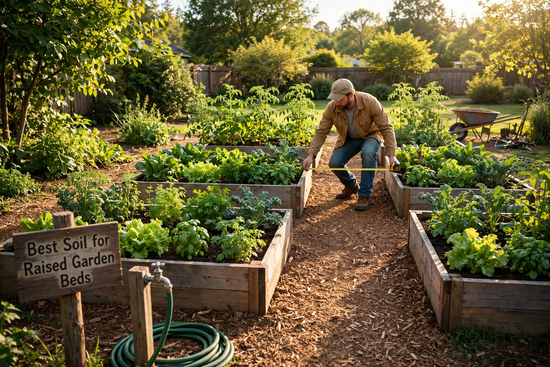
Build beds no wider than 4 feet and 10 to 18 inches deep, on level ground with at least 6 hours of direct sun.
Width, Depth, and Paths
Four feet lets you reach the center from either side without stepping on the soil. When you design a garden layout, leave 2 to 3 feet between beds: wide enough for a wheelbarrow of compost and for kneeling without crushing the bed edge. . Lettuce, beans, and herbs thrive in 10 to 12 inches, while tomatoes, squash, and carrots root better at 18.
Sun and Water
Run long beds north to south so taller crops shade their neighbors less, and keep a hose bib within reach. Landscape ideas from Morph can help you test bed placement and spacing before you build, but confirm the spot gets 6 or more hours of sun and doesn’t hold standing water after rain.
How Much Soil Does a Raised Bed Need?
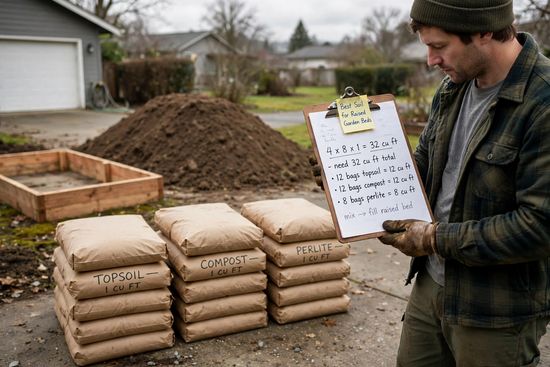
Multiply length by width by depth, all in feet, to get cubic feet. A 4-by-8-foot bed filled 12 inches deep holds 32 cubic feet.(about 0.9 cubic meters, or 900 liters)
- Volume: 4 ft × 8 ft × 1 ft = 32 cubic feet.
- Settling cushion of 10%: 32 × 1.1 = 35.2 cubic feet.
- Topsoil at 60%: 21.1 cubic feet.
- Compost at 30%: 10.6 cubic feet.
- Perlite or coarse sand at 10%: 3.5 cubic feet.
- Bulk conversion: 35.2 ÷ 27 = 1.3 cubic yards.
In 1-cubic-foot bags, that means 22 bags of topsoil, 11 of compost, and 4 of perlite. If you design a garden with four identical beds, the total reaches about 5.2 cubic yards, roughly 150 bags, and at that volume a single bulk delivery is usually cheaper and far less work.
Gardening households spent a record $740 each in 2025, according to the National Gardening Association’s National Gardening Survey 2026 Edition. Fill is often the biggest single cost of a new bed, but unlike plants, you buy it once, so it’s worth pricing bulk against bagged before you order.
How Do You Mix and Fill Raised Bed Soil?
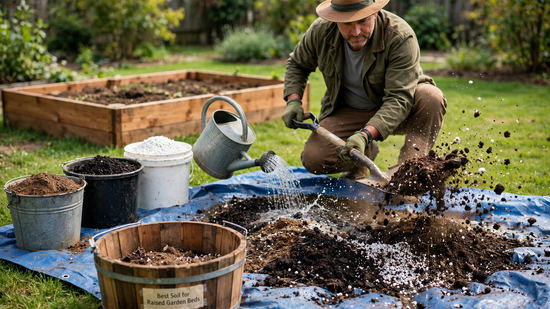
Blend all three ingredients before they go into the frame, then water the fill and let it settle. Separate layers create boundaries that stall drainage.
- Loosen the ground under the bed with a digging fork, 6 to 8 inches deep.
- Mix in batches on a tarp: 6 buckets of topsoil, 3 of compost, and 1 of perlite.
- Moisten each batch until it feels like a wrung-out sponge.
- Fill 1 to 2 inches above the rim, soak, and wait two or three days.
- Top off low spots, rake level, and plant.
What If Your Yard Has Heavy Clay?
Break up the clay under the bed and work 2 to 3 inches of compost into its surface before filling, so water exits instead of pooling.
The core rule in how to fix clay soil for gardening applies here too: organic matter opens clay’s structure, while adding sand alone rarely loosens it and can make it pack harder.
Why Does Raised Bed Soil Sink?
Organic matter decomposes, and loose particles pack down under rain. Beds filled mostly with compost or bagged potting mix lose the most height.
This is the costliest raised-bed mistake: bark-and-peat bag mixes look convenient, then drop inches by spring as microbes eat them.
A 12-inch bed that drops 3 inches has lost 25% of its volume, or 8 cubic feet in a 4-by-8 bed, refilled at full price. The fix starts at the fill stage: when designing garden beds, if you want to last, build the mix on at least 50% mineral topsoil, and top up a sunken bed with a topsoil-compost blend rather than more potting mix.
When the 60/30/10 Rule Doesn’t Apply
Beds on concrete, decking, or a rooftop have no ground contact, so heavy mineral soil stays soggy at the bottom and the 60/30/10 rule breaks down. The University of Maryland Extension recommends a 1:1 blend of compost and soilless growing mix for these beds, with topsoil limited to 20% of the volume and only in beds at least 16 inches deep. A 12-inch patio bed should skip topsoil entirely.
How Do You Maintain Raised Bed Soil Each Year?
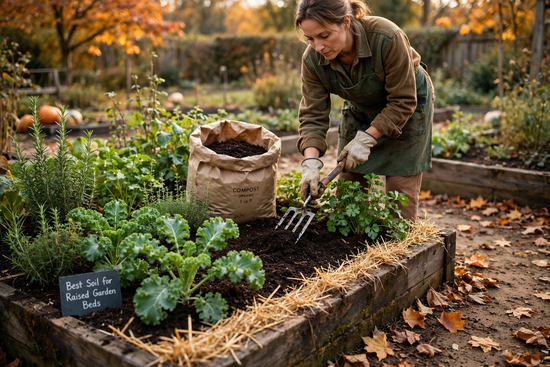
Spread fresh compost over the surface each fall or spring and fork it lightly into the top few inches. You never need to replace the whole bed.
A 1-cubic-foot bag of compost covers 12 square feet at a depth of 1 inch, according to Oregon State University Extension. A 4-by-8 bed has 32 square feet of surface, so 3 bags deliver a full inch, and one bag gives a light refresh of about three-eighths of an inch.
Raised beds follow the same three habits as any guide on how to maintain a garden : feed the soil, keep it covered, and stay off it. Mulch with straw, rotate crop families yearly, and test the soil every three years.
Frequently Asked Questions
Can I use soil from my yard in a raised bed?
Yes, if it is loamy and weed-free, blend it with compost and perlite instead of using it straight. Rocky or heavy clay soil works better when loosened beneath the bed.
How long does raised-bed soil last?
A well-built mix lasts indefinitely when you add compost every year. The topsoil stays put, and fresh compost restores the organic matter crops use up.
Is bagged raised-bed mix worth buying?
Bagged mix makes sense for one small bed, but it settles faster and costs more per cubic foot than a bulk topsoil blend. Stir in screened topsoil to slow the sinking.
What should go in the bottom of a raised bed?
Beds under 18 inches deep need nothing below the mix except loosened native soil. Taller beds can hold logs and dry leaves in the bottom third, but skip gravel, which traps water above it.
Do I need fertilizer in new raised-bed soil?
Heavy feeders such as tomatoes, peppers, and corn benefit from a balanced organic fertilizer at planting. Lettuce, beans, and herbs usually grow well on the compost alone.
Conclusion
The best soil for raised garden beds balances weight, food, and air: 60% topsoil, 30% compost, and 10% perlite or coarse sand. Mix it before it goes in, top it with compost every year, and the same bed keeps producing without a full refill.

2 thoughts on “Best Soil for Raised Garden Beds: A Simple 60/30/10 Recipe That Works ”