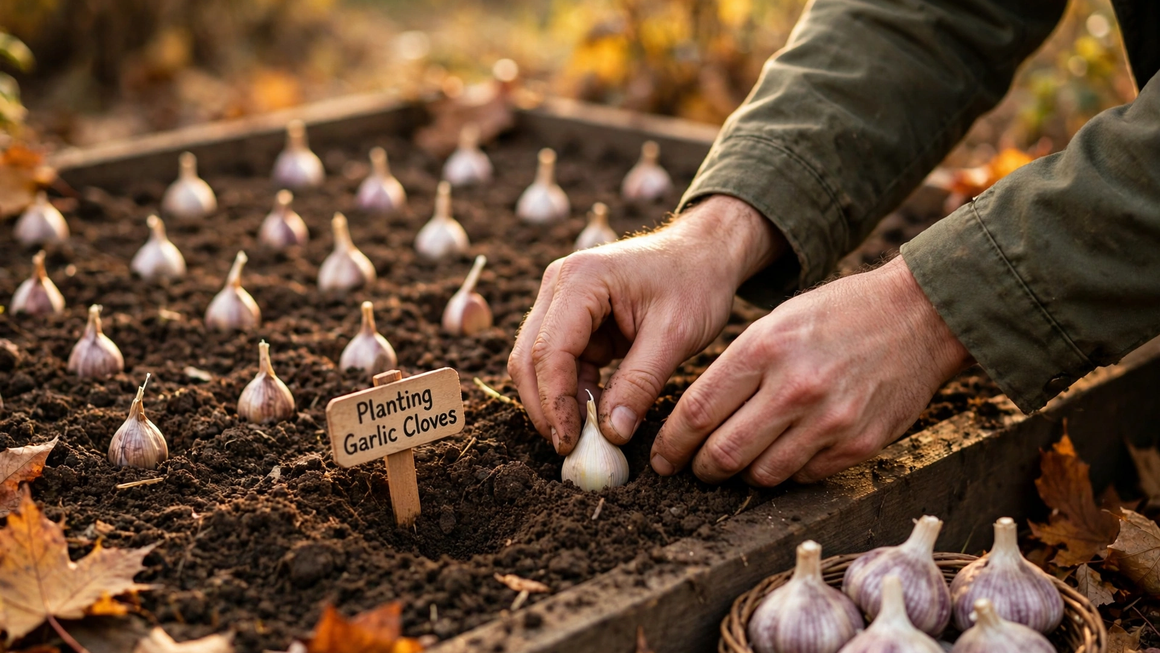
Planting garlic cloves works best in fall, 6 to 8 weeks before your ground freezes, with each clove set pointed end up, its base 2 to 3 inches below the soil surface, in loose, well-drained soil. Choose the biggest cloves from firm seed garlic, mulch after planting, and harvest next summer when lower leaves brown.
Key Takeaways
- Fall planting gives garlic the winter chill it needs to divide into a full bulb of separate cloves.
- Large cloves produce large bulbs, so use the tiny center cloves for cooking instead of planting them.
- A 4-by-8-foot raised bed holds about 128 cloves on a 6-inch grid.
- Hardneck garlic suits cold northern winters, while softneck garlic suits mild southern ones and stores longer.
- Garlic needs steady spring moisture, then dry soil for the last few weeks before harvest.
What Is Seed Garlic?
Seed garlic is a bulb grown and sold for planting rather than cooking, picked for firm, disease-free cloves, and a variety that suits a particular climate.
Which Garlic Variety Should You Grow?
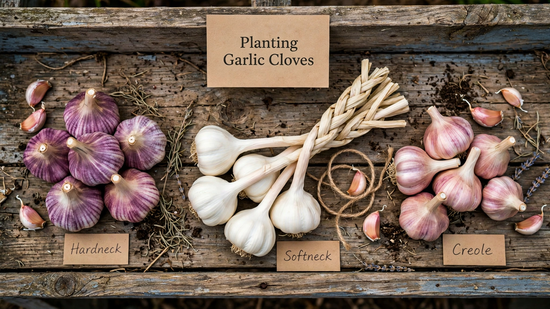
Match the type to your winter. The KDAGardenation Guide sorts the choices into three climate bands.
- Cold winters (northern states): Hardneck types such as Music, German Extra Hardy, and Chesnok Red. They form fewer, larger cloves plus a curly spring scape.
- Moderate winters (mid-Atlantic, Pacific Northwest, upper South): Either type, including softnecks like Inchelium Red.
- Mild winters (Gulf Coast, Florida, Southern California, low desert): Softneck and Creole types, which need less cold to form bulbs.
When Should You Plant Garlic Cloves?
Plant in mid-fall, after the soil cools but before it freezes solid. Lincoln University Cooperative Extension’s 2025 garlic fact sheet sets the window at 6 to 8 weeks before the ground freezes, which falls in October or early November for most of the country.
Work backward: if your soil usually locks up around December 1, your planting window runs from roughly October 6 to October 20.
When to Plant Garlic by USDA Zone
| USDA zone | Plant garlic | Best type |
| 3–4 | Mid-Sept to early Oct | Hardneck |
| 5 | Late Sept to mid-Oct | Hardneck |
| 6 | October | Hardneck or softneck |
| 7 | Mid-Oct to early Nov | Either |
| 8 | November | Softneck |
| 9–10 | Late Nov to Dec (pre-chill cloves) | Softneck or Creole |
Timing cuts both ways. Cloves planted too early for your zone push out tender leaves that frost burns back; cloves planted too late barely root before the cold arrives.
Reserve the garlic bed in August, as summer squash or beans finish; Garden Layout Planning for fall makes that rotation easy.
What Soil and Site Does Garlic Need?
Garlic wants at least six hours of direct sun and crumbly loam that drains fast yet holds moisture. Soggy ground rots cloves faster than cold harms them.
Garlic grows well in the best soil for raised garden beds: a blend of screened topsoil and finished compost, free of clay lumps and fresh manure.
Skip any spot where onions, leeks, shallots, or garlic grew in the past three seasons, since those crops share white rot, basal rot, and onion thrips.
How Do You Go About Planting Garlic Cloves Step by Step?
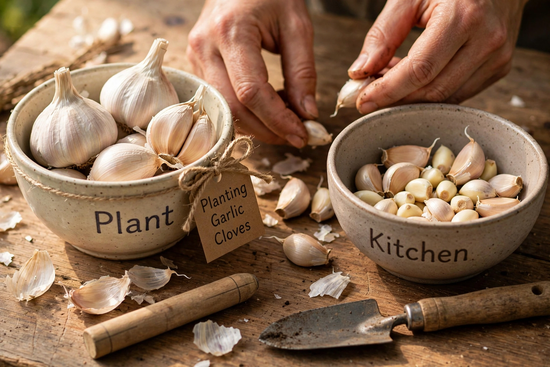
Break the bulbs apart, keep the largest cloves, and plant them base-down at an even depth in prepared soil.
- Buy seed garlic locally. Farmers’ markets and regional seed companies sell varieties proven in your climate.
- Split bulbs one or two days before planting. Leave the papery skin on each clove to shield it from rot.
- Sort by size. Plant the plump outer cloves. Discard any with soft spots, mold, or a damaged base plate.
- Prepare the bed. Loosen the soil 8 to 10 inches deep and mix in compost plus a balanced fertilizer.
- Set each clove’s pointed tip up. University of Minnesota Extension recommends placing the clove so its base sits two to three inches below the surface. Mark that depth on a wooden dowel so every clove emerges on the same schedule.
- Cover, firm, and water once. Press the soil gently to remove air pockets, then soak the bed thoroughly.
- Mulch once the topsoil turns cold. Spread clean straw or shredded leaves to stop freeze-thaw cycles from heaving cloves to the surface.
How Many Garlic Cloves Fit in a 4-by-8 Raised Bed?
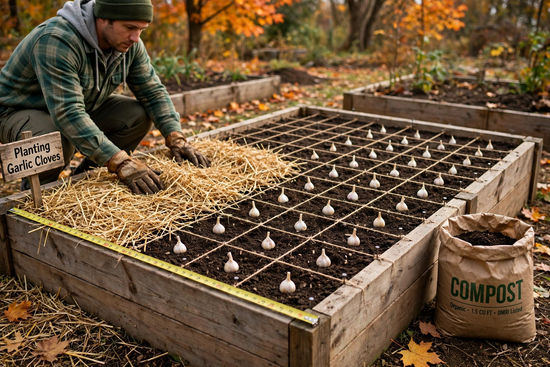
A 4-by-8-foot bed holds about 128 cloves on a 6-inch grid. That gives eight cloves across the 48-inch width and 16 down the 96-inch length, with a 3-inch margin around the edges.
If each hardneck bulb yields about six planting-size cloves, you need roughly 21 to 22 bulbs. Buy 24 to allow for culls.
Iowa State University Extension and Outreach suggests 1 to 2 pounds of all-purpose 10-10-10 fertilizer per 100 square feet before planting. A 32-square-foot bed needs about 5 to 10 ounces, raked into the top few inches.
Run the cloves in straight rows and leave the outer 3 inches clear for a hand hoe, a simple way to design a garden layout that keeps weeding easy.
| Planning point | Figure | What it means in a 4×8 bed | Source |
| Clove and row spacing | Cloves 4–6 in. apart, rows 12–24 in. apart | The row figure applies to in-ground rows; a raised bed handles a tighter 6-inch grid. | Washington State University Extension |
| Winter mulch | 3–4 in. of leaf or straw mulch | Plan on about one compressed straw bale. | University of Minnesota Extension |
| Soil pH | 6.0–7.0 | Test in late summer so there is time to add lime or sulfur. | University of Minnesota Extension |
| Elephant garlic | 4–6 in. deep, 12 in. apart | Only 32 cloves fit in the same bed. | Lincoln University Cooperative Extension |
| Last watering | 4–6 weeks before harvest | Stop irrigating in mid-May for a mid-June dig. | Lincoln University Cooperative Extension |
| Curing time | 2–3 weeks | Clear a shaded, airy shelf before you harvest. | Lincoln University Cooperative Extension |
How Do You Care for Garlic Until Harvest?
Keep the bed weeded, water when the top inch of soil dries out in spring, and feed lightly once shoots appear. Narrow garlic leaves cast almost no shade, so weeds win fast.
Spring Feeding and Scapes
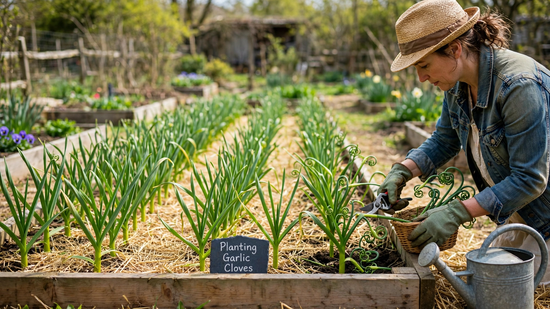
Side-dress with a nitrogen fertilizer, such as blood meal, when shoots reach a few inches tall, then once more a few weeks later. Quit fertilizing when bulbs begin fattening up in late spring, since nitrogen added then boosts leaves, not bulbs.
Snap off hardneck scapes once they make a full loop, so energy goes to the bulb. Sauté them like green beans.
When and How to Harvest
Washington State University Extension lists about 240 days from planting to harvest. Cloves planted on October 20 reach that mark around June 17, so start checking leaves in early June.
Each green leaf becomes one bulb wrapper. Dig when about half the leaves have browned, using a garden fork instead of pulling, and brush off dirt without washing.
Curing and Storing Garlic
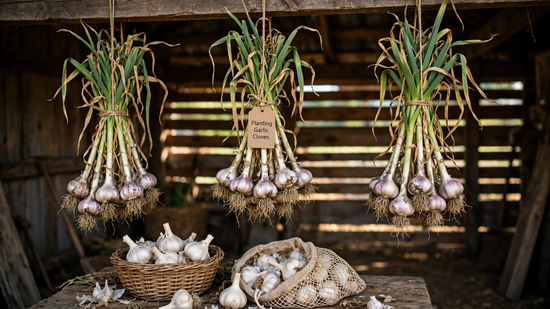
Hang whole plants, leaves attached, in a shaded, breezy spot until the necks feel dry and wrappers turn papery. Then trim roots and stems.
Store cured bulbs in mesh bags or baskets somewhere cool, dark, and dry. Keep them out of the refrigerator, where cold, damp air triggers sprouting. Soft necks outlast hardnecks, so cook hardnecks first and save the fattest bulbs as seed.
What Mistakes Shrink Garlic Bulbs?
Three habits cause most undersized harvests: planting tiny cloves, planting too shallow, and harvesting by the calendar instead of the leaves.
Small cloves get planted because gardeners hate waste; eat them instead. Shallow planting comes from fluffy soil that settles after watering, so firm the bed before marking depth. For timing, dig one test plant and wait a week if cloves still look tight.
A mid-June harvest leaves the bed free for a second round of edible plants, such as bush beans or fall carrots.
When Does the Usual Garlic Advice Not Apply?
Gulf Coast, Florida, and low-desert winters rarely chill hardneck garlic enough to divide. There, plant softneck or Creole types in late fall or early winter, and chill the cloves in a paper bag in the refrigerator for about 4 to 8 weeks first, using the longer end where winters stay frost-free. Growing in a small indoor garden works differently. Windowsill pots rarely produce full bulbs, but a few cloves pressed into a 6-inch pot grow tender garlic greens you can snip within a couple of weeks.
Frequently Asked Questions
Can you plant garlic cloves from the grocery store?
You can, but grocery-store garlic often fails in cold-winter gardens. Many supermarket bulbs carry sprout inhibitors or suit only mild climates. Seed garlic from a local grower gives far more reliable results.
Which end of the garlic clove goes in the ground first?
Plant the flat root end downward, with the pointy tip aimed skyward. A sideways clove still grows but often forms a lopsided bulb.
Should you soak garlic cloves before planting?
Soaking is optional and makes little difference in healthy soil. Some growers dip cloves in a mild baking soda or seaweed solution for a few hours to rinse off surface mold.
Can you plant garlic in spring instead of fall?
Yes, but spring-planted garlic usually forms smaller bulbs or single round cloves. It misses the winter chill and the extra root growth of fall planting. Plant softneck as soon as the soil can be worked.
Do you need to peel garlic cloves before planting?
No, leave the papery skin on each clove. The wrapper guards against rot over winter, so separate cloves gently and keep the base plate intact.
How long does garlic take to grow from a single clove?
Fall-planted garlic takes about eight months to mature. Most gardens harvest from mid-June through July, depending on variety and how fast spring warms in your region.
How deep do you plant garlic?
Plant each clove so its base sits 2 to 3 inches below the surface. In very cold zones (3–4), go 4 inches deep and add extra mulch.
Why are my garlic bulbs small?
Small bulbs usually come from planting small cloves, planting too late, too little water in spring, or digging too early. See the mistakes section above for fixes.
Conclusion
Planting garlic cloves comes down to three choices: the right week, the right clove, and the right depth. Get those right in fall, and the bed does most of the work until June. Save your biggest bulbs at harvest, and each year’s crop grows better suited to your soil than the last.