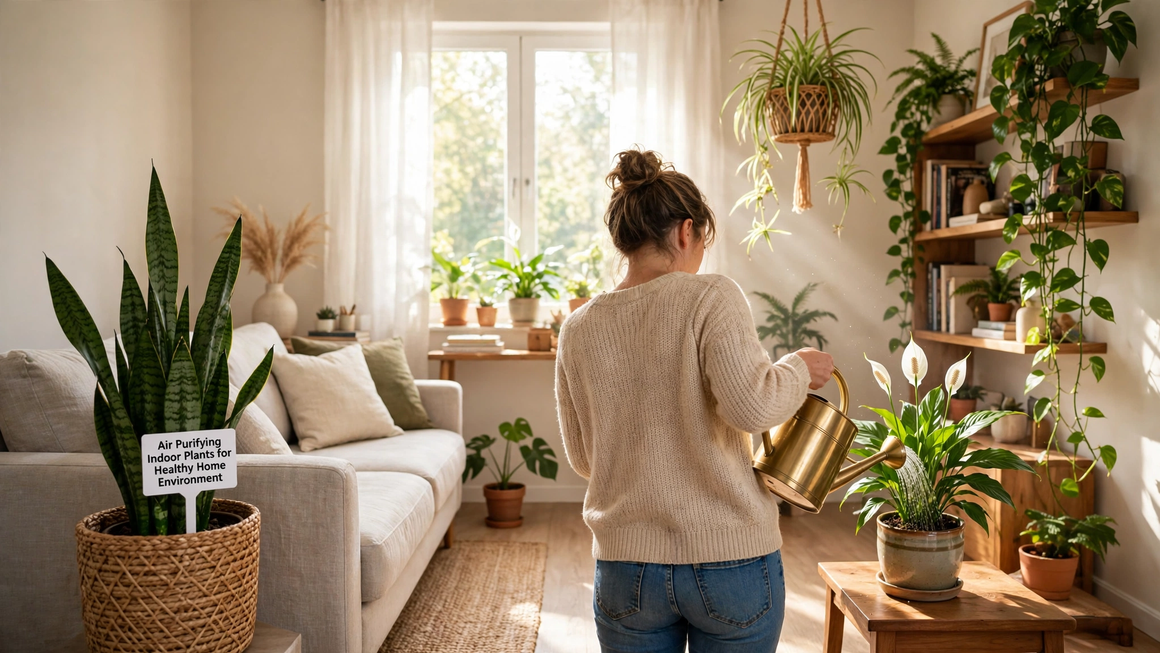
The most reliable air purifying indoor plants for healthy home environment goals are snake plant, pothos, ZZ plant, spider plant, peace lily, and cast iron plant, because they tolerate low light and missed waterings. They work best alongside ventilation and source control: plants absorb trace chemicals, add humidity, and lift your mood, while fresh air does the heavy cleaning.
Key Takeaways
- Houseplants soak up a little of the volatile organic compounds indoors, but cracking a window clears out far more.
- Plants can’t filter smoke particles, carbon monoxide, or radon, so you still need alarms and test kits.
- Snake plant, ZZ plant, and cast iron plant survive in dim rooms and need water only after their soil dries completely.
- Spider plant, Boston fern, parlor palm, areca palm, cast iron plant, and bird’s nest fern are nontoxic to cats and dogs.
- Watering by soil moisture instead of a fixed schedule prevents root rot, one of the most common causes of houseplant death
What Are Air Purifying Indoor Plants for a Healthier Home?
Air-purifying indoor plants are houseplants whose leaves and soil microbes absorb and break down trace airborne chemicals, such as formaldehyde and benzene, while their foliage releases moisture into the room.
Why Does Indoor Air Need Attention?
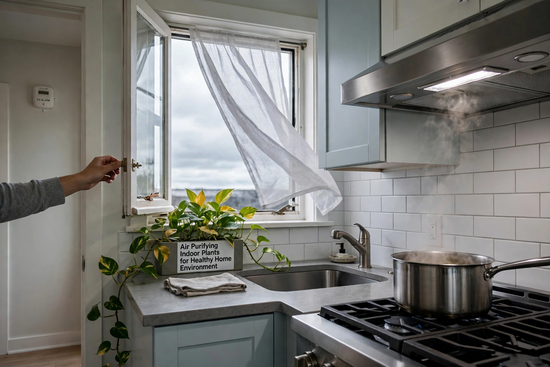
Your home traps pollution. Cooking smoke, cleaning sprays, fresh paint, and new furniture all release compounds, and closed windows keep them circulating at breathing height.
A pothos chosen as indoor garden decoration brings real rewards: greener rooms, softer humidity, and a calmer mood. Truly clean air takes a few more steps, and it matters more than most people realize. The U.S. Environmental Protection Agency’s Report on the Environment estimates that Americans spend about 90 percent of their lives indoors, with some pollutants reaching two to five times their outdoor levels.
Over a full year, that share comes to roughly 7,900 hours under your own roof, or about 21.6 hours a day. Cut pollution at its source first. Run the range hood whenever a burner is on, choose low-VOC paint, and let flat-pack furniture air out in a garage for several days before it comes inside.
Plants do nothing against fine particles, carbon monoxide, or radon. Mount CO alarms outside every sleeping area, and run a radon test kit on the lowest floor where your family spends time.
Do Air Purifying Indoor Plants for Healthy Home Environment Goals Really Work?
Yes, in the ways you’ll feel every day: they add humidity, improve mood, and make rooms feel alive. They also absorb small amounts of airborne chemicals, though not enough to replace ventilation or an air filter.
Early lab tests looked impressive because they ran inside small sealed chambers. In those boxes, leaf pores absorbed gases and root-zone microbes digested them with no fresh air diluting the results. A real house leaks air constantly, and HVAC systems swap it out far faster than any plant can scrub it.
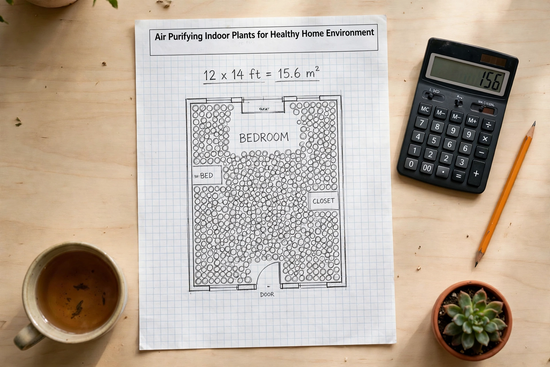
Drexel University engineers reanalyzed decades of those chamber experiments in 2019 (Cummings and Waring, Journal of Exposure Science & Environmental Epidemiology). They concluded that matching ordinary air exchange would take 10 to 1,000 potted plants for every square meter of floor.
Worked example: a 12-by-14-foot bedroom
That bedroom covers 168 square feet, or about 15.6 square meters. At the low end of the range, you would need around 156 pots. At the high end, the count climbs to roughly 15,600.
Even the minimum works out to nearly one pot per square foot, which leaves no room for a bed. That’s why the KDAGardenation Guide recommends a layered clean-air plan: source control first, ventilation second, and plants as the finishing layer that makes a home healthier and more pleasant to live in. Their genuine contribution is moisture: most of the water you pour into a pot returns to the room as vapor, which eases dry winter air in heated homes.
Which 15 Indoor Plants Are Best for a Healthy Home?
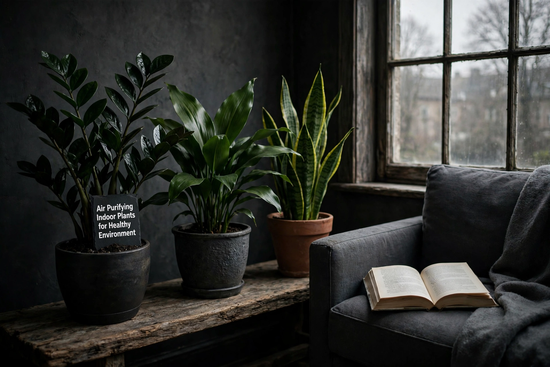
The most forgiving species are snake plant, ZZ plant, pothos, spider plant, and cast iron plant. Match each one to the light you already have, not the light you wish you had.
For anyone hunting the best indoor plants that survive without direct sunlight, start with ZZ plant, cast iron plant, and snake plant. All three store water in thick stems or leaves and grow slowly, so dim light rarely starves them.
| Plant | Light | Water when | Pet-safe | Watch for |
| Snake plant | Low to bright indirect | Soil fully dry | No | Mushy base from overwatering |
| ZZ plant | Low | Soil fully dry | No | Yellow stems from wet soil |
| Pothos | Low to medium | Top 2 inches dry | No | Long bare vines in deep shade |
| Spider plant | Medium to bright indirect | Top inch dry | Yes | Brown tips from tap-water salts |
| Peace lily | Low to medium | Leaves begin to droop | No | Brown edges after repeated wilting |
| Boston fern | Medium indirect | The surface is just dry | Yes | Leaflet drop in dry air |
| Parlor palm | Low to medium | Top inch dry | Yes | Spider mites on frond undersides |
| Areca palm | Bright indirect | Top inch dry | Yes | Brown tips from mineral buildup |
| Cast iron plant | Very low | Top half dry | Yes | Bleached leaves in direct sun |
| Chinese evergreen | Low to medium | Top inch dry | No | Leaf damage from cold drafts |
| Heartleaf philodendron | Low to medium | Top inch dry | No | Shrinking leaves in deep shade |
| Rubber plant | Bright indirect | Top inch dry | No | Leaf drop after relocation |
| Dracaena ‘Janet Craig’ | Low to medium | Top inch dry | No | Brown tips from fluoride |
| English ivy | Medium to bright | Top inch dry | No | Spider mites in warm rooms |
| Bird’s nest fern | Medium indirect | The surface is just dry | Yes | Crown rot from water in center |
A few on the list, like Boston fern and English ivy, need a little more attention but reward it with lush growth.
How Do You Care for Air-Purifying Plants?
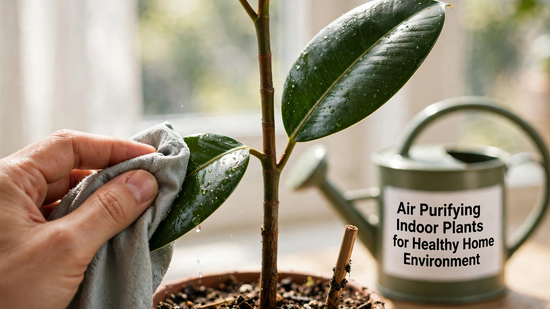
Water according to soil moisture, give each plant the brightest indirect light it tolerates, and keep leaves clean. Those three habits prevent most failures.
- Test before watering. Push a finger or wooden chopstick 2 inches into the soil, and water only when it comes out dry. Wait for a completely dry pot with snake plant and ZZ plant.
- Soak, then drain. Pour until water runs from the drainage hole, and empty the saucer after 15 minutes so roots never sit in standing water.
- Use the book test for light. If you can comfortably read a paperback at midday without a lamp, low-light species will grow there.
- Switch water for sensitive species. Dracaena, spider plant, and areca palm are brown at the tips from fluoride and salts, so use filtered or rainwater and flush the soil with plain water every few months.
- Dust monthly. Wipe both leaf surfaces with a damp cloth to restore light absorption and expose hidden pests.
- Feed and repot sparingly. Apply half-strength liquid fertilizer monthly from early spring through late summer, and repot every 18 to 24 months into a container only 1 to 2 inches wider.
Hanging plants need a separate routine. Warm air pools near the ceiling, so baskets dry out faster than floor pots, and you should check them twice as often.
What mistake kills most beginner houseplants?
Watering on a fixed schedule. Nursery tags often print a weekly routine, yet a pothos in a cool north-facing room drinks far more slowly than the same plant beside a sunny window.
Roots suffocate, lower leaves yellow, and fungus gnats breed in the soggy top layer. Many owners respond by adding even more water. The fix takes one week: lift the pot right after a full soak to learn its heavy weight, then water again only when it feels clearly lighter.
Where Should Each Plant Go in Your Home?
Place plants by window direction and room humidity rather than by décor alone. Bathrooms favor ferns, bedrooms favor snake plants, and bright living rooms favor palms and rubber plants.
Before buying, take ten minutes to design a garden layout; it’s the easiest way to give every plant light it will love. Sketch each room, mark every window by compass direction, and shade the spots where sun hits the floor.
North windows give soft, steady light that suits Boston fern, cast iron plant, and Chinese evergreen. East windows deliver gentle morning sun, ideal for spider plants, peace lilies, and areca palms. South and west windows run hot in the afternoon, so set rubber plants and snake plants a few feet back or behind a sheer curtain.
Light fades fast with distance. A plant thriving on the sill will often stall across the room, so rotate pots a quarter turn each week to keep growth even.
The usual advice to fill every room with greenery does not fit households with mold-triggered asthma or a cat that chews leaves. Damp potting mix grows mold, so allergy-prone homes should keep fewer pots, top the soil with half an inch of gravel, and water from the bottom tray. Pet owners should stick to the pet-safe rows, since pothos, peace lily, and philodendron contain calcium oxalate crystals that burn the mouth and throat.
How Do You Fit Plants Into a Small Apartment?
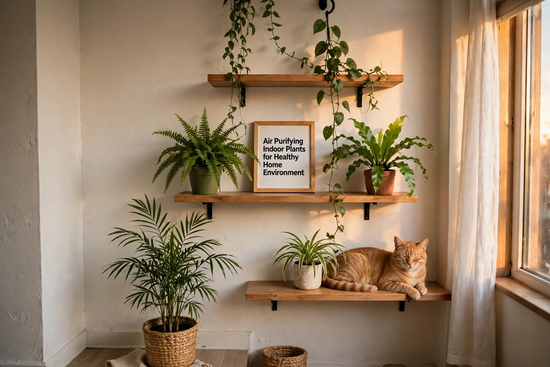
Build upward. Wall shelves, ceiling hooks, and tall, slim species add greenery without eating floor space.
A balanced small indoor garden looks fuller and grows better with three heights: one floor plant such as a parlor palm, two or three shelf plants, and one trailing vine. Clustering them raises humidity around each leaf, which ferns and palms appreciate.
A 2025 Floral Marketing Fund study found that nearly 97 percent of houseplant buyers said their plants lift their mood. That payoff depends on seeing them daily. Put your healthiest specimen at eye level beside the chair or desk you use most, rather than tucking it into an unused corner.
Frequently Asked Questions
What is the best indoor plant for cleaning air?
The snake plant is the strongest all-round choice because it handles low light, rare watering, and neglect better than most species. Pair it with regular window ventilation, since no single plant measurably cleans a whole room.
How many plants do I need to purify a room?
No realistic number of houseplants will purify a room on their own. Matching ventilation would carpet the floor with pots, so keep 3 to 5 healthy plants for humidity and mood and rely on airflow for cleaning.
Which air-purifying plants are safe for cats and dogs?
Spider plant, Boston fern, parlor palm, areca palm, cast iron plant, and bird’s nest fern are nontoxic to cats and dogs. Keep snake plant, pothos, and peace lily on high shelves or out of homes with leaf-chewing pets.
Are air-purifying plants good for bedrooms?
Yes, they suit bedrooms as a source of humidity and calm, though they won’t change air quality overnight. The snake plant works best because it opens its leaf pores at night and tolerates dim corners.
How often should I water indoor plants in winter?
Water roughly half as often in winter as in summer, and confirm the soil is dry first. Shorter days slow growth, so roots take up less moisture, and wet soil turns into root rot faster.
Conclusion
Air purifying indoor plants for healthy home environment plans earn their place as the most rewarding layer: source control and ventilation clean the air, while plants add humidity, calm, and color. Choose species that match your dimmest room and water by touch rather than by calendar, and a handful of pots will thrive for years.